

Introduction
In today’s volatile market, most businesses encounter one of the following two situations;
Scenario 1: They have excess workforce capacity but insufficient project demands, which negatively impacts the bottom line.
Scenario 2: They experience a sudden increase in project demand, which results in missed opportunities due to resource crunch.
In both scenarios, failing to align resource capacity with changing project demands can adversely impact operational efficiency and business profitability. That’s why it’s critical to proactively identify and bridge resource capacity and demand gaps, build a well-optimized talent pool, and stay competitive.
In this blog, we will explore how to measure resource capacity and demand, and the best practices for balancing them.
What is Resource Capacity and Demand?
Resource capacity refers to the amount of work a resource can deliver over a defined period, after accounting for leave, training, and non-billable activities. On the other hand, resource demand is the quality, quantity, and type of project resources required to meet upcoming requirements within a given period.
Both capacity and demand are typically measured in hours, FTEs, or person-days by role and skill rather than generic headcount. However, demand should be expressed as a range to account for uncertainty and changing project needs.
Read our resource capacity planning eBook to understand how to future-proof your workforce against market volatility.
Now that we understand what resource capacity and demand are, let’s learn how to measure them.
How to Measure Resource Capacity and Demand: A Step-by-Step Approach
Measuring resource capacity and demand requires a structured approach that helps organizations gain visibility into supply and demand, identify gaps early, and make informed resourcing decisions.
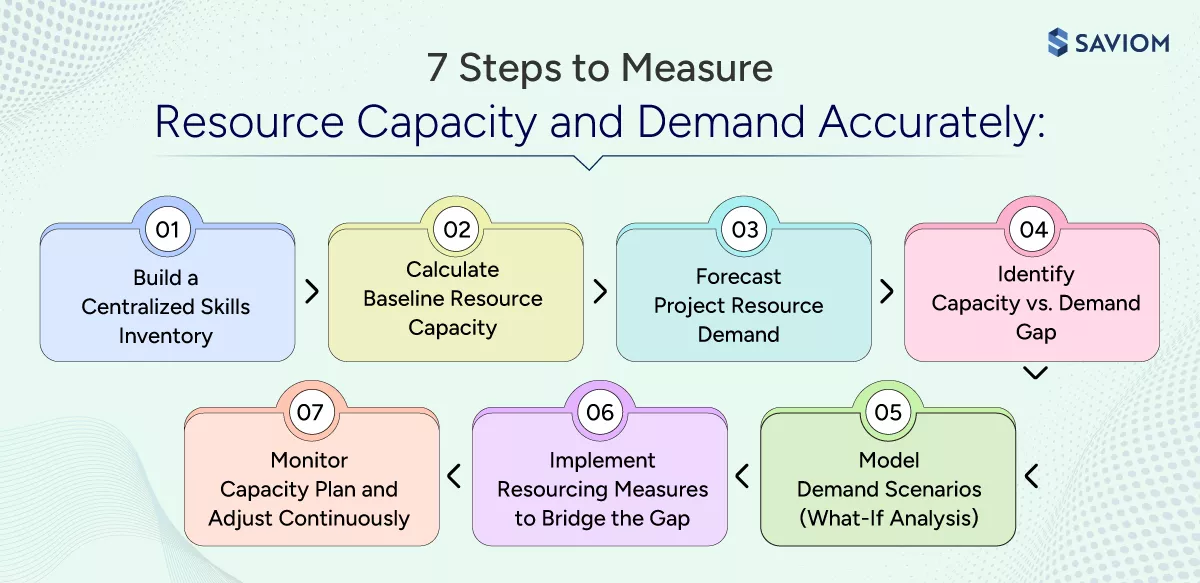
Step 1: Build a Centralized Skills Inventory
Start by building a centralized skills inventory that captures each resource’s role, certifications, experience level, and proficiency. This helps managers understand the skills and capacity available within the workforce, identify potential gaps, and take timely corrective actions.
Understand how a skill matrix helps you match people to work more effectively.
Step 2: Calculate Baseline Resource Capacity
Determine the baseline capacity by subtracting leave, training, and administrative time from total working hours. Also factor in part-time staff, contractors, and local holidays to reflect actual availability. For example, a senior consultant with 1,800 annual working hours may only have 1,400 billable hours after accounting for BAU commitments.
The formula for calculating resource capacity is:
Step 3: Forecast Project Resource Demand
Forecast upcoming work to estimate the type and quantity of resources required, then break down scope, tasks, and timelines into role- and skill-based effort needs. Also factor in project interdependencies, complexity, and delivery deadlines that may affect demand. Finally, validate assumptions based on historical data and expert judgement to improve future resource forecasts.
The formula for calculating resource demand is:
Learn what demand management involves and the steps to manage it effectively.
Step 4: Identify Capacity vs. Demand Gap
In this step, perform capacity vs. demand analysis to identify resource excesses or shortfalls. Based on these insights, managers can take proactive measures to bridge the demand gaps and ensure that the project gets completed on time without getting disrupted by any resource constraints.
The formula for calculating the capacity vs. demand gap is:
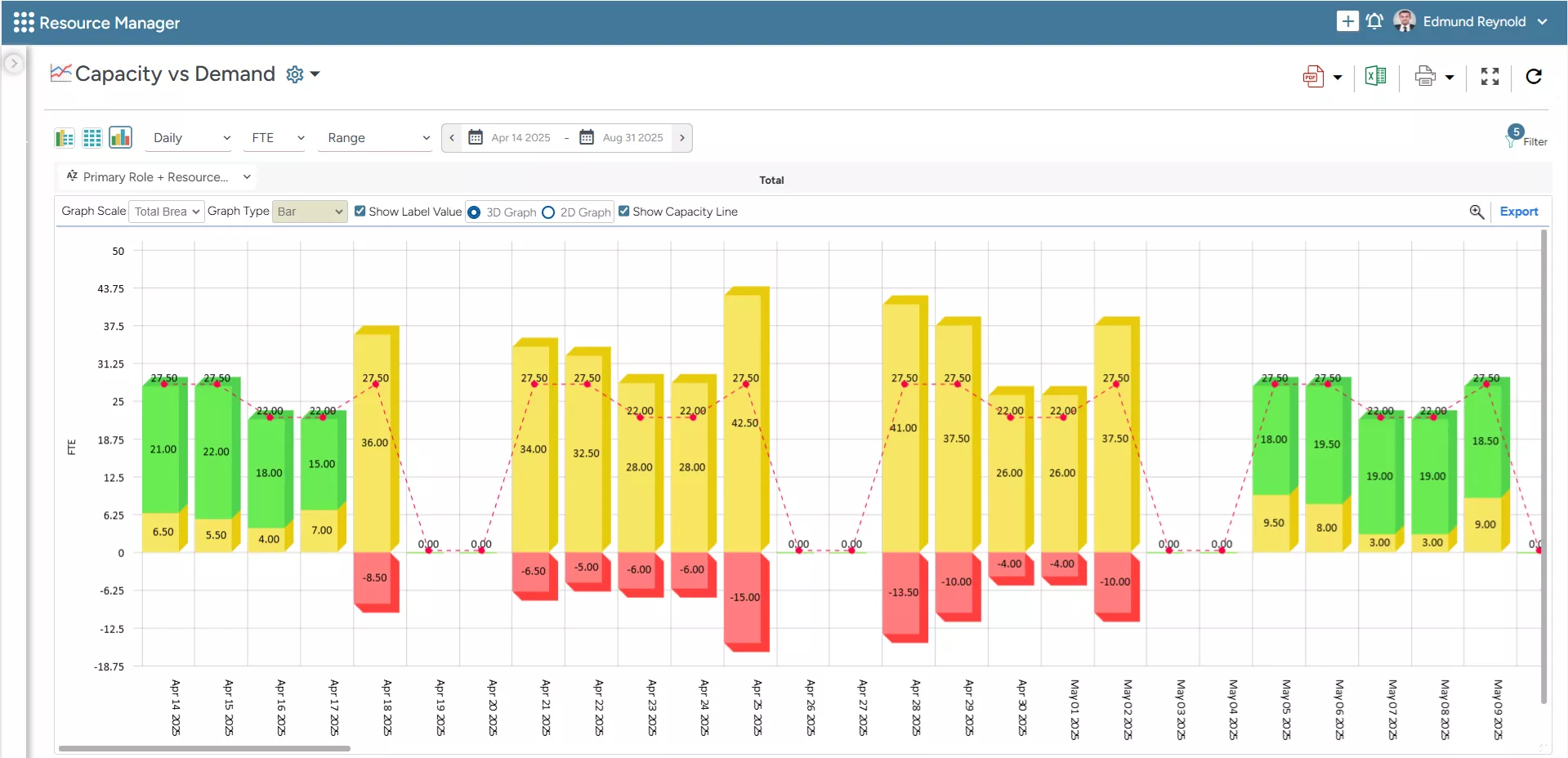
SAVIOM’s Capacity vs. Demand Graph enables managers to quickly spot resource shortages or excesses, and take timely action to balance supply and demand.
Step 5: Model Demand Scenarios (What-If Analysis)
Next, model different demand scenarios to assess how changes in timelines, project scope, or priorities impact available capacity and resourcing plans. This helps managers compare staffing options, balance costs, and decide which resources to deploy and when, ensuring seamless project delivery.
Learn how scenario planning strengthens your capacity and demand plans.
Step 6: Implement Resourcing Measures to Bridge the Gap
Based on whether there is a shortage or surplus of resources, managers can take different resourcing actions. For resource shortages, they can plan retraining/upskilling, apply out-rotation and backfilling, or hire permanent or contingent staff. For surplus capacity, they can expedite project timelines or sell excess capacity at a discounted rate.
Measure and align resource capacity and demand with confidence using SAVIOM’s 5th Gen resource management software. Book a demo to see it in action.

Step 7: Monitor Capacity Plan and Adjust Continuously
Lastly, regularly review and update capacity plans to reflect changing priorities, evolving skill requirements, and shifting workloads. Ongoing adjustments help resolve resourcing challenges early and maintain alignment between resource capacity and demand. This continuous review enables firms to adapt to changing business needs, strengthen workforce readiness, and sustain operational efficiency.
Gain more insight into how capacity planning can drive project success.
Having understood the measurement process, let’s explore how to balance resource capacity and demand with the following best practices.
Best Practices to Balance Resource Capacity and Demand
The following best practices institutionalize resource capacity planning as an operating rhythm, ensuring consistency, accountability, and long-term workforce sustainability.
Establish a Structured Capacity Planning Process
According to PMI research, “37% of project failures stem from poor resource planning, reinforcing the importance of effective capacity planning.”
Managers should develop a standardized capacity planning process where the projected demand is consistently validated against resource skills and availability. This enables proactive staffing decisions, reduces last-minute firefighting, and keeps supply and demand aligned across resource planning cycles.
Adjust Resource Allocations as Needed
Organizations should reassign resources based on changing project priorities, timelines, and skill requirements. They can utilize real-time capacity data to make timely adjustments before resource risks impact delivery. This proactive reallocation improves efficiency, reduces delivery delays, and keeps demand aligned with available capacity.
Explore proven approaches to allocating resources without overloading teams or wasting capacity.
Anticipate Ramp-Downs & Reduce Capacity Wastage
Forecasting project ramp-downs enables proactive redeployment of resources before they hit the bench. By identifying release dates early, organizations can seamlessly align talent with upcoming opportunities. This minimizes bench time, protects margins, and keeps employees engaged with meaningful work.
Track Variance Between Forecasted vs. Actuals
According to the Institute of Business Forecasting research, “Improving forecast accuracy by just 15% can increase pre-tax profits by around 3% by better aligning plans with actual demand.”
Organizations should regularly compare forecasted demand with actual usage to improve resource estimation accuracy over time. Furthermore, managers should consider historical data on variance to plan staffing levels better and avoid shortages or surpluses. This helps keep projects on track and boosts business profitability.
Develop a Multi-Skilled & Flexible Workforce
Prioritize cross-skilling and skill rotation to reduce dependence on external hiring and single experts. In addition, building workforce flexibility through internal mobility and dynamic role assignments enables organizations to handle workload peaks more effectively.
Find out how upskilling and retraining can futureproof your workforce.
Next, let’s see how powerful resource capacity planning software helps with managing capacity and demand across projects.
How Can SAVIOM Help Align Resource Capacity and Demand?
A modern resource capacity planning software helps organizations forecast and identify employee shortage/excess and take timely corrective actions. Key capabilities include:
- The all-in-one resource planner provides a centralized visibility into resource capacity and demand and helps implement suitable resourcing measures accordingly.
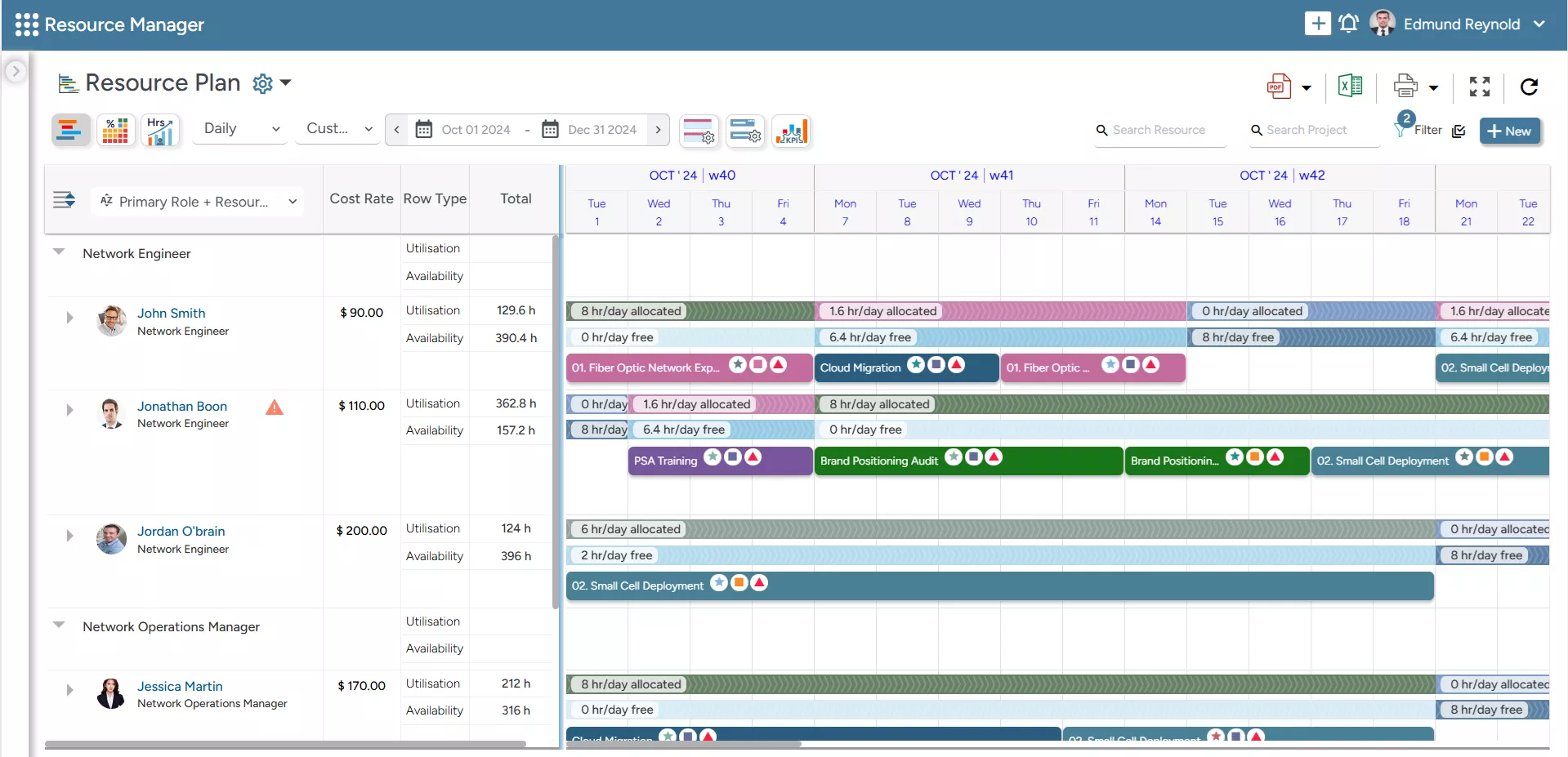
SAVIOM’s All-in-One Resource Planner provides organizations with a holistic view of the resource’s availability, utilization, and capacity, enabling informed decision-making.
- The embedded capacity planner helps identify skill gaps or excess capacity early to address them before they impact delivery.
- Intelligent matchmaking helps assign the right people to the right work at the right time, ensuring competent resource allocation from the onset.
- KPI forecaster offers insights into utilization, availability, burnout risk, and capacity to support proactive, data-backed decisions.
- The competency matrix helps identify skill gaps and plan targeted upskilling or hiring actions.
- Real-time BI reports like forecast vs. actuals, capacity vs demand, bench reports, project vacancy reports, etc., help make data-driven decisions on time.
- What-if analysis enables organizations to model demand changes and build resilient, profitable resource plans.
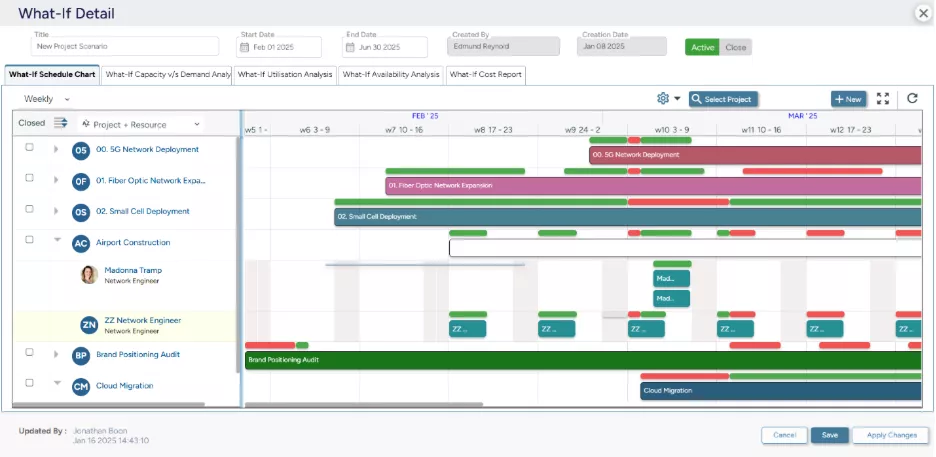
SAVIOM’s What-If Analysis empowers managers to compare various workforce scenarios and select the most favorable & profitable outcome.
Conclusion
Resource capacity and demand management are not static metrics. It is a decision system that shapes delivery reliability, cost control, and workforce resilience. Moreover, accurate measurement, scenario planning, and disciplined governance enable leaders to navigate volatility with confidence. Hence, enterprise-grade workforce capacity planning drives a higher utilization rate, improved profitability, and engaged teams.
Frequently Asked Questions
Resource capacity is the amount of work an organization’s resources can deliver with available skills and hours. On the other hand, resource demand is the volume and type of work required over the same period. By comparing capacity with demand, organizations can identify resource gaps early and take suitable resourcing measures to meet workload requirements seamlessly.
Capacity = Available Hours per Role or Skill
Demand = Required Project Hours Mapped to Skills
Gap = Demand – Capacity
Balancing capacity and demand improves forecast accuracy and delivery reliability. It also supports better investment decisions while preventing burnout from overloading and financial loss from underutilization. Most importantly, it enables organizations to commit to work they can realistically deliver.
The best practices for balancing resource capacity and demand are:
1. Establish a Structured Capacity Planning Process
2. Adjust Resource Allocations as Needed
3. Anticipate Ramp-Downs & Reduce Capacity Wastage
4. Track Variance Between Forecasted vs. Actuals
5. Develop a Multi-Skilled & Flexible Workforce
Common challenges in balancing resource capacity and demand include demand volatility, last-minute scope changes, lack of real-time visibility into resource data, and frequent skill gaps and shortages.