

Introduction
Every organization depends on its workforce, tools, and technology to operate effectively. However, simply having resources is not enough. It’s how effectively they are planned, allocated, and utilized that determines project and business success. Without a structured resource management approach, teams can become overburdened, valuable talent may remain underutilized, and delivery costs can rise.
That’s why resource management is important for every growing business. It ensures that the right people with the right skills are available when needed, enabling managers to optimize resource utilization, minimize costs, and enhance project delivery. When done well, it boosts employee productivity, improves client satisfaction, and drives sustainable, long-term business growth.
In this blog, we will break down 15 reasons why resource management is important and why it should be at the heart of every successful business strategy.
Let’s explore.
Why is Resource Management Important?
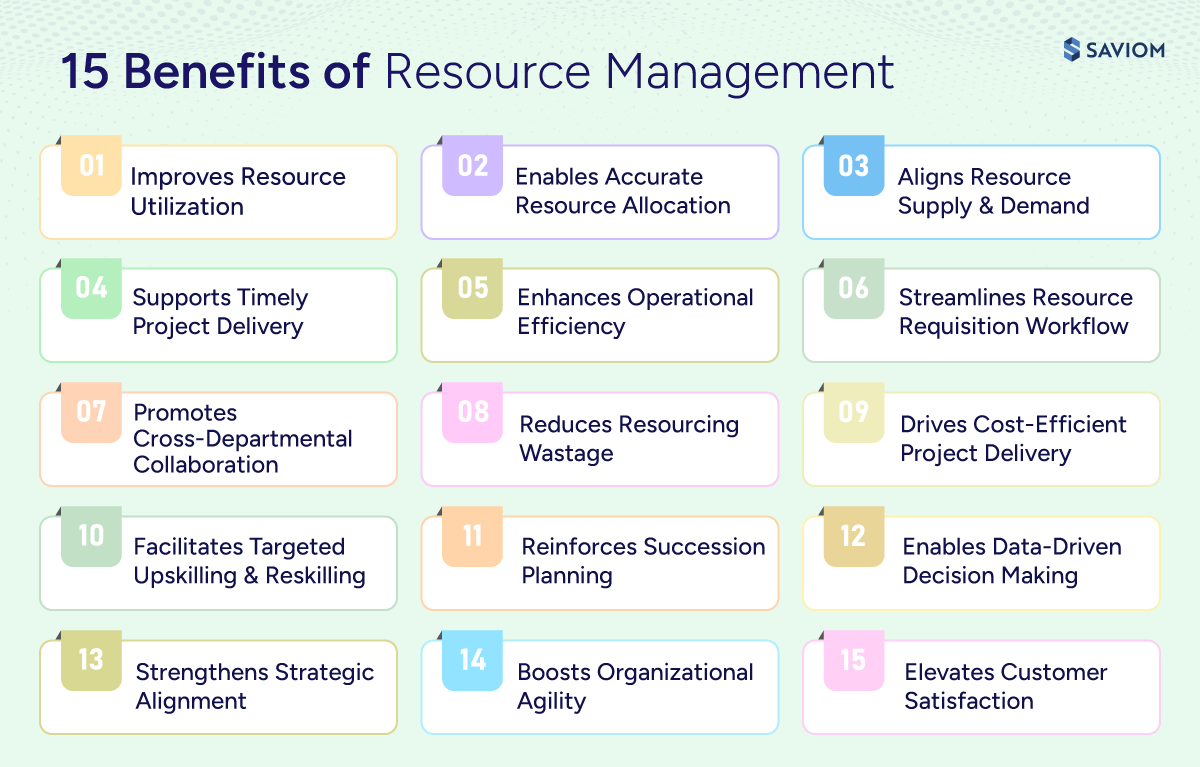
Understanding the importance of resource management begins by examining how it connects to strategic alignment, financial control, and operational efficiency. Below are 15 benefits of resource management for every business:
Aligns Resource Supply and Demand
With resource capacity planning, firms can proactively forecast and bridge the supply vs. demand gap, ensuring a competent workforce is available when needed. It addresses shortages through upskilling/retraining, or planned hiring, and resolves excess by expediting project timelines. This approach helps businesses avoid last-minute firefighting, initiate projects on time, and protect long-term profitability.
For example, a consulting firm preparing for multiple digital transformation programs forecasts demand for solution architects, change managers, and senior consultants across quarters. They identify significant shortages for solution architects in Q2, prompting the firm to onboard contingent staff in advance to balance resource supply and demand.
Learn how to measure resource capacity and demand effectively.
Enables Accurate Resource Allocation
A well-structured resource management framework provides visibility into skills, availability, capacity, and utilization, enabling managers to make precise resource allocation decisions. Thus, by ensuring that the right skills are assigned to the right task, firms can prevent overallocations, skill mismatches, and quality issues. In turn, it helps improve workforce productivity, project outcomes, and cost efficiency.
Improves Resource Utilization
According to a 2023 McKinsey survey, “More than 50% employees reported being relatively unproductive at work.”
Effective resource management combines demand forecasting and capacity planning to ensure the right skills are available for priority work at the right time. With real-time visibility into resource utilization, managers can quickly identify and correct under- or overallocation, preventing burnout or bench time. Additionally, it enables managers to proactively shift resources from non-billable activities to billable or strategic initiatives, maximizing productive utilization and overall workforce efficiency.
Explore our guide on resource utilization and how it helps improve workforce productivity.
Supports Timely Project Delivery
Timely project delivery begins with securing the right type, quantity, and quality of resources before work starts. By forecasting pipeline demand, managers can onboard the necessary skills in advance and prevent last-minute skill shortages. In addition, structured resource management enables quick reallocation in response to unexpected scope changes or unplanned absenteeism, helping teams deliver projects on time.
For example, an AEC firm managing multiple infrastructure projects anticipates demand for structural engineers, site supervisors, and safety specialists across project phases. When a lead structural engineer becomes unavailable, a robust resource management plan enables managers to immediately reassign a pre-identified backup, preventing schedule delays and keeping critical milestones on track.
Enhances Operational Efficiency Across Teams
According to an IBM survey, “77% of CEOs view operational efficiency as a key driver of revenue growth.”
A robust resource management plan standardizes and optimizes resource-centric workflows across the organization. It prevents project and operational delays by ensuring the right talent is available at the right time and cost. In addition, continuous tracking of resource management metrics enables managers to identify and correct variances early. Together, these practices improve employee productivity and overall operational efficiency.
Check out our blog on operational efficiency.
Streamlines Resource Requisition Workflow
A well-defined resource management framework standardizes and streamlines the resource requisition process through a centralized system, replacing informal requests. This structured, template-driven request captures skills, roles, timelines, and cost rates,reducing ad-hoc decision-making. In turn, it minimizes bias, reduces managerial conflicts, and ensures timely allocations while maintaining clear audit trails.
For example, an IT services firm starting a new software deployment project can submit a formal request for a project manager and two developers with specific experience levels, start dates, duration, and budget range. Because these requests flow through a defined approval process, managers can review priorities and resolve conflicts before bookings are made.
Promotes Cross-Departmental Collaboration
Efficient resource management provides a real-time view of key metrics such as capacity, availability, skills, and utilization across the organization. This allows departments to plan together rather than working in isolation, making it easier to coordinate shared talent, prevent double-booking, and align efforts around common business goals. As a result, teams work cohesively across functions, and high-value initiatives receive the capabilities they need to succeed.
Read this eBook to learn how 5th gen resource management transforms workforce visibility into sustained profitability and competitive advantage.
Reduces Resourcing Wastage
Effective resource management reduces capacity waste by optimally allocating employees across projects through proactive resource forecasting and capacity planning. This minimizes wasteful hiring/firing cycles, prolonged bench time, skill mismatches, and work duplication. Additionally, by comparing planned versus actual time spent on tasks, managers can improve planning accuracy and ensure that workforce capacity is used efficiently across the organization.
Read in detail about resource management and how it ensures efficient utilization of resources.
Drives Cost-Efficient Project Delivery
According to a Gartner survey, “56% of CFOs rank cost optimization as a top priority for 2026.”
Effective resource management supports this objective by enabling managers to build the right mix of permanent, contingent, local, global, senior, and junior resources based on project requirements. This helps control project costs without compromising quality. Moreover, continuous monitoring and optimization of productive utilization help avoid schedule delays that drive cost escalation. Additionally, estimating project budgets based on employees’ cost and charge-out rates enhances financial control.
Facilitates Targeted Upskilling and Reskilling
Rapid technological change, an aging workforce, growing demand for specialized skills, and the rise of hybrid skill requirements have widened the global skills gap. In response, firms must focus on workforce skill development through targeted upskilling and retraining, rather than generic training programs. This way, organizations can build versatile, transferable skills that reduce reliance on external hiring and better prepare their workforce for future demands.
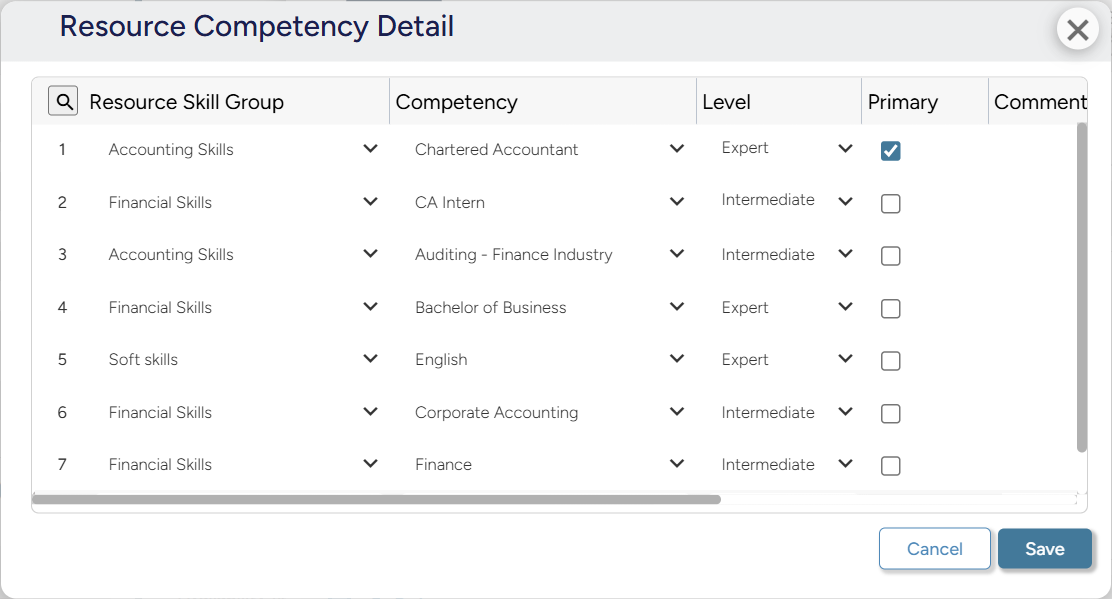 SAVIOM’s Competency Matrix enables managers to track skills, certifications, and proficiency levels, helping identify skill gaps and plan targeted reskilling initiatives.
Reinforces Succession Planning
Clear visibility into critical roles and key skill dependencies enables organizations to identify and prepare successors early. By tracking expertise, experience, and readiness levels, leaders can build structured backup plans and leadership pipelines for business-critical roles. This reduces disruption during attrition, retirement, or internal mobility while preserving institutional knowledge and ensuring business continuity.
For example, an accounting firm identifies a senior tax leader nearing retirement and begins mentoring a high-performing manager for months in advance. This proactive transition ensures regulatory expertise is transferred smoothly, service quality remains consistent, and client relationships stay stable.
Understand how skill development helps create a future-ready workforce.
Enables Data-Driven Decision Making
Resource management replaces fragmented, siloed workflows with a centralized, structured foundation for data-driven decision-making. By consolidating insights on resource availability, utilization, capacity, cost, skills, and location, organizations make informed hiring, training, and allocation decisions. Over time, this operational data evolves into strategic intelligence that enables informed business decisions and supports long-term resource planning.
Strengthens Strategic Alignment
A well-structured resource management process helps align projects with the organization’s strategic objectives. It enables managers to evaluate and prioritize initiatives based on business value and ROI. Once priorities are set, they can estimate resource requirements and look into internal and external channels to identify and assign suitable candidates. This structured approach ensures high-priority projects are executed efficiently within the stipulated timeline, cost, and quality standards.
Learn key resource management best practices to improve project performance.
Boosts Organizational Agility
With an advanced resource management approach, firms gain visibility into workforce capacity and future skill requirements, enabling them to build a robust talent pipeline in advance. Moreover, agile capacity planning helps align internal capacity with changing market demand, allowing timely resource adjustments and faster responses to emerging opportunities. As a result, managers can effectively mitigate market volatility.
For example, an IT services firm anticipating increased demand for AI integration can identify upcoming skill gaps months in advance. By upskilling existing developers and selectively hiring specialists, the firm can respond quickly to new client opportunities without delaying ongoing projects.
Elevates Customer Satisfaction
Resource management enables skill-based allocation, improving employee productivity, minimizing rework, and maintaining deliverable quality. As a result, clients experience fewer delays and greater confidence in project execution. Secondly, it prevents last-minute hiring, which helps prevent cost escalations and billing disputes. Lastly, project resource management fosters communication and transparency, which enhances customer experience and strengthens long-term relationships.
Discover how SAVIOM’s advanced resource management software helps optimize utilization, minimize resource risk, and support long-term growth. Book your free demo now.
Now that we have explored the benefits, let’s see how an advanced resource management software helps achieve them.
How Does SAVIOM Enable These Resource Management Benefits?
SAVIOM’s robust resource management software translates strategic workforce planning into measurable outcomes through the following capabilities:
- An all-in-one resource planner provides enterprise-wide visibility into the resource pool, enabling managers to view current and future resource schedules.
- An embedded capacity planner helps managers anticipate future needs, identify resource gaps, and address them proactively.
- The KPI forecaster provides real-time insights into critical resource management metrics, including availability, utilization, burnout, and skill gaps.
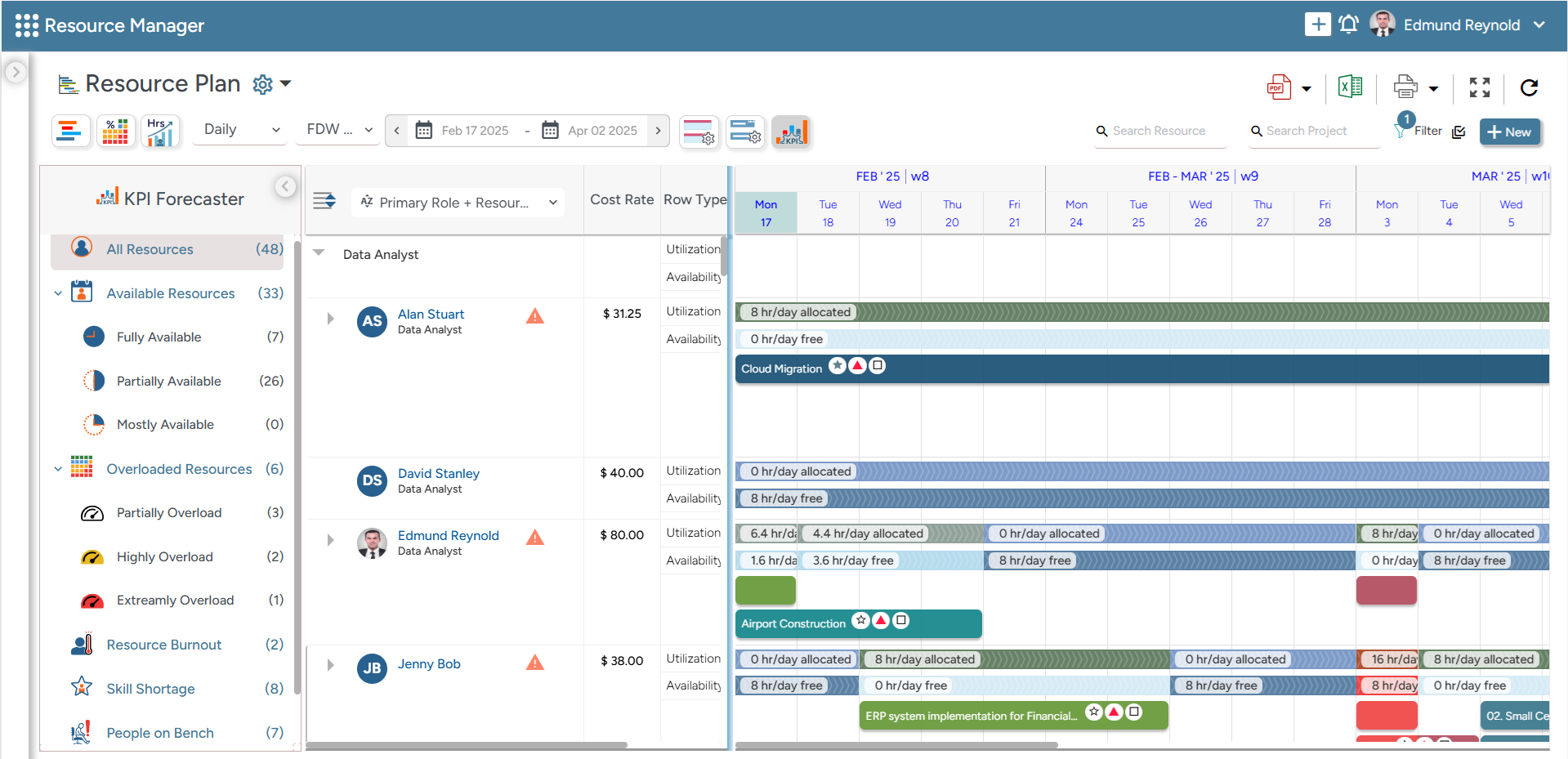 SAVIOM’s KPI Forecaster provides visibility into utilization, availability, and bench time, enabling proactive decisions and better resource planning.
- Embedded resource heatmaps visually highlight over- and underutilized resources, enabling managers to balance workloads and address resource constraints early.
- The early warning system flags overallocations and booking conflicts, allowing teams to address resource planning issues before they impact delivery.
- Intelligent matchmaking ensures each project is staffed with the best-fit resources based on their skills, roles, experience, cost, etc., ultimately improving delivery quality.
- The competency matrix centralizes skills, experience, and certifications, enabling managers to assess skill readiness and identify gaps.
- Real-time BI reports and dashboards provide insights into forecast vs. actual performance, project vacancy, and people-on-the-bench to support informed decision-making.
- The what-if analysis feature helps simulate various scenarios in a sandbox environment and arrive at an optimized resource plan.
Conclusion
Resource management plays a central role in helping organizations use their personnel and assets efficiently. It not only reduces resourcing costs and project risks but also improves productivity, customer satisfaction, and business agility. Ultimately, by aligning resources with strategic priorities and preparing for future demands, firms can build resilience and stay competitive in a changing market.
Frequently Asked Questions (FAQs)
The key benefits of resource management include:
1. Aligns resource supply and demand
2. Enables accurate resource allocation
3. Improves resource utilization
4. Supports timely project delivery
5. Enhances operational efficiency across teams
6. Streamlines resource requisition workflow
7. Facilitates targeted upskilling and reskilling
Resource management balances supply and demand through demand forecasting and proactive capacity planning. It identifies skill shortages or excesses in advance and addresses them through upskilling, planned hiring, or workload adjustments.
Resource management improves workforce utilization by helping organizations plan, allocate, and monitor work based on employees’ skills, availability, and capacity. This prevents overallocation, reduces bench time, and balances workloads across teams. As a result, employees remain productively engaged across projects.
Resource management improves project delivery by ensuring the right skills and capacity are available before work begins. Demand forecasting prevents last-minute shortages, while structured reallocation during scope changes or disruptions helps teams stay on schedule to meet delivery commitments.
Resource management supports cost control by ensuring the right mix of resources is assigned to projects based on skills, availability, and cost rates. Forecasting and capacity planning help prevent overstaffing, bench time, and last-minute hiring, while utilization tracking reduces schedule delays and cost overruns.