

Introduction
Long-term business success depends on more than ambition. Organizations need a clear and structured approach to align goals, prioritize initiatives, allocate resources effectively, and turn goals into measurable business results. Strategic planning provides the foundation that helps businesses establish a shared direction and translate high-level objectives into coordinated execution.
Strategic planning also gives leaders a practical framework for making informed decisions, tracking progress, and adapting to change without losing focus on long-term priorities. When supported by the right processes and frameworks, it improves alignment, strengthens execution, and drives sustainable growth.
This blog explains what strategic planning is, why it matters, and the frameworks, processes, and metrics organizations use to execute strategies effectively.
What is Strategic Planning?
Strategic planning is the process of defining an organization’s long-term direction, setting priorities, and allocating resources to achieve specific goals. It provides a clear roadmap for decision-making, performance improvement, and sustainable business growth.
Strategic planning ensures that organizations operate with clarity and purpose. It helps leadership focus on high-impact initiatives and align execution with long-term goals. By doing so, businesses can improve performance, adapt to market changes, and achieve a competitive advantage.
Now that we understand what strategic planning is, let’s explore why it is critical for driving long-term business success.
Why Strategic Planning Matters for Long-Term Business Success?
Strategic planning influences an organization’s ability to achieve predictable growth, maintain competitive advantage, and respond to market changes with confidence. It transforms abstract goals into structured, actionable plans that guide decision-making at every level of the business. Let’s explore the key benefits:
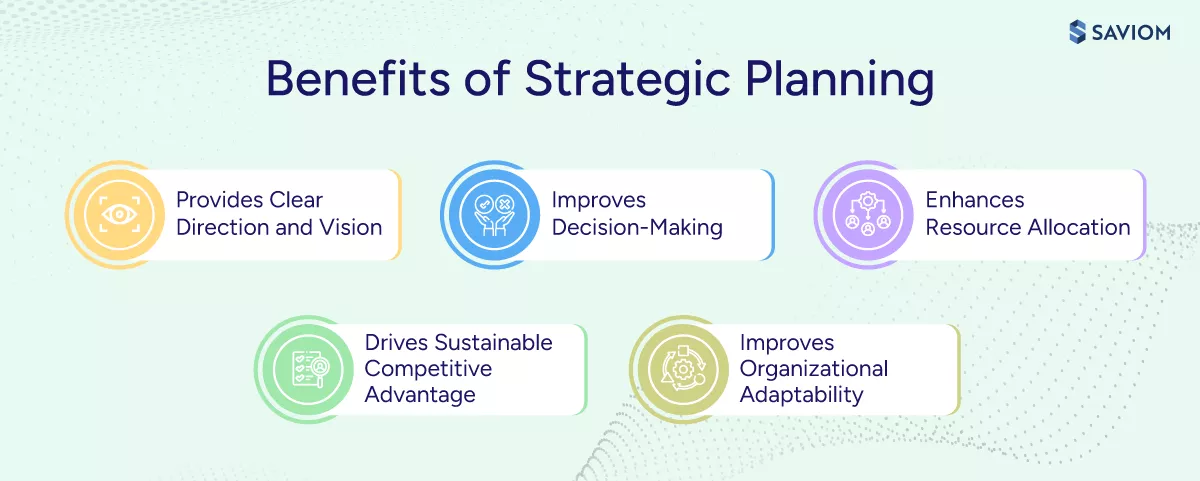
Provides Clear Direction and Vision
Strategic planning converts high-level business ambitions into clearly defined priorities that guide organizational focus. It ensures leadership teams gain clarity on where to invest, which markets to pursue, and how to position the business for long-term success. This ensures better alignment of goals, initiatives, and resources across the organization.
Improves Business Decision-Making
A well-defined strategic planning framework provides a consistent foundation for evaluating business opportunities and risks. It helps leaders make informed decisions based on long-term objectives rather than reacting to short-term pressures, improving overall business stability.
Enhances Resource Allocation
Strategic planning ensures that resources like budgets, talent, assets, and operational capacity are aligned with high-impact initiatives. Consequently, organizations can avoid spreading resources too thin across low-priority work and allocate employees to high-priority initiatives that deliver the greatest strategic value.
Drives Sustainable Competitive Advantage
Strategic planning helps businesses understand their market position and identify ways to stand out from competitors. By analyzing strengths, weaknesses, customer needs, and industry trends, companies can develop strategies that improve their unique value. This makes it easier to build stronger customer relationships, increase market share, and maintain long-term relevance, thereby driving sustainable competitive advantage.
Improves Organizational Adaptability
Strategic planning enables organizations to anticipate market shifts and adjust business priorities proactively. By continuously evaluating internal capabilities and external market factors, businesses can remain resilient in volatile environments and capitalize on emerging trends. This ensures faster response to change without disrupting ongoing operations.
Having explored why strategic planning matters, it is important to distinguish it from related planning approaches that are often used interchangeably.
Operational Planning vs. Strategic Planning vs. Business Planning
Understanding the distinction between operational planning, strategic planning, and business planning is essential for aligning day-to-day tasks with long-term objectives. It helps resources understand their roles within the planning process and ensures better coordination across functions.
| Aspect | Operational Planning | Strategic Planning | Business Planning |
|---|---|---|---|
| Purpose | Converts strategic and business goals into day-to-day activities and workflows | Defines the organization’s long-term direction and strategic priorities | Combines organizational strategy with operational plans to define how the business will function and grow |
| Focus | Execution of tasks, processes, and operational activities | Long-term growth, competitive positioning, and strategic goals | Annual targets, budgets, and departmental plans |
| Time Horizon | Short-term planning (monthly, quarterly, or daily operations) | Long-term (typically 3–5 years or longer) | Usually, annual planning cycles |
| Key Outputs | Work schedules, operational procedures, and team-level plans | Strategic goals, priorities, and major initiatives | Business plans, budgets, and operational targets |
| Who is Involved | Department managers and operational teams | Executive leadership and senior management | Business unit leaders and finance teams |
Explore how to create a winning operational strategy for your business.
This distinction matters because misalignment between these layers often leads to execution gaps. However, organizations that integrate all three processes effectively achieve more predictable business outcomes, better resource utilization, and stronger financial performance. Let’s now explore the key components of a strategic plan.
Key Components of an Effective Strategic Plan
An effective strategic plan includes key components that bring clarity to business goals and organizational priorities. It aligns initiatives and resources across the organization, enabling measurable progress toward long-term business objectives. Let’s explore the key components:
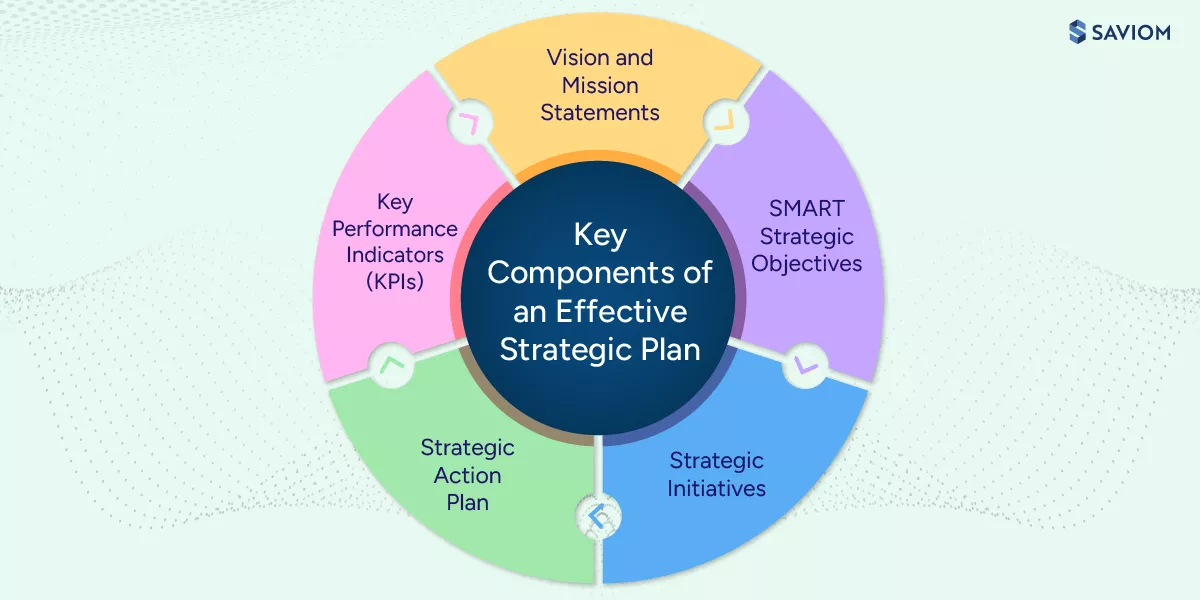
Vision and Mission Statements
A vision statement defines the long-term goals an organization aims to achieve, while the mission outlines its purpose and value proposition. Together, they provide a guiding framework that shapes strategic direction and decision-making.
SMART Strategic Objectives
Strategic objectives should follow the SMART model, which stands for specific, measurable, achievable, relevant, and time-bound goals. This component ensures that high-level strategies are translated into clear targets that teams can work toward effectively.
Explore essential business objectives firms can measure to drive success.
Strategic Initiatives
Strategic initiatives represent the high-impact projects or investments required to achieve operational efficiency and long-term objectives. These initiatives define where the organization should focus its efforts and resources to drive meaningful business outcomes.
Strategic Action Plan
An action plan helps break down strategic initiatives into executable tasks, timelines, and responsibilities. It bridges the gap between strategy and execution, ensuring that teams understand what needs to be done and when.
Key Performance Indicators (KPIs)
KPIs help measure progress toward strategic objectives and provide visibility into overall organizational performance. They help organizations track business outcomes, identify performance gaps, and make timely adjustments to ensure strategic initiatives stay on course.
Having outlined the key components, let’s explore the frameworks organizations use to structure and guide strategic planning.
Strategic Planning Frameworks Explained
Organizations rely on structured frameworks to define their strategic planning process and ensure comprehensive analysis. Each framework offers a different lens for evaluating opportunities and risks. Let’s explore the key strategic planning frameworks:
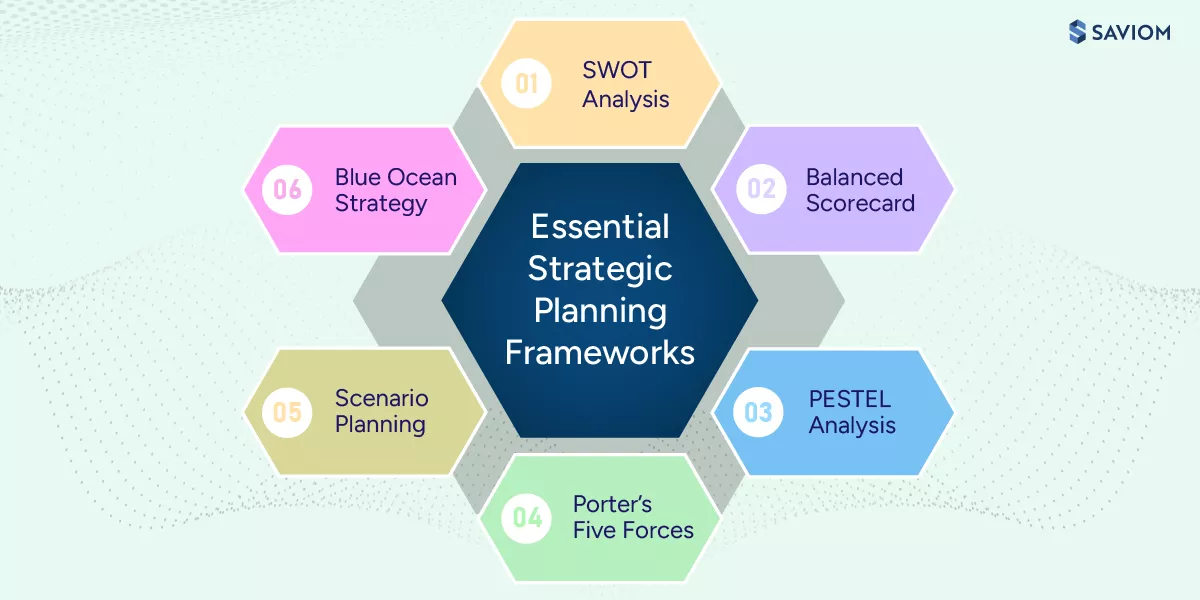
SWOT Analysis
SWOT analysis helps evaluate internal strengths and weaknesses alongside external opportunities and threats by systematically mapping these factors into a structured framework. This analysis helps identify capability gaps, competitive weaknesses, and missed market opportunities, enabling more informed strategic decisions and targeted improvements.
Balanced Scorecard
The Balanced Scorecard framework links business strategy to measurable performance metrics by translating strategic objectives into specific KPIs across financial, customer, internal process, and learning perspectives. This structured mapping ensures that strategy execution is tracked holistically rather than through isolated financial metrics.
PESTEL Analysis
PESTEL analysis helps examine macro-environmental factors such as political, economic, social, technological, environmental, and legal influences. It helps organizations anticipate external risks and opportunities that may impact strategic decisions.
Porter’s Five Forces
Porter’s Five Forces helps analyze competitive dynamics within an industry, including supplier and buyer power, competition intensity, and threats from substitutes or new entrants. This framework helps organizations identify strategies to strengthen their market position.
Scenario Planning
Scenario planning helps develop multiple future outcomes related to potential changes in market conditions, economic trends, technology shifts, or customer demand. It allows organizations to test strategic assumptions and prepare for different possibilities, improving resilience and adaptability.
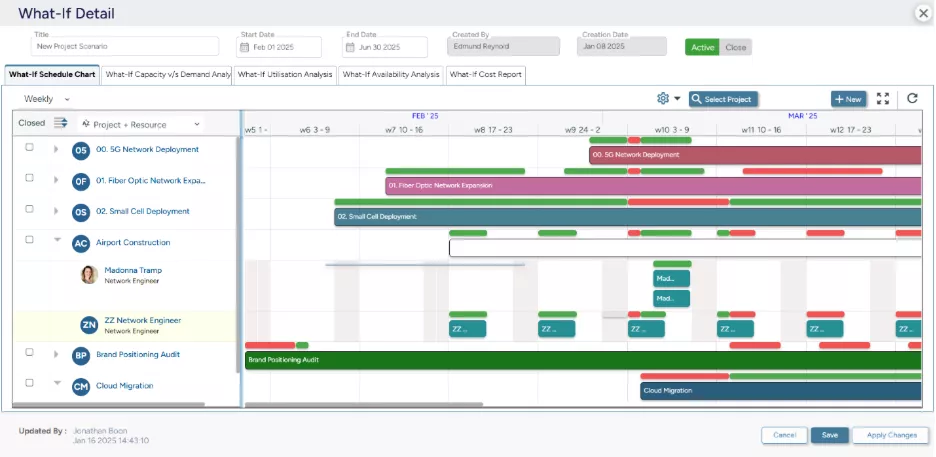 SAVIOM’s Scenario Modeling functionality enables managers to simulate different workforce scenarios in a sandbox environment and select the most profitable plan.
Blue Ocean Strategy
Blue Ocean Strategy focuses on creating new market spaces where competition is minimal. It encourages innovation by delivering unique customer value while reducing costs related to operations, production, or service delivery. This enables organizations to avoid direct competition in saturated markets.
With an understanding of the key frameworks, let’s now examine the step-by-step process organizations can follow to develop and execute a strategic plan.
How Strategic Planning Works? End-to-End Process Explained
A structured strategic planning process ensures alignment between vision, execution, and measurable outcomes, enabling organizations to move from abstract goals to operational reality with clarity and control. Let’s explore the strategic planning process:
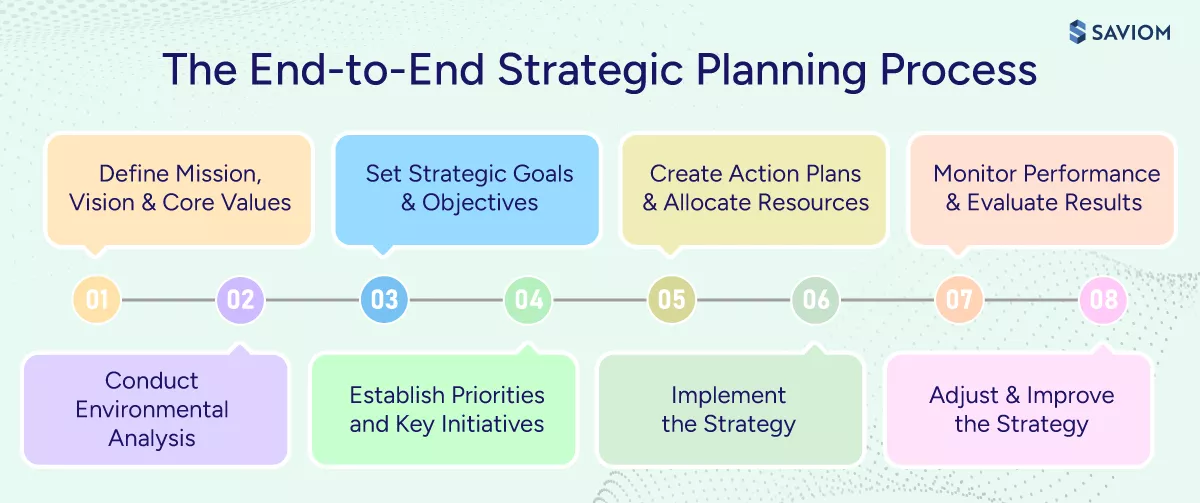
Step 1: Define Mission, Vision, and Core Values
This step involves defining the organization’s mission, vision, and core values to establish a clear purpose, long-term direction, and guiding principles. It sets the foundation for consistent decision-making and strategic alignment across leadership and teams.
Step 2: Conduct Environmental Analysis
In this step, organizations assess internal capabilities and analyze external market conditions such as competition, customer demand, and economic trends. This helps identify key business opportunities, market risks, and resource constraints that may influence strategic direction and execution.
Step 3: Set Strategic Goals and Objectives
Organizations define clear long-term goals and translate them into measurable objectives in this stage. These objectives guide planning, execution, and performance evaluation of strategic initiatives across the organization.
Step 4: Establish Priorities and Key Initiatives
After goal setting, organizations decide which key initiatives will help achieve their objectives. Leadership then prioritizes these initiatives based on business value, urgency, and organizational readiness to maximize strategic impact.
Step 5: Create Action Plans and Allocate Resources
This stage involves breaking down strategic initiatives into smaller, actionable plans with defined timelines and responsibilities. Leadership can then allocate business resources such as budget, talent, and tools to support the effective execution of the action plans.
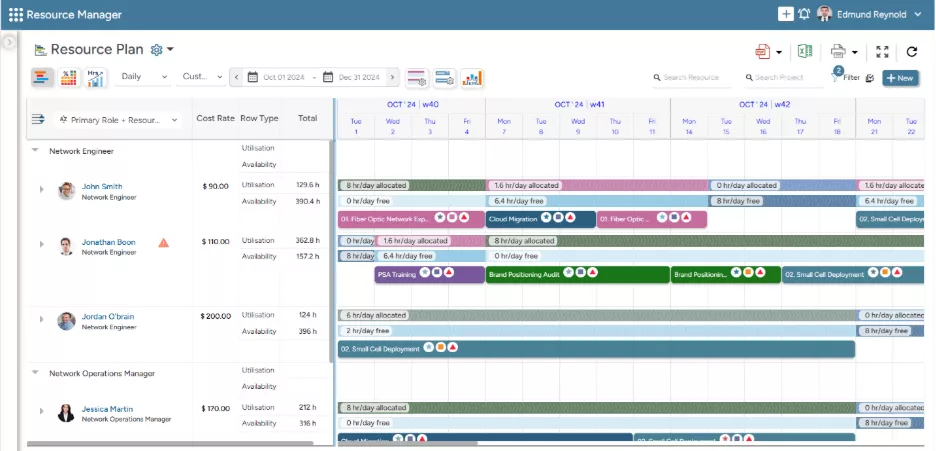 SAVIOM’s All-in-One Resource Planner provides 360-degree visibility across various resource attributes.
Step 6: Implement the Action Plan
Next, organizations begin implementing the action plan across various business functions. To ensure effective execution, teams work collaboratively to accomplish tasks, initiatives, and operational goals.
Step 7: Monitor Performance and Evaluate Results
At this stage, organizations track progress using pre-defined benchmarks, KPIs, and metrics. They evaluate whether strategic initiatives are delivering expected outcomes and identify areas that require corrective action.
Step 8: Adjust and Improve the Strategic Plan
This last stage involves continuously refining the strategic plan based on performance insights and changing market conditions. Accordingly, organizations update priorities, reallocate resources, and adjust initiatives to ensure the strategy remains relevant and effective over time.
Discover how 5th gen resource management supports project-based businesses in our eBook.
Having defined the planning process, it is important to understand the roles and governance structures that drive strategic planning forward.
Who is Responsible for Strategic Planning? Roles and Governance
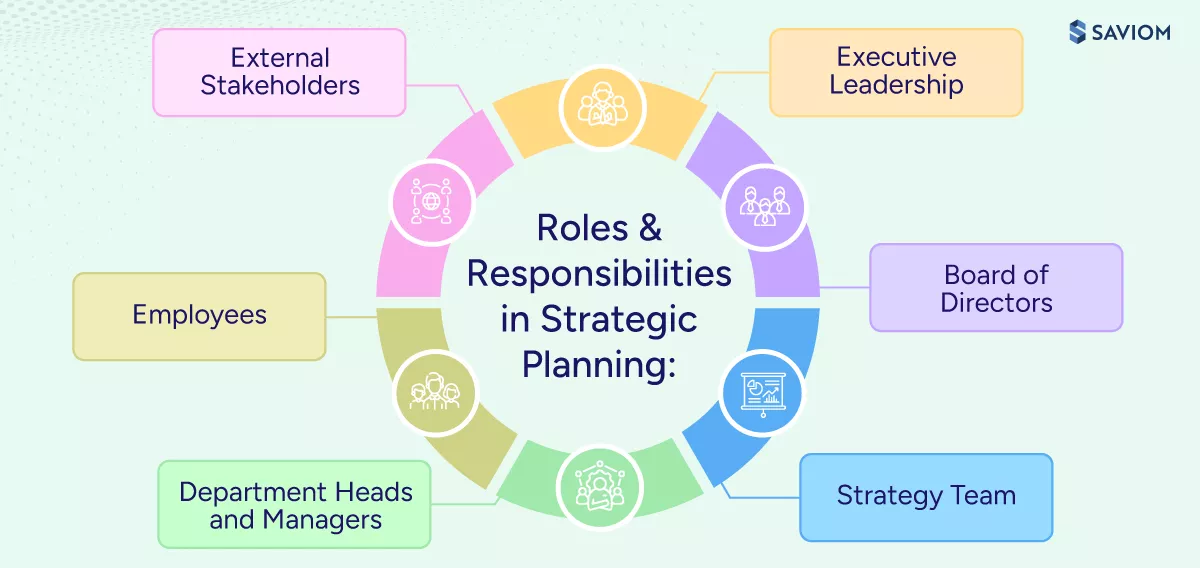
Clear ownership and governance are critical to ensuring that strategic planning translates into execution. Moreover, without defined roles, strategies often remain theoretical, leading to misalignment and poor accountability across the organization. Let’s explore the key roles:
Executive Leadership
The CEO and executive team define the organization’s long-term vision and strategic priorities. They align them with market opportunities and internal capabilities while guiding key decisions on investments, trade-offs, and direction.
Board of Directors
The board of directors provides oversight by reviewing and approving the strategic plan. They assess whether major priorities support long-term organizational health and whether the overall direction supports sustainable growth.
Strategy Team
The strategy team manages the planning process by gathering data, coordinating planning sessions, tracking strategic initiatives, and ensuring effective communication across departments. Their role is to create structure, improve consistency, and support leadership through analysis, reporting, and implementation follow-through.
Department Heads and Managers
Department heads and managers play a key role in executing the strategic plan at the operational level. They translate strategic goals into day-to-day actions, monitor team performance, and ensure employees understand how their work contributes to long-term business success.
Employees
Employees offer practical insight into daily operations, team challenges, workflow gaps, and opportunities for improvement that leadership may not always see directly. Their input helps organizations make better decisions and develop strategies that are more realistic, actionable, and easier to implement.
External Stakeholders
External stakeholders, such as customers, partners, consultants, and industry experts, provide external perspectives that strengthen strategic planning. They offer market insights, validate key business assumptions, and help identify emerging opportunities and risks.
Understand who the project stakeholders are and how to manage them efficiently.
With roles and responsibilities clearly defined, the next step is to understand how strategic priorities translate into execution through aligned initiatives and portfolios.
From Strategy to Execution: Aligning Initiatives and Portfolios
Strategic planning only creates value when priorities are translated into actionable initiatives and well-managed project portfolios. To move from strategy to execution, organizations need clear alignment, disciplined prioritization, and strong visibility across investments. Organizations typically achieve this by focusing on the following key practices:
- Align project portfolios with strategic objectives to ensure that selected initiatives directly support business priorities.
- Prioritize strategic initiatives by evaluating their potential impact on organizational goals and the long-term strategy.
- Use structured prioritization methods to determine which initiatives should receive investment and leadership attention.
- Help leadership balance investments across initiatives while considering risk, cost, and expected return.
- Use strategic roadmaps to outline timelines, milestones, and major initiatives required to achieve strategic goals.
Learn what strategic alignment of a portfolio is and why it is important.
Building on this alignment, it is equally important to assess whether the organization has the capacity and resources needed to execute these initiatives effectively.
How Does Resource Capacity Planning Translate Strategy into Execution?
Resource capacity planning helps translate strategy into execution by ensuring business goals are supported by the right people, skills, and availability. It connects strategic plans with delivery capacity, enabling organizations to assess workforce readiness, identify resource gaps, and make realistic execution decisions. This helps reduce bottlenecks, maintain momentum, and ensure critical initiatives are staffed.
In practice, resource capacity planning supports execution by helping organizations:
- Match resource availability with strategic demand so key initiatives have the people and time required for delivery.
- Identify skill gaps and staffing shortages early before they affect timelines, quality, or execution speed.
- Make informed workforce decisions such as hiring, reskilling, reallocating talent, or adjusting priorities.
- Prevent overutilization and delivery bottlenecks by balancing workloads across teams and functions.
- Improve execution confidence by ensuring strategic plans are realistic, resourced, and achievable.
For example, a software company planning multiple product launches can use resource capacity planning to compare required skills and team capacity against upcoming demand. Based on these insights, the company may hire additional developers, upskill existing employees, or revise timelines to keep launches on track without overloading teams.
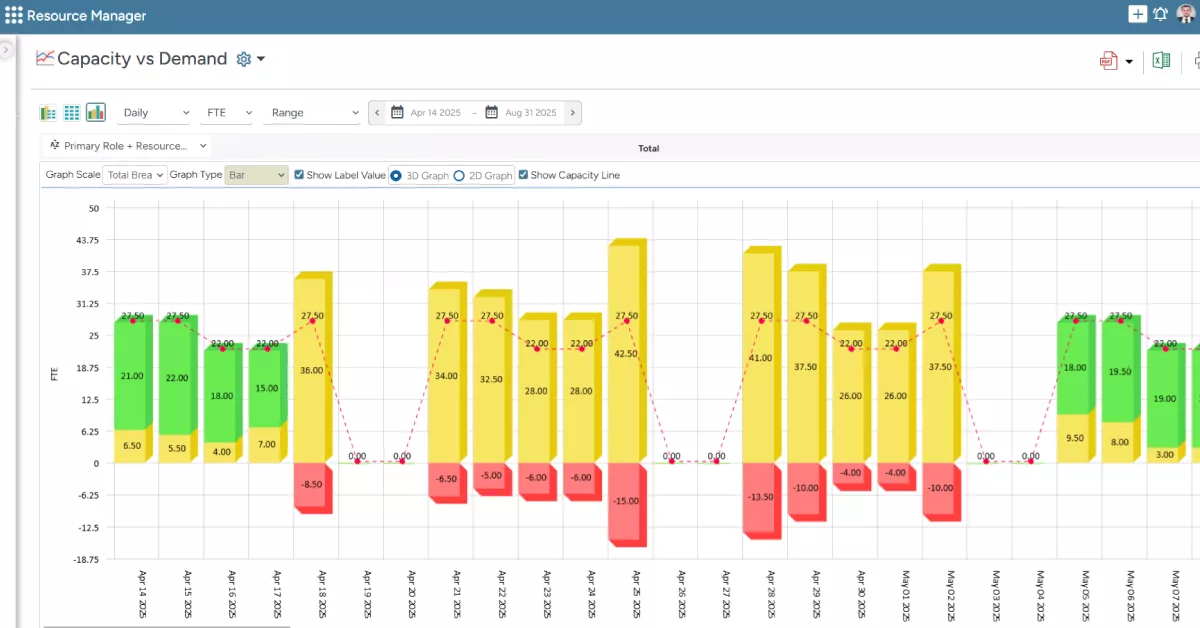
SAVIOM’s Capacity vs. Demand Graph enables managers to spot resource shortages and excesses, and take timely action to balance supply and demand
Now that we understand how strategy is translated into execution, let’s explore how organizations measure the success of their strategic planning efforts.
Measuring Strategic Planning Success: Key KPIs to Track
Measuring the effectiveness of strategic planning is essential for ensuring that strategies deliver tangible business outcomes and that organizations can continuously improve performance and execution. Let’s explore the key strategic planning KPIs:
Strategic Initiative Success Rate
Strategic initiative success rate measures the percentage of strategic initiatives that achieve their intended objectives. It provides visibility into how effectively strategy translates into execution and helps organizations assess whether planned initiatives are delivering expected business outcomes.
The formula to calculate strategic initiative success rate is:
Strategic Utilization
Strategic utilization measures the proportion of a resource’s available time spent on strategic initiatives that support long-term organizational goals. It provides visibility into how effectively workforce capacity is aligned with high-value work, ensuring resources contribute to growth and competitive advantage.
The formula to calculate strategic utilization is:
Resource Allocation Effectiveness
Resource allocation effectiveness measures how well organizations assign available resources to strategic initiatives based on skill fit, priority, and demand. It helps reduce mismatches between capabilities and requirements, ensuring that the right resources are allocated to the most critical initiatives at the right time for optimal results.
The formula to calculate resource allocation effectiveness is:
Resource Forecast Accuracy
Resource forecast accuracy measures how closely predicted workforce demand aligns with actual requirements for strategic initiatives. It reflects the reliability of planning processes and helps organizations make informed decisions on hiring, allocation, and budgeting while minimizing last-minute adjustments and execution disruptions.
The formula to calculate resource forecast accuracy is:
Forecast vs. Actual Utilization
Forecast vs. actual utilization measures the variance between planned resource utilization and actual usage during strategy execution. Such gaps highlight forecasting inaccuracies, leading to resource overutilization or underuse, while regular tracking helps identify inefficiencies early and improve planning accuracy.
The formula to calculate forecast vs. actual utilization is:
Skill Gap Index
The skill gap index measures the difference between the skills required to execute strategic initiatives and those available within the workforce. It highlights critical capability gaps, enabling organizations to take proactive actions, such as targeted hiring, retraining/upskilling, or cross-training, to ensure successful strategy execution.
The formula to calculate the skill gap index is:
Learn why it is important to create a skill matrix for business success.
Revenue Growth Rate
Revenue growth rate measures the percentage increase in revenue over a specific period compared to previous performance. It helps organizations evaluate whether strategic initiatives and go-to-market efforts are effectively driving business growth.
The formula to calculate revenue growth rate is:
Having established how to measure strategic planning success, it is equally important to understand the common mistakes that can hinder effective planning and execution.
Common Strategic Planning Mistakes (and How to Avoid Them)
Even well-structured strategic planning processes can fail if organizations fall into common pitfalls that disrupt execution. These issues often arise when the strategy is not clearly defined or effectively aligned with execution. Let’s examine where strategic planning typically goes wrong and how to address it:
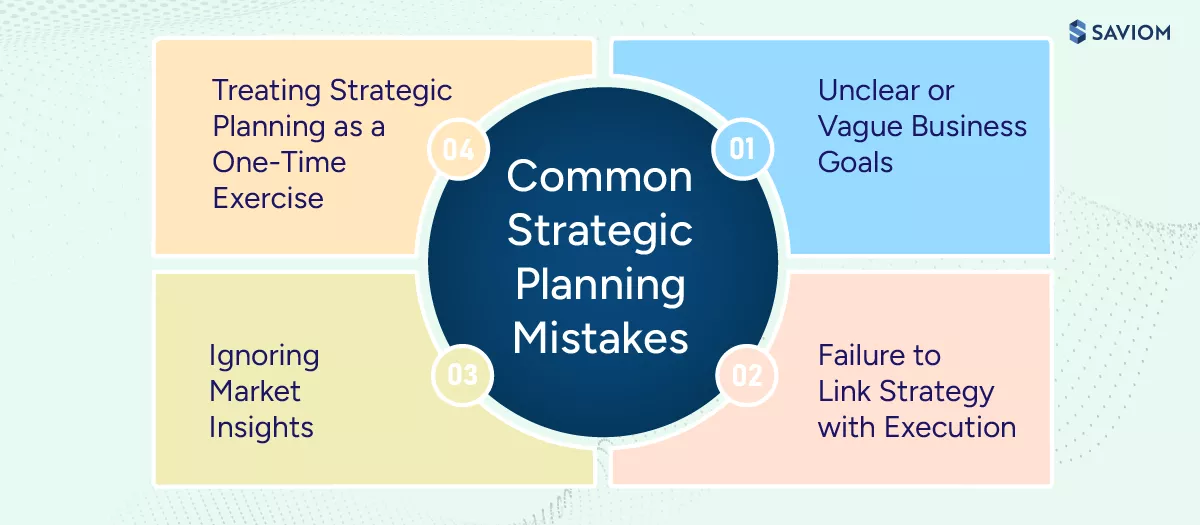
Unclear or Vague Business Goals
According to a Harvard report, “About 48% of organizations fall short of meeting at least half of their strategic goals.”
Unclear business goals are rarely caused by a lack of ambition. More often, they happen when leadership ideas remain too broad, different teams interpret priorities differently, or the organization has not agreed on what success actually looks like. This creates confusion around priorities, weakens decision-making, and makes it difficult to evaluate whether the strategic planning process is producing meaningful results.
How Organizations Address This
Organizations can start by first aligning leadership around a shared view of business priorities, trade-offs, and expected outcomes before goals are formalized. From there, they can translate broad ambitions into decision-ready objectives by defining success criteria, time horizons, ownership, and expected business impact. This makes strategic planning more practical because teams understand where to focus their effort.
Failure to Link Strategy with Execution
Many organizations struggle to turn high-level intent into coordinated action. This usually happens when the strategy is articulated at a conceptual level, while execution is managed separately through disconnected projects, departmental plans, or short-term operational decisions. The result is a gap where strategic priorities remain theoretical and do not deliver measurable business value.
How Organizations Address This
Organizations can create a clear path from strategic priorities to initiatives, ownership, and execution milestones. Instead of treating strategy as a document, they can connect it to delivery through roadmaps, initiative planning, cross-functional coordination, and regular performance reviews. This helps ensure that strategic planning is not limited to vision-setting but becomes an active management process.
Ignoring Market Insights
Strategic planning becomes less effective when decisions are based mainly on internal assumptions rather than external signals. Firms may rely on outdated customer understanding, incomplete competitive analysis, or past performance trends that no longer reflect current market realities. When this happens, even well-structured plans can lose relevance because they are not grounded in reality.
How Organizations Address This
Organizations can incorporate market insights directly into the planning process rather than treating it as a one-time input. They can combine customer feedback, competitive intelligence, market trends, and scenario analysis to test assumptions and shape priorities more effectively. This enables leaders to make decisions based on evidence.
Treating Strategic Planning as a One-Time Exercise
When strategic planning is treated as a one-time or annual event, organizations often fail to adapt to changing conditions. Priorities that seemed relevant at the start of the year may become less important as customer needs and market dynamics evolve. Over time, this limited responsiveness and disconnect prevent businesses from moving in the right direction.
How Organizations Address This
Strategic planning should be treated as an ongoing discipline rather than a fixed planning cycle. Firms must establish regular review cadences to reassess assumptions, monitor execution progress, and adjust priorities when needed. This allows them to respond to new information without losing sight of long-term goals. As a result, strategic planning becomes more resilient and adaptive over time.
Discover how advanced resource management software enables effective strategic planning and execution. Book a free demo today!
Now that we have discussed the challenges and their solutions, it is important to understand the role of technology, data, and AI in enabling effective strategic planning.
The Role of Technology, Data, and AI in Strategic Planning
Modern strategic planning is increasingly powered by technology, enabling organizations to make more informed business decisions, improve alignment between strategy and operations, and strengthen overall delivery capabilities. Let’s explore how technology, data, and AI are transforming the strategic planning process:
Technology as an Integrator of Strategic and Operational Information
Strategic planning requires alignment between high-level business objectives and operational realities. Enterprise systems enable this integration through the following capabilities:
- Alignment of strategic goals with operational data through enterprise systems, such as ERP, CRM, PSA, and project management tools, enables decisions based on real-time information.
- Consolidation of data across departments and functions reduces silos, creating a unified view for strategic planning and execution.
- Visibility into organizational performance, resource capacity, and financial health supports more informed decision-making.
- Alignment of strategies with operational feasibility ensures strategic plans reflect actual resource availability and execution realities.
Data as the Foundation for Strategic Insight
Data provides the foundation for evaluating business performance, identifying opportunities, and making informed decisions. Enterprise systems and analytics tools enable this through the following capabilities:
- Collection and analysis of data, including operational, financial, and market information, supports data-driven decision-making.
- Aggregation of information across business functions such as sales, delivery, finance, and customer engagement creates a unified view of performance.
- Reliable insights for leaders reduce dependency on assumptions, improving strategic accuracy.
- Identification of market trends and emerging patterns allows organizations to anticipate changes and respond proactively.
- Evaluation of internal capabilities ensures strategic priorities are aligned with actual strengths, gaps, and opportunities.
Learn how data-driven insights from resource management software improve strategic decision-making.
AI as a Tool for Predictive and Scenario-Based Planning
Artificial intelligence enhances strategic planning through predictive analytics and scenario-based analysis. It enables more forward-looking, data-driven decisions. This is achieved through the following capabilities:
- Analysis of historical data and external signals generates projections that support more accurate resource forecasting and planning.
- Forecasting of market demand, resource requirements, and potential business developments helps organizations prepare for future scenarios.
- Evaluation of strategic assumptions through scenario modeling allows leadership to evaluate multiple possible outcomes before making decisions.
- Expansion of strategic options enables leaders to consider a wider range of possibilities during the planning process.
Automation and Advanced Analytics for Monitoring Strategic Progress
Technology enables continuous monitoring and evaluation of strategic initiatives. It provides real-time visibility into performance and supports timely adjustments. The following capabilities make this possible:
- Consistent measurement of progress by tracking performance indicators, project outcomes, and financial metrics through automation and analytics tools.
- Continuous visibility into strategic objectives allows organizations to monitor how initiatives perform over time.
- Tracking strategy evolution helps organizations understand how plans progress and where adjustments are needed.
- Early identification of performance gaps enables leaders to take corrective actions before issues impact outcomes.
- Creation of a continuous planning cycle, where strategies are regularly refined using updated data and insights.
Conclusion
Strategic planning is not just about defining goals; it is about aligning vision, execution, and measurable outcomes in a way that drives sustainable business growth. Hence, organizations that integrate strategy with portfolio management, resource planning, and performance tracking are far more likely to succeed in today’s competitive environment.
Furthermore, organizations must move beyond static planning toward continuous, data-driven strategy management. To achieve this, combining structured frameworks and modern technology is critical to achieving predictable execution and long-term success.
Frequently Asked Questions (FAQs
Strategic planning in business is the process of defining an organization’s long-term direction, setting priorities, and allocating resources to achieve measurable goals. It provides a clear roadmap for decision-making, performance improvement, and sustainable business growth.
Strategic planning is important for organizations because it:
1. Provides clear direction and vision
2. Improves decision-making
3. Enhances resource allocation
4. Drives sustainable competitive advantage
5. Improves organizational adaptability
The key components of a strategic plan are:
1. Vision and mission statements
2. SMART strategic objectives
3. Strategic initiatives
4. Strategic action plan
5. Key Performance Indicators (KPIs)
The commonly used strategic planning frameworks are:
1. SWOT Analysis
2. Balanced Scorecard
3. PESTEL Analysis
4. Porter’s Five Forces
5. Scenario Planning
6. Blue Ocean Strategy
The key steps in the strategic planning process are:
Step 1: Define mission, vision, and core values
Step 2: Conduct environmental analysis
Step 3: Set strategic goals and objectives
Step 4: Establish priorities and key initiatives
Step 5: Create action plans and allocate resources
Step 6: Implement the strategy
Step 7: Monitor performance and evaluate results
Step 8: Adjust and improve the strategy
The KPIs organizations should track in strategic planning include:
1. Strategic Initiative Success Rate
2. Strategic Utilization
3. Resource Allocation Effectiveness
4. Resource Forecast Accuracy
5. Forecast vs. Actual Utilization
6. Skill Gap Index
7. Revenue Growth Rate
The common mistakes in strategic planning are:
1. Unclear or vague strategic goals
2. Failure to link strategy with execution
3. Ignoring market insights
4. Treating strategic planning as a one-time exercise