

Introduction
Every organization aims to place the right people, with the right skills, in the right roles, at the right time, and at the right cost. However, maintaining this balance consistently is far more complex than it seems.
By adopting a structured approach to workforce planning, organizations can seamlessly align employees with business demand, eliminate recurring hiring and firing cycles, create a competent talent pool, and drive sustainable profitability.
This guide explores the fundamentals of workforce planning, its types, benefits, key metrics, etc., and explains how it helps boost employee productivity and maintain a competitive edge.
What is Workforce Planning?
Workforce planning is the structured process of forecasting, analyzing, and ensuring the right talent is available to meet business objectives at the right time and at the right cost. It involves predicting future demand, analyzing current workforce capacity, identifying capacity gaps, and applying appropriate resourcing strategies to bridge them.
For instance, in case of a capacity shortage, firms can implement measures such as retraining/upskilling or targeted hiring. In case of excess, they can strategically redeploy employees or sell surplus capacity at a discounted price. This enables firms to optimize the workforce, streamline allocation decisions, and support long-term growth.
Now that we understand the workforce planning definition, let’s explore the tangible advantages it delivers for long-term growth.
How Workforce Planning Benefits Enterprises?
Effective workforce planning offers organizations numerous benefits, from enhancing operational efficiency to driving long-term organizational growth. Let’s explore these advantages in detail:
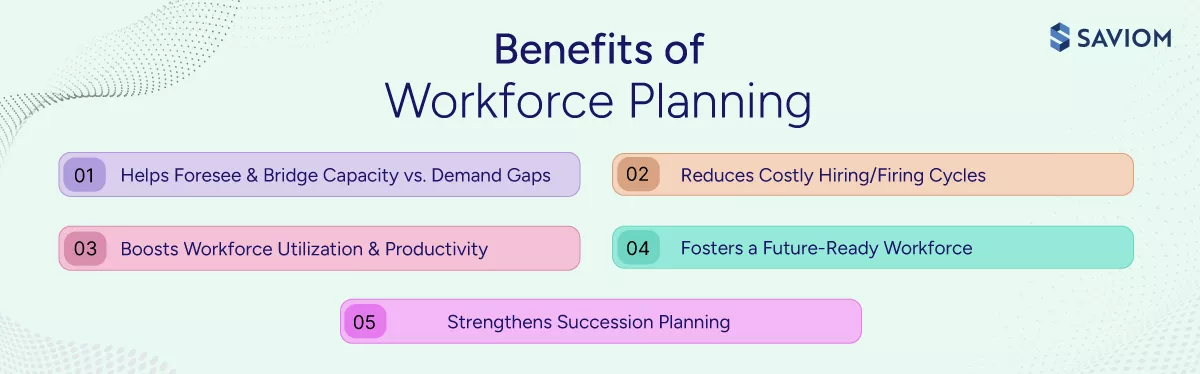
Helps Foresee and Bridge Capacity vs. Demand Gaps
Robust workforce planning enables organizations to forecast future workforce demand and compare it with available workforce capacity. This enables them to anticipate shortages or surpluses early. Accordingly, managers can take suitable measures to bridge the gaps, reduce last-minute firefighting, and build an optimized talent pool.
Read our blog to learn how to measure resource capacity and demand.
Reduces Costly Hiring/Firing Cycles
Proactive workforce planning helps firms distinguish between short-term and long-term workforce needs. By forecasting demand and assessing capacity early, managers can implement structured resourcing strategies instead of resorting to reactive decisions. This reduces expensive hiring/firing cycles and helps maintain a more stable workforce.
Boosts Workforce Utilization and Productivity
Effective workforce planning ensures employees are assigned to work that matches their skills and business priorities. This enables managers to prevent both over- and under-allocation of talent, enhance employee engagement, and ultimately enhance overall productivity.
Fosters a Future-Ready Workforce
Technological advancements and shifting market demands are rapidly reshaping skill requirements. By anticipating these changes early, firms can create structured learning pathways that prepare employees for future roles and build a future-ready, optimized workforce. This enables firms to stay agile in a fast-evolving market.
Explore how retraining/upskilling can help futureproof your workforce.
Strengthens Succession Planning for Critical Roles
Workforce planning enables organizations to identify high-potential talent early and develop them for leadership or specialized roles. By proactively preparing successors for critical positions, firms reduce dependency risks and ensure business continuity even when key employees transition to new roles, retire, or leave unexpectedly.
Now that we understand the benefits of workforce planning, let’s clarify related terms that are often confused with it, even though they serve distinct purposes.
Workforce Planning vs. HR Planning vs. Capacity Planning
Understanding distinctions between workforce planning, HR planning, and capacity planning helps clearly define each discipline. This prevents overlapping responsibilities and ensures organizations align talent strategy, people processes, and operational execution effectively.
Clarity in terminology prevents organizational confusion and overlapping ownership.
| Parameter | Workforce Planning | HR Planning | Capacity Planning |
|---|---|---|---|
| Primary Focus | Strategic alignment of talent with business goals | Employee lifecycle and HR processes | Balancing available resources with future demand |
| Core Purpose | Align workforce capabilities with future demand | Manage recruitment and employee processes | Create an optimized talent pool |
| Key Decisions | Hire vs. upskill, workforce mix, succession plans | Recruitment, onboarding, compensation, compliance | Who works on what, when, and at what utilization level |
| Data Used | Demand forecasts, sales pipeline, skills inventory, attrition trends | HR systems, employee records, payroll, policy data | Project plans, resource availability, utilization reports |
| Business Impact | Drives growth, resilience, and future readiness | Stable and compliant workforce operations | Improves delivery efficiency |
Effective workforce planning spans multiple planning horizons, each serving a distinct strategic and operational purpose. Let’s explore the various types of workforce planning.
Types of Workforce Planning
Different workforce planning horizons allow enterprises to translate long-term strategy into practical workforce actions while maintaining operational flexibility.
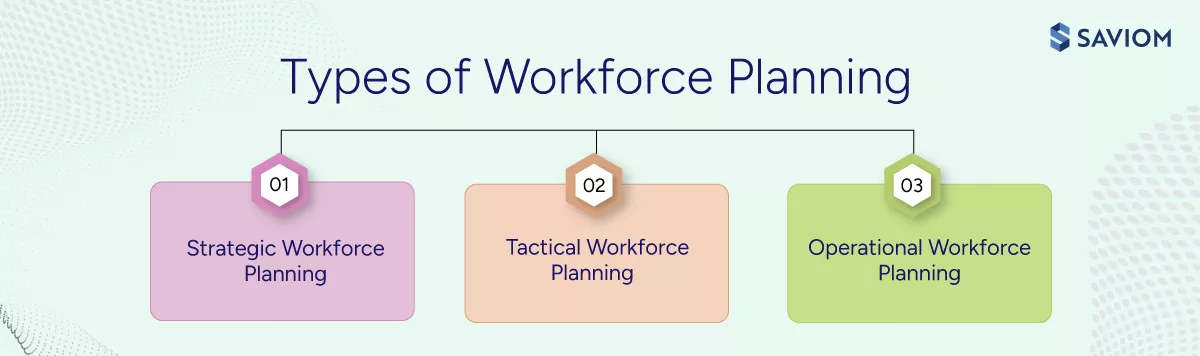
Strategic Workforce Planning
Strategic capacity planning is the process of planning workforce capacity for the long term, usually over the next few years. Organizations look at future business goals, expected growth, and the skills they will need later. This helps leaders decide whether to hire, train, or reorganize the workforce to stay future-ready and competitive.
Read our blog on strategic workforce planning.
Tactical Workforce Planning
Tactical workforce planning is the process of planning workforce capacity for the medium term, typically over the next few months to a year. Organizations interpret long-term business objectives and convert them into structured training, upskilling, and hiring plans. This helps managers ensure the right skills and capacity are available to meet upcoming project and business demands.
Operational Workforce Planning
Operational workforce planning is the process of managing workforce capacity for the short term, usually on a weekly, monthly, or quarterly basis. Organizations focus on day-to-day scheduling, workload balancing, and responding to changing demand and delivery priorities. This helps managers optimize employee utilization, meet delivery timelines, and ensure smooth execution of ongoing projects.
Learn more about operational workforce planning.
Effective workforce planning involves applying a structured process with clear, actionable steps. Read on:
How to Implement the Workforce Planning Process?
A structured workforce planning process helps organizations move from reactive staffing decisions to proactive workforce strategies that support sustainable growth and predictable delivery outcomes. Let’s take a look:
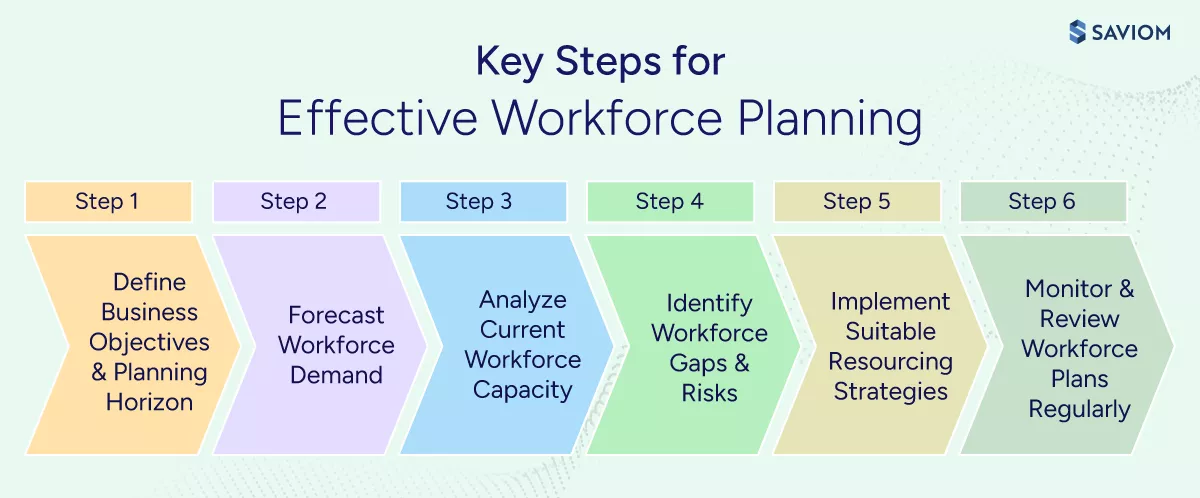
Step 1: Define Business Objectives and Planning Horizon
Begin by clearly identifying the business objectives driving workforce planning, such as growth initiatives, transformation programs, or operational priorities. Establish the planning horizon, strategic, tactical, or operational, to define the timeframe for workforce decisions. This ensures resource planning efforts are aligned with business direction and future goals.
Step 2: Forecast Workforce Demand
Assess future business plans, project pipelines, and delivery timelines to determine upcoming workforce needs. Identify the number of employees required, the skills needed, and the roles or seniority levels expected across different timeframes. This provides clarity on the type, quantity, and quality of future workforce demand.
Deep dive into resource forecasting to understand how it benefits enterprises.
Step 3: Analyze Current Workforce Capacity
Evaluate the current workforce by reviewing headcount, active allocations, bench strength, planned leaves, BAU commitments, and utilization levels. Assess existing skills and role distribution to understand the actual available capacity. This creates a realistic baseline before identifying any gaps.
Step 4: Identify Workforce Gaps and Risks
Compare current workforce capacity with projected project demand to identify any shortages or surpluses. Prioritize gaps based on business impact and urgency. This helps managers understand where intervention is required to ensure consistent project initiation and delivery.
Read our blog on workforce capacity planning.
Step 5: Implement Suitable Resourcing Strategies
In case of gaps, create targeted workforce strategies such as hiring, upskilling, reskilling, redeployment, and outsourcing initiatives. Evaluate different approaches based on cost, timelines, and strategic importance. The goal is to close identified gaps while maintaining workforce efficiency.
Step 6: Monitor and Review Workforce Plans Regularly
Track workforce plans using defined metrics and ongoing reviews to ensure alignment with changing business conditions. Regular monitoring helps identify deviations early and allows staffing adjustments as priorities evolve. Moreover, continuous evaluation keeps workforce planning relevant and effective.
Workforce demand forecasting and scenario planning form the foundation of effective workforce planning, enabling firms to anticipate future demand and prepare for uncertainty. Let’s explore how they work.
Workforce Demand Forecasting and Scenario Planning
Forecasting workforce demand reduces uncertainty and ensures enterprises make proactive workforce decisions rather than reacting to talent shortages after they impact delivery.
Workforce Demand Forecasting Methods
Workforce demand forecasting applies trend-, driver-, and scenario-based models to estimate future skill and capacity requirements.
- Trend-based models use historical hiring and utilization data to project future needs.
- Driver-based models align workforce demand with business metrics such as revenue targets and project pipelines.
- Scenario-based models test multiple outcomes to improve staff planning flexibility.
Scenario Planning for Uncertainty
Scenario planning complements workforce forecasting by modeling best-case, worst-case, and most-likely workforce outcomes. Rather than relying on a single static forecast, organizations test multiple assumptions to evaluate risk exposure and prepare contingency strategies.
This approach enables leaders to:
- Assess workforce strategies under varying business conditions
- Prepare for hiring freezes, rapid growth, or demand volatility
- Align workforce flexibility with the firm’s financial risk tolerance
Scenario Comparison Framework
The table below shows how workforce strategies can vary under different business growth scenarios.
| Scenario | Revenue Growth | Hiring Plan | Reskilling Investment | Contingent Workforce |
|---|---|---|---|---|
| Best Case | 25%+ | Accelerated hiring | Moderate | Low reliance |
| Most Likely | 15% | Balanced hiring | High | Moderate buffer |
| Worst Case | <5% | Hiring freeze + redeployment | High | High flexibility |
As business environments evolve, organizations are shifting from traditional role-based models toward skills-driven workforce strategies. Let’s understand.
Skills-Based Workforce Planning (The Shift from Roles to Skills)
As technology cycles accelerate and work becomes more cross-functional, skills intelligence is emerging as the foundation of modern workforce planning. Skills-based workforce planning involves organizations focusing on capabilities rather than static job roles to respond faster to evolving business needs. Let’s take a look.
Why Skills-Based Planning Matters
According to the World Economic Forum 2025 Future of Jobs Report, “44% of workers’ core skills will be disrupted or change within the next five years.”
Traditional job roles evolve faster than formal job descriptions can be updated, making role-based planning increasingly restrictive. A skills-based approach shifts the focus from fixed titles to adaptable capabilities, enabling organizations to:
- Increase workforce flexibility and internal mobility
- Respond faster to technological and market change
- Reduce dependency on reactive external hiring
- Build long-term workforce resilience
Building a Skills Matrix
A skills matrix defines core, adjacent, and emerging capabilities across the enterprise, creating a standardized framework for workforce planning and talent development. By establishing a shared skills framework, organizations can map capabilities consistently across teams, identify gaps, if any, and prioritize reskilling initiatives.
A typical skills matrix includes:
- Core domain expertise
- Technical or digital competencies
- Leadership and behavioural capabilities
- Emerging future skills
For example, an engineering firm may classify skills into structural design, BIM modeling, sustainability compliance, and emerging automation tools. This structured mapping improves workforce visibility and supports more accurate forecasting and succession planning.
Using Skills Data for Workforce Decisions
Skills data enables organizations to make workforce decisions based on verified capabilities rather than job titles alone. By maintaining a clear view of existing skills, proficiency levels, and adjacent capabilities, leaders can align talent supply with evolving business demand more accurately.
In practice, organizations use skills intelligence to:
- Match employees to projects based on required competencies and proficiency levels to improve delivery outcomes.
- Identify skill gaps by comparing current capabilities with future demand forecasts.
- Design targeted reskilling programs focused on closing high-priority capability gaps.
- Improve hiring precision by defining precise skill requirements rather than broad role descriptions.
- Support internal mobility by identifying adjacent skills that enable career transitions.
- Inform build-versus-buy decisions by evaluating whether to upskill existing talent or recruit externally.
For example, if workforce forecasts indicate rising demand for cloud architecture expertise, skills data can reveal whether the organization already has secondary capabilities, such as infrastructure engineers with cloud certifications who can be upskilled more cost-effectively than hiring externally.
By shifting decision-making from role-based assumptions to data-backed skill visibility, organizations improve deployment speed, reduce reactive hiring, and strengthen long-term workforce resilience.
Read our blog on skill development.
The next section focuses on common challenges in workforce planning and their solutions.
Common Workforce Planning Challenges (And How Enterprises Solve Them)
Understanding real-world workforce planning challenges helps managers avoid common pitfalls that undermine workforce planning strategies and prevent organizations from achieving predictable delivery outcomes.
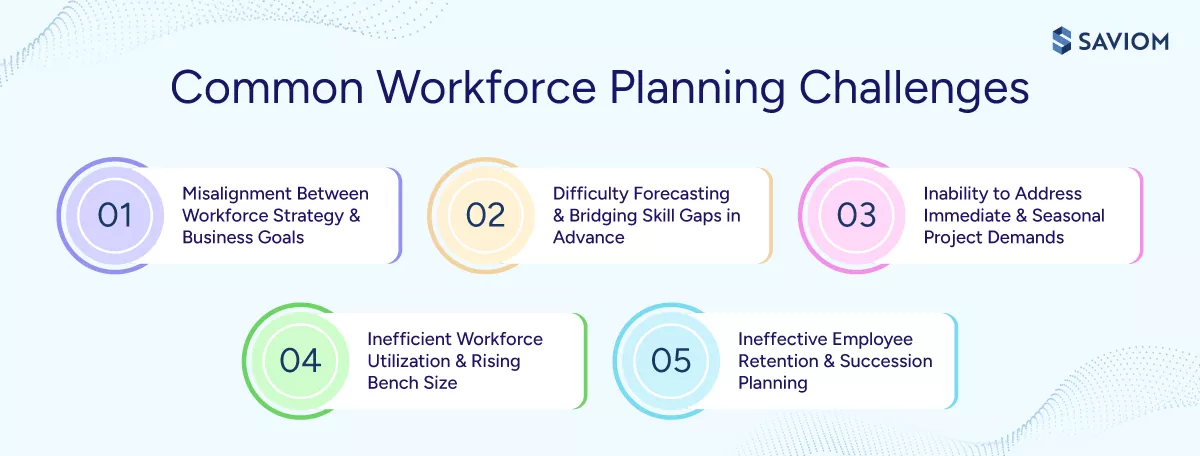
Misalignment Between Workforce Strategy and Business Goals
When workforce planning operates independently of corporate strategy, critical business initiatives face talent shortages while excess capacity accumulates in lower-priority areas. This misalignment delays execution, reduces ROI, and weakens the organization’s ability to respond to market changes.
How Enterprises Solve This
Enterprises align workforce plans with business priorities, financial goals, and project pipelines. Clear ownership across business, HR, and finance ensures talent decisions support long-term strategy.
Difficulty Forecasting and Bridging Skill Gaps in Advance
Due to limited visibility into upcoming projects and market demand, many organizations struggle to predict future skill requirements ahead of the curve. As a result, they identify skill gaps only after they begin affecting delivery performance, thereby leading to increased hiring costs and delayed project timelines.
How Enterprises Solve This
Organizations implement structured demand forecasting and move toward skills-based workforce planning. This helps them identify future gaps early and plan appropriate resourcing measures in advance to ensure seamless project completion.
Learn how to do effective demand planning.
Inability to Address Immediate and Seasonal Project Demands
A lack of proactive forecasting and planning often forces managers to recruit suboptimal or expensive resources at the last minute to meet urgent needs. This drives up resourcing costs unnecessarily. Thus, when demand subsides, companies are often compelled to downsize, resulting in a cycle of frequent hiring and layoffs.
How Enterprises Solve This
Modern enterprises use advanced resource forecasting to gain early visibility into short- and long-term talent requirements. By proactively securing the right mix of talent, they reduce recurring hiring/firing cycles and avoid cost overrun.
Inefficient Workforce Utilization and Rising Bench Size
Limited visibility into employee skills and task allocations often leaves capable talent underutilized while critical project needs remain unmet. Moreover, this lack of insight makes it difficult for organizations to redeploy talent effectively during demand shifts, resulting in a growing bench and reduced overall productivity.
How Enterprises Solve This
Organizations can address this by actively managing ramp-up and ramp-down cycles through accurate forecasting. This helps align people with high-value, billable work, redeploy talent quickly, reduce bench time, and optimize workforce utilization.
Understand how to minimize bench time in your firm.
Ineffective Employee Retention and Succession Planning
Intense market competition makes attracting and retaining employees increasingly difficult. When firms fail to provide clear career growth and competitive compensation, attrition rises. As experienced employees leave without prepared successors, it disrupts existing workflows and reduces workforce productivity.
How Enterprises Solve This
By implementing targeted training and development programs, firms can address critical skill gaps and create clear growth pathways. This improves employee engagement, reduces unplanned attrition, and strengthens internal talent readiness.
Read this eBook to learn how 5th gen resource management helps boost workforce visibility and optimization to gain a competitive edge.
Now, let’s review the key workforce planning metrics an organization must track.
Key Workforce Planning Metrics to Achieve Optimal Business Outcomes
Measuring workforce planning effectiveness ensures that organizations efficiently align workforce investments with strategic objectives. Let’s take a look.
Workforce Capacity Utilization Rate
Workforce capacity utilization measures the percentage of available employee capacity actively used on assigned tasks during a specific period. It helps assess how effectively the workforce is deployed to meet upcoming business demand. Low utilization indicates capacity wastage, while consistently high utilization may signal risk of overwork.
The formula to calculate the workforce capacity utilization rate is:
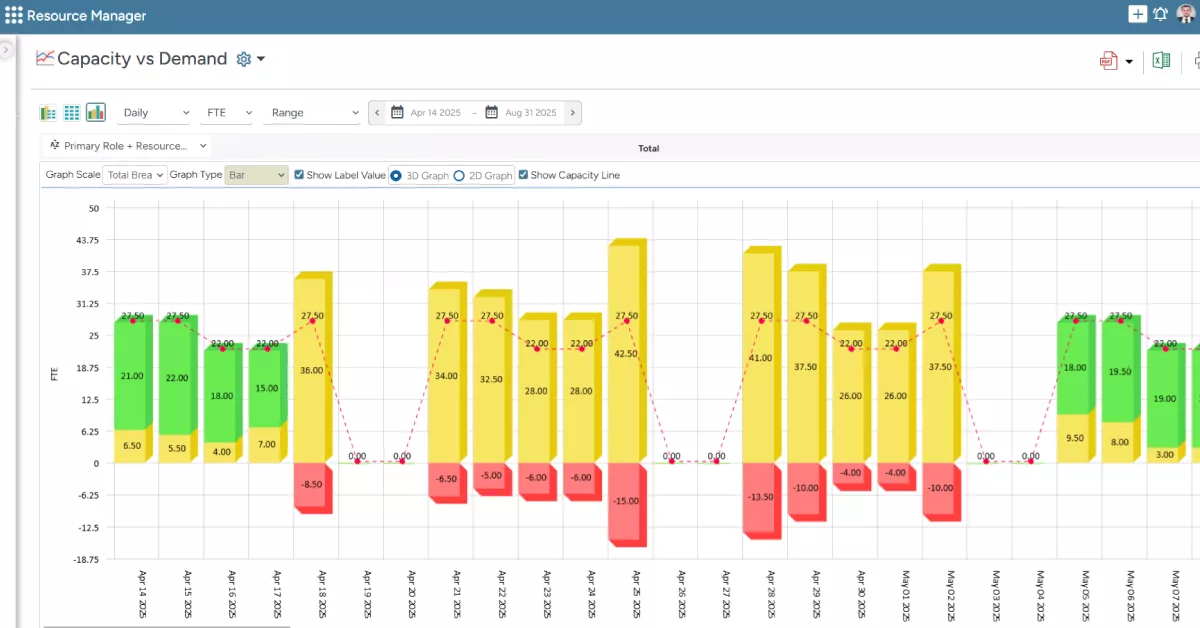 SAVIOM’s Capacity vs. Demand Graph enables managers to spot resource shortages and excesses, and take timely action to balance supply and demand.
Forecast vs. Actual Utilization
Forecast vs. actual utilization measures the variance between planned and actual employee utilization over a specific period. A significant gap indicates forecasting inaccuracies that can lead to resource overutilization or underutilization. Regular monitoring of this metric enables managers to improve workforce planning accuracy.
The formula to calculate the forecast vs. actual utilization is:
Workforce Forecast Accuracy
Workforce forecast accuracy measures the degree to which projected workforce demand matches actual employee capacity requirements over a specific period. Higher accuracy indicates effective workforce planning, while lower accuracy highlights gaps that may lead to reactive staffing decisions and operational disruptions.
The formula to calculate the workforce forecast accuracy is:
Deep dive into our blog about workforce management.
Skill Gap Index
The skill gap index measures the difference between the skills an organization requires and those currently available within its workforce. It highlights critical capability shortages and areas of expertise, enabling organizations to take proactive workforce planning actions and build a future-ready talent pool.
The formula to calculate the skill gap index is:
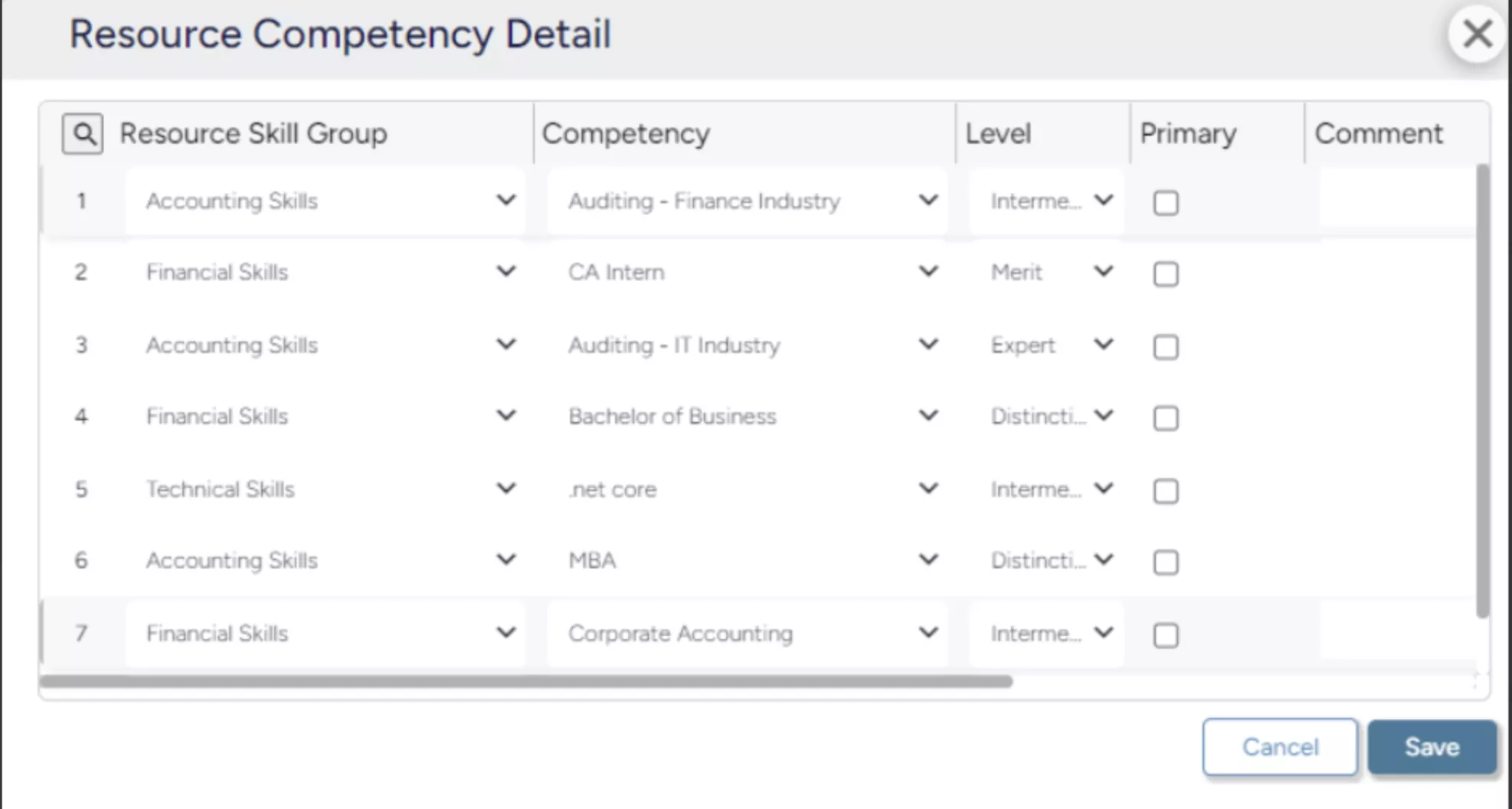 SAVIOM’s Competency Matrix enables managers to track skills, certifications, and proficiency levels, helping identify skill gaps and plan targeted reskilling initiatives.
Workforce Availability Rate
Workforce availability rate is the percentage of time an employee is available to perform productive work within a specific timeframe. It quantifies the portion of an employee’s total capacity that can be assigned to tasks, taking into account current commitments, scheduled leave, maintenance, and other organizational constraints.
The formula to calculate the workforce availability rate is:
Learn more about resource availability.
Strategic Utilization Rate
Strategic utilization measures the total time spent by an employee on the organization’s long-term, strategic projects. This metric provides visibility into how productively employees are aligned with the company’s strategic initiatives. By tracking it, managers can ensure that the workforce is actively focusing on activities that drive future growth.
The formula to calculate the strategic utilization rate is:
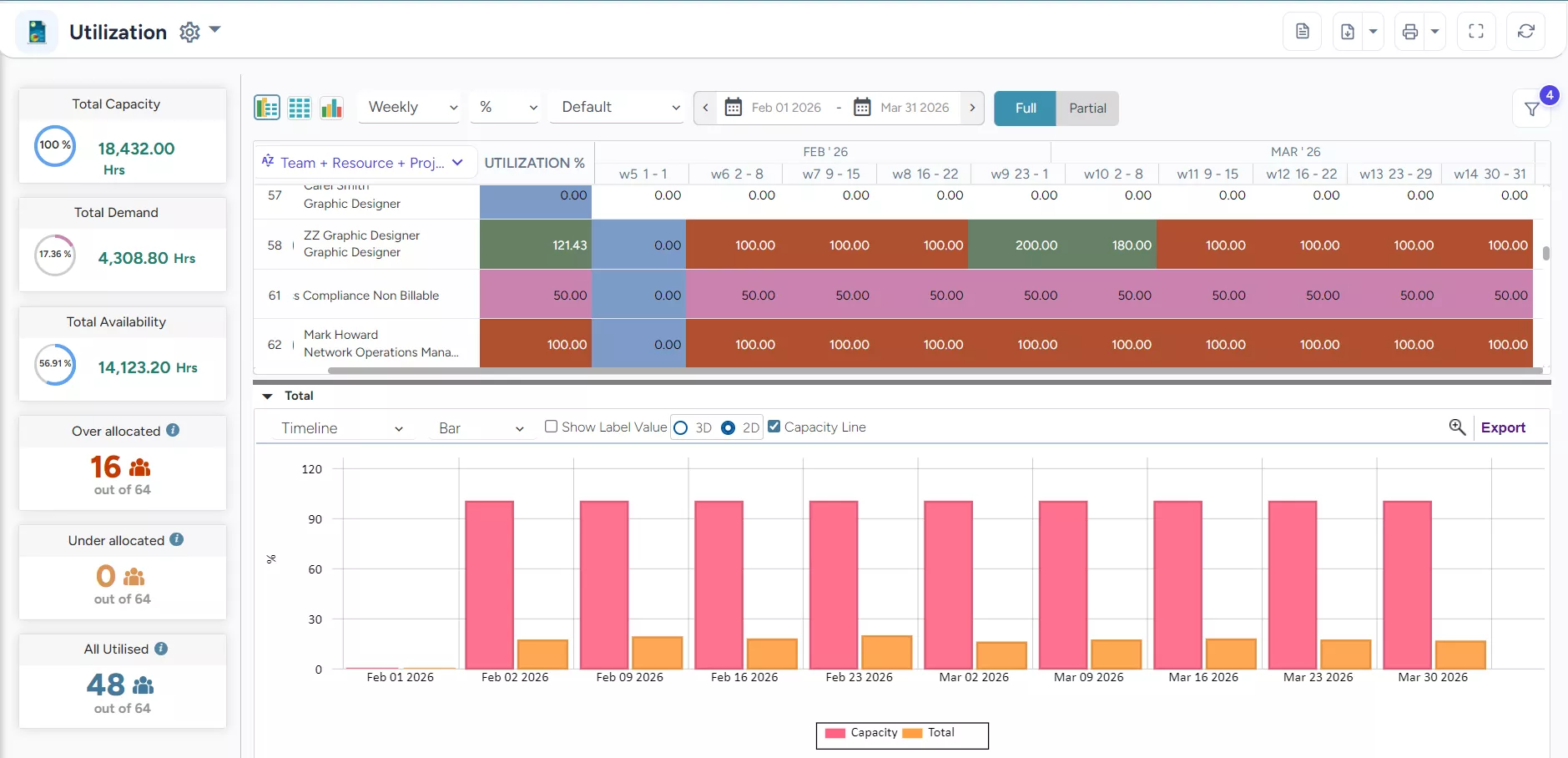 SAVIOM’s Utilization Report visualizes resource over- or underutilization using color-coded indicators, supporting data-driven decision-making.
Workforce Allocation Effectiveness
Workforce allocation effectiveness measures how appropriately a firm assigns its available people to tasks and projects to achieve optimal results with minimal waste. It reflects the firm’s ability to ensure that the right employees are allocated to the most suitable activities at the right time and at the right cost.
The formula to calculate the workforce allocation effectiveness is:
Read our blog on resource allocation.
Revenue per Employee
Revenue per employee is a metric that measures the revenue generated by each employee over a specific time period. It provides valuable insight into how effectively the organization leverages its workforce to achieve business goals and drive profitability.
The formula to calculate revenue per employee is:
Workforce Cost Variance
Workforce cost variance compares the forecasted workforce cost and the actual cost incurred over a specific period. A positive variance indicates adherence to the project budget, while a negative variance signals a cost overrun. By tracking this metric, firms can improve workforce cost forecasting accuracy and make better allocation decisions.
The formula to calculate the workforce cost variance is:
Read this blog to understand what cost overrun is and how to prevent it.
Employee Turnover Rate
The employee turnover rate is a key metric that measures the frequency at which employees leave an organization and are replaced within a specified period. It is typically shown as a percentage and provides critical insight into workforce stability and employee retention.
The formula to calculate the employee turnover rate is:
Technology powers scalable workforce planning through real-time visibility, workforce analytics, and data-driven decisions. Therefore, selecting the right tool becomes critical. Let’s explore how to evaluate your options.
Workforce Planning Tools: Core Capabilities and Considerations
The right workforce planning tools help organizations maintain visibility into workforce data and execute strategy effectively. Below are key parameters to consider when selecting the most suitable solution.
Core Capabilities of Workforce Planning Tools
Modern workforce planning platforms consolidate employee headcount, skills, capacity, utilization, and cost data into a unified platform. This centralized visibility enables more accurate workforce planning and forecasting.
Advanced solutions typically include:
- Integrated demand forecasting engines to model future workforce needs
- Workforce scenario planning modules to evaluate strategic alternatives
- Executive dashboards with real-time workforce insights
- Seamless integration with ERP, finance, and project portfolio management (PPM) systems to ensure data consistency
Together, these capabilities create a connected staff planning ecosystem that improves decision-making accuracy.
Role of Analytics and AI Capabilities
AI-driven analytics enhance forecast precision, detect emerging skill trends, and identify capacity gaps early. In addition, predictive algorithms can recommend corrective actions, enabling proactive workforce adjustments.
By embedding analytics into workforce planning, organizations can detect capacity gaps earlier, forecast skill demand more accurately, and make faster, data-backed allocation decisions.
Key Software Considerations: Build vs. Buy
Off-the-shelf solutions deliver faster deployment and proven best practices, while custom-built systems offer flexibility but require higher investment and ongoing maintenance.
Organizations should assess whether the solution can scale with workforce growth, integrate seamlessly with existing enterprise systems, help maintain cost efficiency, and achieve strong user adoption to ensure successful implementation.
Given below are real-world industry examples that demonstrate how workforce planning adapts to different operational contexts while supporting predictable delivery outcomes.
Industry Use Cases and Workforce Planning Examples
Understanding workforce planning becomes clearer when viewed through practical applications and real business scenarios. Let’s examine how organizations across industries apply these principles to achieve measurable results.
IT and Technology Firms
An IT services company struggled with rapid skill shifts and project-driven hiring spikes. They introduced skills-based workforce planning to forecast demand across technology stacks and compare it against available developers and architects across regions.
Impact: The firm redeployed internal talent proactively, launched targeted upskilling for emerging technologies, and hired strategically before project kick-offs, reducing delivery risk and avoiding reactive recruitment.
Explore how IT firms benefit from effective workforce planning.
AEC (Architecture, Engineering, and Construction) Firms
An engineering firm experienced workforce bottlenecks during later project phases due to poor phase-based talent planning. They analyzed workforce capacity at each phase of the project lifecycle, identifying when specific engineering roles would be underutilized or overstretched.
Impact: By adjusting project start timelines and aligning hiring and subcontracting with ramp-up phases, they reduced delays, minimized bench time, and improved phase-wise delivery predictability.
Professional Services and Consulting Firms
A global consulting firm faced fluctuating project demand, leading to uneven utilization and rising bench time. They implemented workforce planning to forecast demand 8–12 weeks in advance by role and skill set, comparing projected client work against available consultants.
Impact: Leaders gained early visibility into potential shortages and excess capacity, enabling proactive resource redeployment, advanced contractor onboarding, and improved billable utilization without last-minute staffing escalations.
Learn more about workforce planning in a professional services firm.
Manufacturing and Operations
A manufacturing firm struggled to align workforce capacity with fluctuating production demand, often resulting in increased overtime during peak periods and underutilized labor during slow cycles. They implemented workforce planning to forecast production needs, align labor with automation schedules, and optimize shift allocation across plants.
Impact: This enabled better workload distribution, reduced overtime costs, improved employee productivity, and ensured consistent production output despite demand variability.
Audit and Accounting Firms
An accounting firm faced seasonal capacity strain during audit and tax cycles, often relying heavily on overtime and temporary staff. They implemented scenario-based workforce forecasting months ahead of peak periods, comparing available capacity with projected workloads across offices.
Impact: This enabled balanced workload distribution, timely staffing adjustments, and reduced last-minute overtime pressure, thereby improving employee productivity and well-being.
Learn how to implement workforce planning in audit and accounting firms.
Healthcare and Pharma
A hospital network struggled with uneven specialist utilization and overbooking in high-demand departments. They adopted workforce forecasting to model patient demand by specialty and compare it against clinician availability and facility capacity.
Impact: With better visibility, they optimized allocation of specialists, planned procedures more realistically, reduced overbooking, and improved overall care delivery efficiency.
Use SAVIOM’s resource management software planner to identify, allocate, and optimize talent in real-time and ahead of the curve to futureproof your workforce. Book a Demo Today.
As workforce planning practices mature, organizations are increasingly looking beyond traditional models to prepare for future workforce challenges and opportunities.
Future of Workforce Planning (AI, Automation & Skills Intelligence)
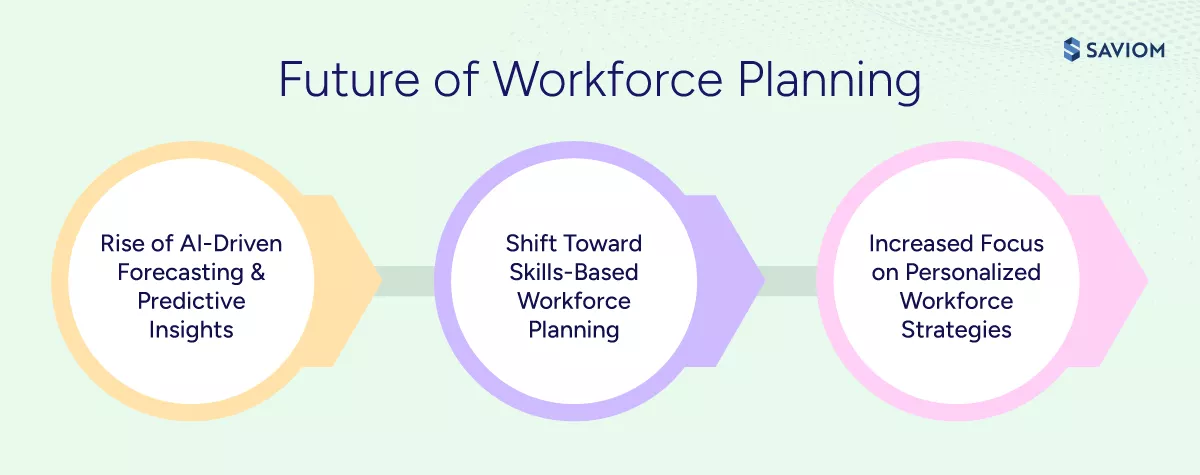
As business environments become more dynamic, firms are adopting advanced, data-driven approaches to anticipate workforce needs and respond faster to change. Given below are key trends redefining how enterprises plan, deploy, and develop talent. Let’s explore:
Rise of AI-Driven Forecasting and Predictive Insights
Workforce planning is shifting from static, periodic forecasting to continuous, AI-powered demand prediction. Predictive analytics increasingly identify emerging trends, workforce risks, and capacity gaps earlier, enabling more proactive and precise talent decisions. By relying on data-driven insights, organizations can improve staff planning accuracy and respond effectively to evolving business demands.
Shift Toward Skills-Based Workforce Planning
Enterprises are steadily moving away from rigid role hierarchies toward dynamic, skills-based frameworks. Skills intelligence is becoming central to workforce strategy, providing deeper visibility into capabilities and enabling faster reskilling, stronger internal mobility, and more flexible deployment. This shift reflects a broader trend toward adaptability and capability-driven planning.
Increased Focus on Personalized Workforce Strategies
Workforce planning is becoming increasingly granular, with a growing emphasis on individual skills, career pathways, and long-term development trajectories. Rather than relying on standardized role-based approaches, firms are adopting personalized workforce strategies to enhance employee engagement, strengthen retention, and improve overall organizational agility.
Conclusion
Workforce planning is no longer optional; it is foundational for long-term business profitability. By forecasting project requirements accurately and aligning skills strategically, organizations can consistently outperform competitors. By investing in modern workforce planning frameworks today, managers can build more agile and resilient organizations positioned for sustained growth and success.
Frequently Asked Questions (FAQs)
Workforce planning is the structured process of forecasting, analyzing, and ensuring the right talent is available to meet business objectives at the right time and at the optimal cost.
Effective workforce planning benefits organizations in the following ways:
1. Helps foresee and bridge capacity vs. demand gaps
2. Reduces costly hiring/firing cycles
3. Boosts workforce utilization and productivity
4. Fosters a future-ready workforce
5. Strengthens succession planning for critical roles
The different types of workforce planning include:
1. Strategic workforce planning
2. Tactical workforce planning
3. Operational workforce planning
A structured workforce planning process involves the following steps:
Step 1: Define business objectives and planning horizon
Step 2: Forecast workforce demand
Step 3: Analyze current workforce capacity
Step 4: Identify workforce gaps and risks
Step 5: Implement suitable workforce strategies
Step 6: Monitor and review workforce plans regularly
Key metrics used to measure workforce planning effectiveness include:
1. Workforce capacity utilization rate
2. Forecast vs. actual utilization
3. Workforce forecast accuracy
4. Skill gap index
5. Workforce availability rate
6. Strategic utilization rate
7. Workforce allocation effectiveness
8. Revenue per employee
9. Workforce cost variance
10. Employee turnover rate