

Introduction
Resource utilization plays a critical role in how effectively organizations achieve their strategic goals. While hiring skilled talent is essential for growth, the real challenge lies in ensuring those resources are used efficiently.
When work is assigned without considering employees’ skills, capacity, and existing workloads, organizations often experience resource imbalance, some teams become overburdened while others remain underutilized. Over time, this imbalance leads to employee burnout, disengagement, and unplanned attrition.
To sustain growth and maintain productivity, organizations must focus on optimizing how resources are deployed. Effective resource utilization enables leaders to balance workloads, maximize team potential, and improve overall business performance.
This guide outlines how leaders can manage resource utilization effectively, supporting growth without exhausting teams, while improving business productivity and boosting ROI.
What is Resource Utilization?
Resource utilization is the metric that measures how effectively available resources, such as people, skills, equipment, or tools, are used over a specific period. It compares actual productive work against total available capacity, helping organizations optimize workforce efficiency, balance workloads, and reduce resource wastage.
By tracking this metric, firms can identify team members who are overextended, at risk of burnout, and underutilized. These insights enable managers to optimize workload distribution, improve productive utilization, and maintain a healthy resource health index.
Explore this eBook to learn how a 5th gen resource management helps firms optimize resource utilization and improve delivery performance across projects.

Now that the definition of resource utilization is clear, let us look at the benefits of optimizing it.
Why Resource Utilization Directly Impacts Cost, Delivery & Profitability
Resource utilization is an incumbent metric in the project management landscape that facilitates managers to enhance productivity, avoid project delays, and optimize the resource health index to ensure consistent quality outcomes. Read on:
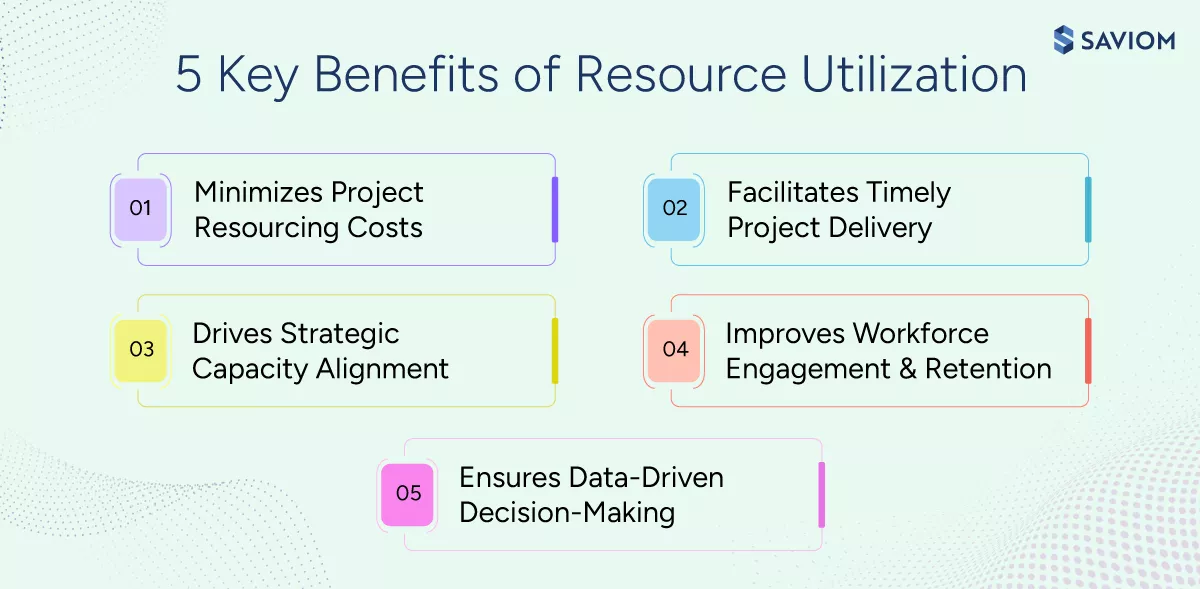
Minimizes Project Resourcing Costs
With effective resource utilization, firms ensure that existing capacity is competently deployed to projects before adding new resources. This reduces the need for urgent, expensive last-minute hiring. As a result, firms ensure that each team member is utilized to their full potential while preventing cost overruns.
Read our blog on cost reduction strategies.
Facilitates Timely Project Delivery
When resources are optimally utilized based on their skills, capacity, and role fit, teams remain productive and focused on the right work. This ensures tasks move forward without rework or skill-related delays, helping project milestones stay on track. Consequently, it ensures projects are completed successfully within planned timelines.
Drives Strategic Capacity Alignment
When critical resources are consistently overworked, it may signal capacity shortages, while sustained underutilization indicates excess capacity or inaccurate demand planning. These insights guide hiring, redeployment, and prioritization decisions, helping organizations align capacity with strategic business objectives.
Improves Workforce Engagement & Retention
Balanced project resource utilization ensures that employee skills are applied to the right work and maintains realistic workloads. This reduces burnout, avoids frustration, and keeps teams productively engaged. As a result, organizations lower voluntary attrition and retain critical institutional knowledge.
Explore effective strategies to enhance employee engagement in your organization.
Ensures Data-Driven Decision-Making
Reliable utilization data shows where and how resources are actually deployed across roles and projects. This helps leaders make faster staffing and prioritization decisions based on real workload conditions rather than assumptions. With clear visibility into resource over- and under-utilization, firms can make data-driven decisions to optimize workloads.
Use SAVIOM’s resource planner to optimize resources in real-time, reduce burnout, and futureproof your workforce. Book a Demo Today.

After understanding the benefits of resource utilization, it’s time to explore core metrics and formulas to accurately calculate and track utilization for data-driven decisions.
Core Metrics & Formulas for Calculating Resource Utilization
Clear metrics ensure utilization is correctly interpreted at the role, team, and portfolio levels. Let’s understand how to calculate resource utilization:
Resource Utilization Rate
The resource utilization rate is one of the critical metrics that measures the percentage of a resource’s available time spent on productive, value-adding tasks. It helps organizations evaluate how effectively resources are utilized against their total capacity, ultimately facilitating optimized workload distribution.
The formula to calculate the resource utilization rate is:
X 100
Billable Utilization Rate
Billable utilization measures the proportion of time spent on revenue-generating work. A low utilization rate highlights excessive time spent on non-billable work, while a high billable percentage shows effective resource deployment to revenue-generating tasks. Tracking this metric helps firms optimize employee productivity and maximize profit margins.
Learn how to maximize billable resource utilization in a professional services firm.
Forecast vs. Actual Utilization
Forecast vs. actual utilization measures the gap between projected resource usage and how capacity is actually consumed during delivery. A significant variance indicates inaccurate forecasting, which leads to either overutilization that drives burnout or underutilization that leads to capacity wastage and increased costs.
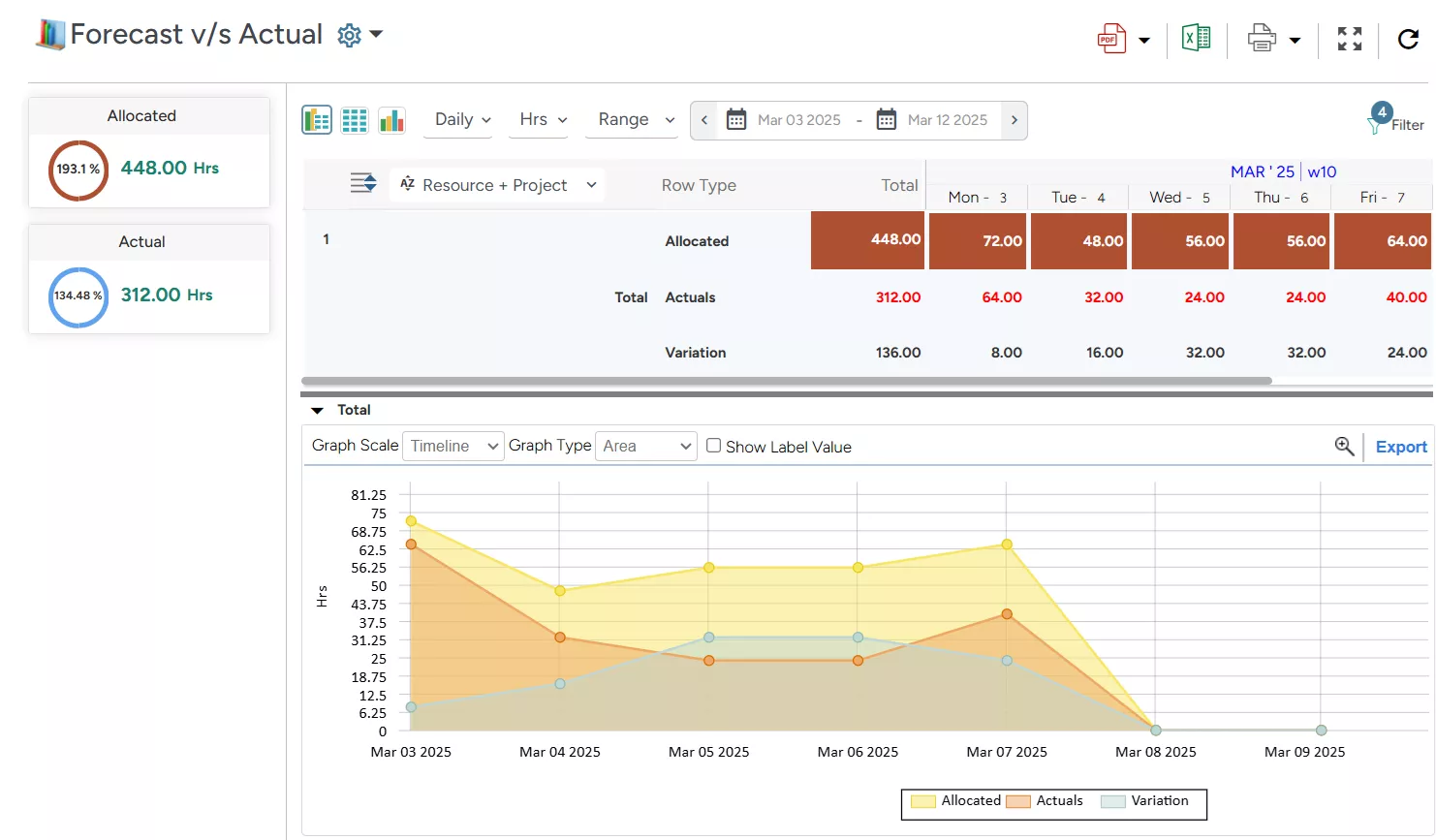 SAVIOM’s Forecast vs. Actual Report highlights estimated vs. actual time spent on tasks, helping managers identify variances and implement course-corrective measures.
Strategic Utilization
Strategic utilization measures how much time resources are spent on initiatives that support long-term business objectives. This metric provides visibility into how productively resources are aligned with the company’s strategic initiatives to drive future growth and strengthen competitive advantage.
Hours] X 100
Resource Capacity Utilization
Resource capacity utilization measures the percentage of available working capacity that is actively assigned to tasks or projects during a given period. Low utilization indicates underused capacity, while high utilization may increase burnout risk. This metric helps managers balance workloads and maximize resource efficiency.
Read our blog on resource capacity planning.
Productive Utilization
Productive utilization assesses how effectively resources are deployed across billable, strategic, and other high-value work. It ensures the workforce is focused on initiatives that deliver the greatest financial and operational impact, enabling organizations to maximize productivity while staying aligned with long-term business goals.
Project Hours) / Total Available Hours] X 100
Skill Utilization
Skill utilization measures how effectively employees’ competencies align with allocated work. It compares available skills with actual skill-based demand across assignments. This metric supports better resource allocation decisions, targeted retraining/upskilling, and workforce development planning based on future demand patterns.
Capacity Hours) X 100
Asset Utilization
Asset utilization measures how effectively physical or digital assets are used relative to their operating capacity. Low utilization increases cost per output, while high utilization may increase maintenance costs. This metric supports more accurate capacity planning, maintenance scheduling, and capital expenditure decisions across the firm.
Time) X 100
Now that we know what the resource utilization metrics are and how to calculate them, let’s understand what a good utilization rate is.
What is a Good Resource Utilization Rate? (Benchmarks by Industry)
A “good” utilization rate depends on industry context; pushing all teams toward the same utilization targets ignores differences in work intensity, regulatory constraints, and the need for innovation buffers.
The benchmarks below outline typical utilization ranges across industries. Take a look.
Information Technology (IT) Industry
In the IT industry, sustainable utilization typically ranges from 75% to 80%, depending on role complexity and delivery models. This allows teams enough time to learn, refactor , and resolve technical issues without rushing delivery.
Agile and product teams especially need buffer capacity to maintain a steady flow and protect code quality. When utilization consistently exceeds 80%, defect rates and delivery volatility tend to rise.
Explore practical strategies to optimize resources in the IT industry.
Professional Services Organizations
In professional services firms, billable utilization typically ranges between 70% and 85% because revenue depends on productive client hours. Higher utilization improves short-term margins but steadily increases workload pressure on delivery teams.
When teams operate near the upper limit for extended periods, burnout and voluntary attrition rise, over time, this disrupts client continuity and weakens long-term profitability.
Architecture, Engineering & Construction (AEC)
In AEC organizations, utilization usually ranges from 75% to 90% and varies across project phases. Execution stages require higher utilization, while design and planning need more coordination and review.
Maintaining high utilization across all phases increases rework and regulatory compliance risks. It also leads to more disputes, rework, and cost overruns caused by design and execution defects.
Audit, Accounting & Legal Industry
In audit, accounting, and legal firms, utilization typically targets 75% to 85%, driven by regulatory deadlines and financial reporting cycles. As a result, workloads spike sharply during peak seasons rather than remaining evenly distributed throughout the year.
Sustained peak workloads increase stress and strain on workforce capacity over time. This weakens long-term workforce sustainability and leads to higher unplanned attrition in critical professional roles.
Learn how to maximize billable resource utilization in an audit and accounting firm.
Healthcare & Pharmacy Organizations
Utilization in healthcare and pharmacy typically ranges between 60% and 75%, shaped by patient safety standards, regulatory requirements, and the cognitive intensity of clinical work.
When utilization remains consistently high, fatigue and error rates increase, directly affecting patient outcomes and regulatory compliance. Maintaining optimum utilization targets helps protect workforce well-being and sustain long-term operational stability.
Having explored the various benchmarks across industries, let’s now look at how resource utilization differs from resource allocation and capacity planning.
Resource Utilization vs. Resource Allocation vs. Capacity Planning
Understanding the differences between utilization, allocation, and capacity planning is critical to understand their criticality in the resource management lifecycle. The table below clarifies how these disciplines differ in purpose, ownership, and business impact.
| Parameter | Resource Allocation | Capacity Planning | Resource Utilization |
|---|---|---|---|
| Core Question | Who should work on which tasks, and when? | Do we have enough capacity to meet demand? | How much of our available capacity is being used? |
| Primary Focus | Assigning tasks and roles | Balancing supply with forecasted demand | Tracking actual capacity consumption |
| Key Inputs | Schedules and approved assignments | Forecasted demand, skills, and available capacity | Timesheets, system logs, and activity data |
| Key Outputs | Workload and staffing plans | Hiring, redeployment, or sourcing decisions | Utilization and workload metrics |
| Risks if Ignored | Role conflicts and overallocation | Structural skill or capacity shortages | Burnout from overload or losses from idle time |
| Business Impact | Ensures short-term delivery feasibility | Supports long-term scalability and growth | Validates whether plans are working in practice |
| Best Used When | Assigning work to active initiatives | Committing to future projects or contracts | Monitoring delivery and workforce health |
Now that the key concepts are clear, let’s explore best practices to improve resource utilization, boost employee productivity, and strengthen operational efficiency.
Best Practices for Improving Resource Utilization in Your Business
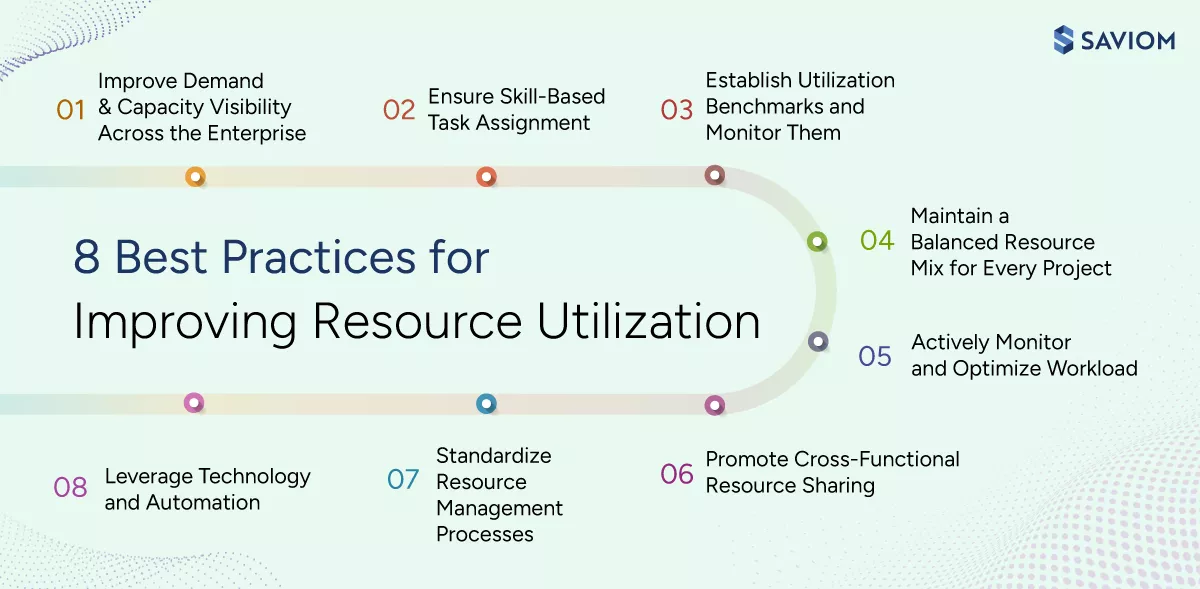
Project or resource managers can follow a systematic approach or some of the best strategies to optimize each resource’s utilization and maintain their health index.
Here is a walk-through of some of the most critical ones:
Improve Demand & Capacity Visibility Across the Enterprise
Consolidate demand, capacity, and skills data into a single enterprise-wide view to remove resource planning blind spots and reduce conflicting allocation decisions across teams. With real-time visibility into workloads, future demand, and available capacity, leaders can act before risks escalate rather than react after delays occur.
Ensure Skill-Based Task Assignment
As per the Gallup Q12 engagement survey, “Aligning work with employee skills drives 11% higher profitability, and cuts turnover by 30%.”
Managers must assign work based on skill fit rather than simple availability to improve output quality and reduce rework, especially on complex or specialized initiatives. Skill-based resource allocation also strengthens employee engagement by supporting role clarity and ensuring seamless project delivery.
Read our blog on resource allocation.
Establish Utilization Benchmarks & Monitor Them
Set realistic utilization benchmarks that account for BAU work, internal initiatives, training, and collaboration rather than assuming all time is billable or project-based. Monitor benchmarks regularly against actual utilization trends to identify instances of resource over- or underutilization and take corrective actions in advance.
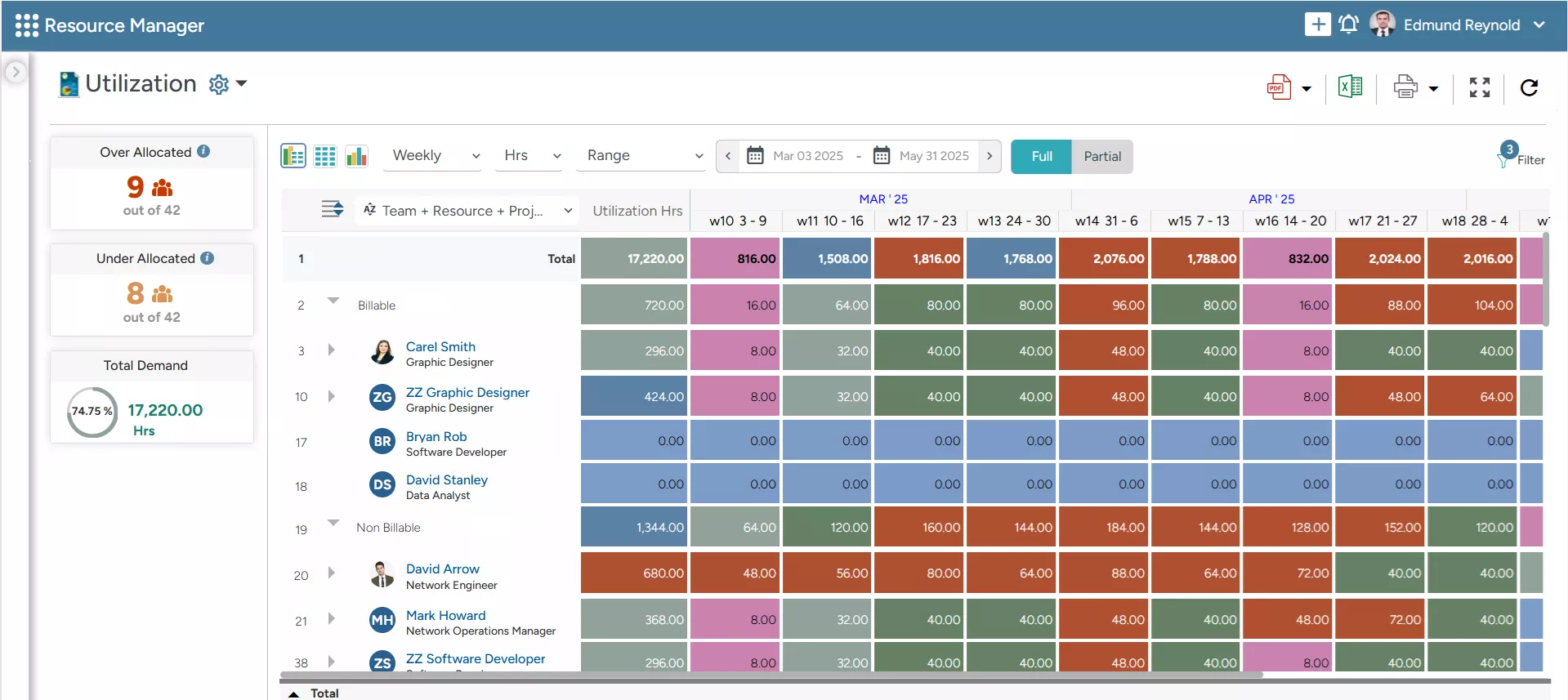 SAVIOM’s Color-Coded Heatmap highlights the real-time resource utilization levels, helping managers identify imbalances and optimize productive utilization.
Maintain a Balanced Resource Mix for Every Project
Maintain the right blend of junior, senior, local, global, permanent, and contingent talent to ensure optimal workload distribution. This prevents specialized resources from being overloaded with routine tasks and allows them to focus on critical work. A balanced mix also helps teams absorb demand spikes without sustained strain on core staff, keeping resource utilization optimized and delivery predictable.
Actively Monitor & Optimize Workload
Regularly review workloads and task fit to ensure junior staff are not overstretched while critical specialists are not tied up with routine BAU work. This boosts employee engagement, reduces burnout and errors, and helps maintain healthy utilization levels and sustained productivity.
Understand what resource optimization is and how it can benefit your business.
Promote Cross-Functional Resource Sharing
Enable resource sharing across teams and departments so underutilized resources can support active projects rather than remain on the bench. This also promotes skill development and knowledge sharing, making it easier to deploy the same resources across multiple initiatives and maintain balanced utilization.
Standardize Resource Management Processes
Establish a formal process for how managers forecast, identify, and assign the right skills to the right tasks to optimize resource utilization. Following consistent, resource-centric workflows enables teams to distribute staff across multiple projects without overloading or underutilizing capacity, supporting balanced workload distribution.
Learn more about resource management.
Leverage Technology & Automation
Use a robust resource management tool to streamline forecasting, scheduling, and utilization tracking across the enterprise. Also, ensure it has built-in workflows to handle repetitive resource planning steps, reduce spreadsheet dependency, and minimize manual intervention for faster, more consistent resourcing decisions.
Having understood the best practices of resource utilization in project management, let’s shift our focus to robust techniques that help improve the process.
Advanced Techniques: Heatmaps & Scenario-Based Utilization Forecasting
Advanced visual reports and modeling techniques help leaders identify utilization risks early and take timely, data-driven corrective actions. The following section shows how.
Utilization Heatmaps
Resource utilization heatmaps highlight under- and over-utilization across roles, teams, and locations at a glance. This allows managers to quickly identify various utilization-centric bottlenecks and take timely corrective actions to optimize utilization levels and boost employee productivity.
Learn how to build and analyze a resource utilization report.
Scenario-Based Forecasting
According to GoodFirms’ survey, “34.2% of companies use scenario planning to improve forecasting accuracy.”
Managers can model scope changes, timeline shifts, or hiring limits to see how utilization and workload distribution will change. This allows teams to rebalance work, add resources, or adjust priorities to avoid over- or underutilization. It also helps assess whether the current workforce can handle upcoming work without requiring additional hiring.
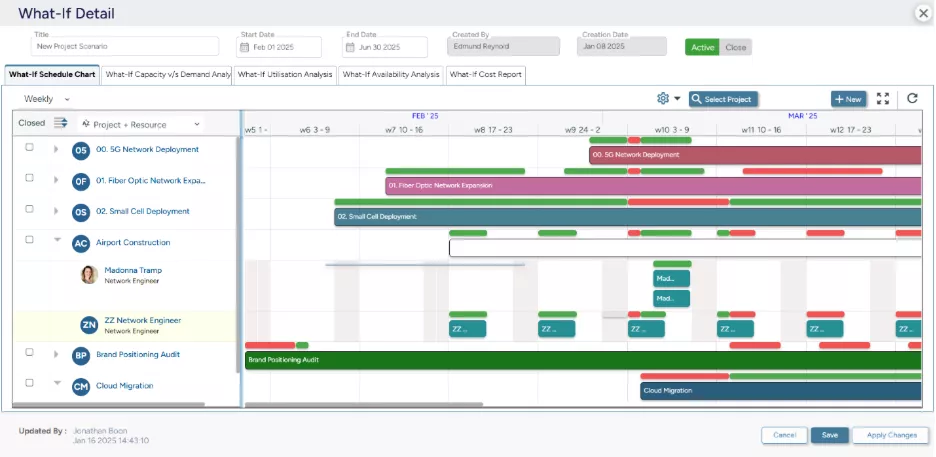 SAVIOM’s Scenario Modeling functionality allows managers to simulate and test multiple workforce scenarios in a sandbox environment.
The Hidden Risks of Over-Utilization: Burnout, Attrition & Quality Loss
High utilization may look efficient, but when sustained, it leads to burnout, quality issues, and unplanned attrition. The following points explain how these pressures translate into day-to-day productivity and delivery challenges.
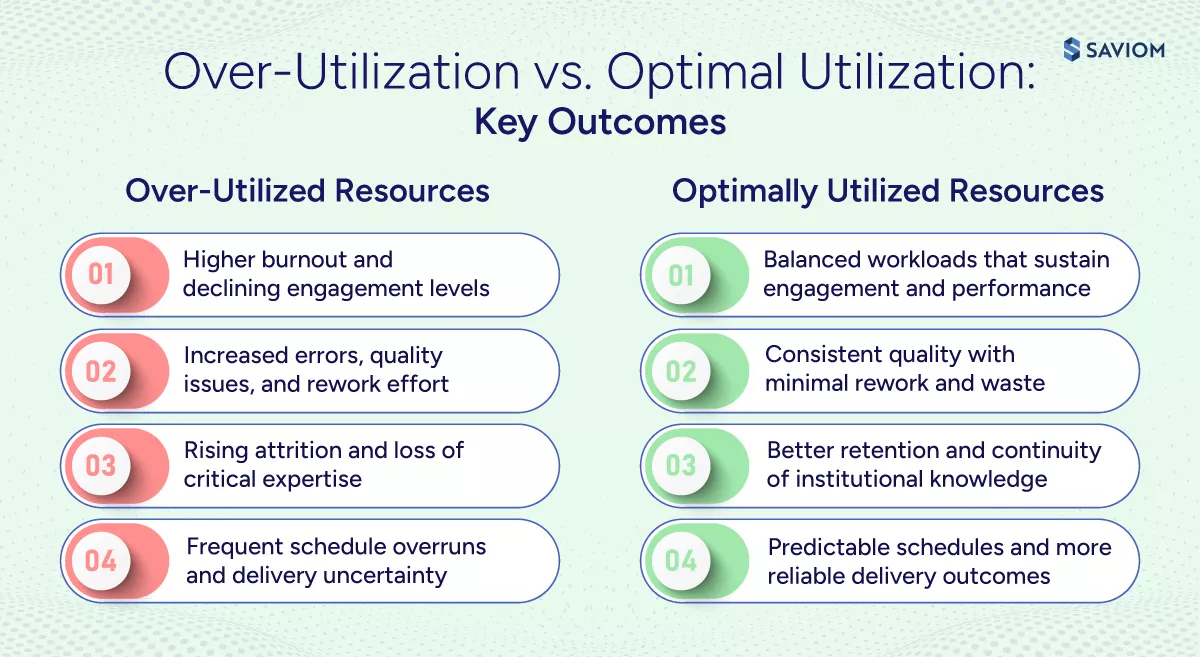
Increases Employee Burnout & Disengagement
According to a study by Gallup, “Burned-out employees are 2.6 times more likely to be actively seeking a different job.”
When resources work beyond their planned capacity for extended periods, it increases stress, hampers their focus, and tasks take longer to complete. Furthermore, as work piles up, handoffs get delayed, and teams struggle to keep pace with incoming requests. This pressure reduces productive output and eventually leads to burnout and disengagement.
Learn how to boost employee engagement in your firm.
Reduced Quality & Rework Costs
Excessive workload pressure increases the likelihood of missed details and compliance gaps, leading to higher rework and client dissatisfaction. Teams then spend more time fixing issues rather than completing planned work , thereby inflating delivery costs and creating a downward cycle in which a growing workload further weakens delivery efficiency.
High Attrition & Knowledge Loss
Consistent overutilization of critical resources creates workload pressure that becomes difficult to sustain over long periods. This increases disengagement and the likelihood that experienced employees will exit high-stress roles. Furthermore, replacing them takes time and weakens institutional knowledge, impacting delivery success.
Explore strategies to combat unplanned attrition in a professional services firm.
Unpredictable Delivery Timelines
When teams are already operating at full capacity, even small scope changes or unexpected issues push schedules off track. With no buffer to absorb disruptions, delays quickly cascade across dependent tasks and projects. Over time, this makes delivery timelines less predictable and weakens confidence in delivery commitments.
How to Optimize Resource Utilization? A Step-by-Step Framework
A structured optimization framework helps organizations move from reactive workload management to data-driven workforce optimization. Here are the steps to create a practical framework.
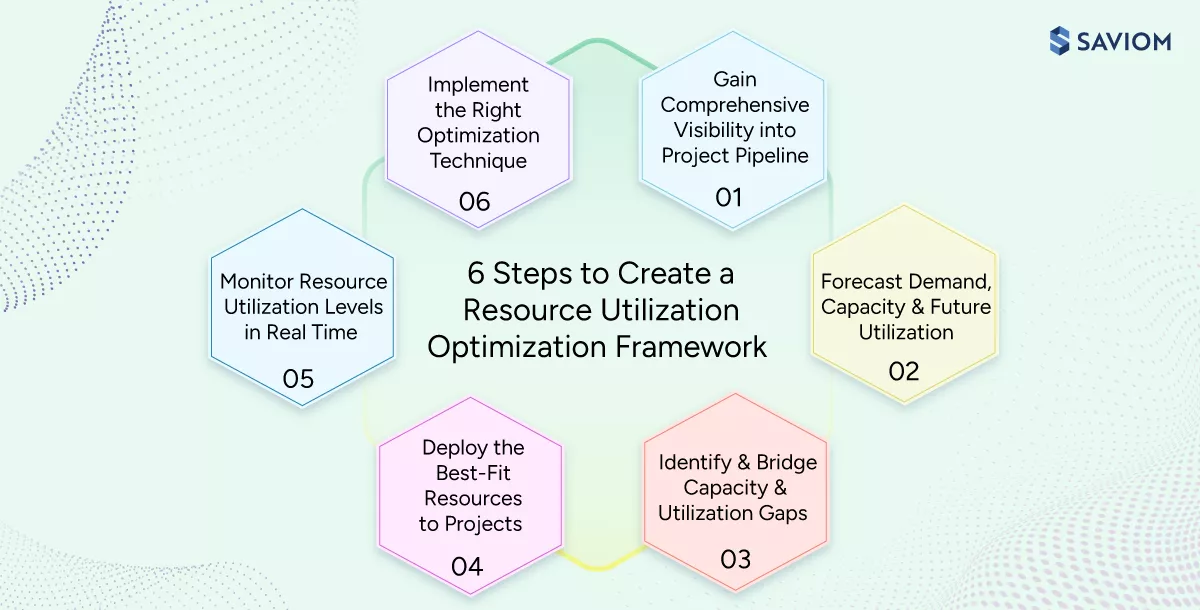
Gain Comprehensive Visibility into Project Pipeline
Start by consolidating all proposed, approved, and approval-stage initiatives. This helps assess what work is likely to enter the execution phase, along with its priority, timelines, and skill needs. With early pipeline visibility, organizations can anticipate demand and plan capacity before delivery commitments are finalized.
Forecast Demand, Capacity & Future Utilization
Secondly, estimate future utilization by aligning current capacity across roles, skills, and locations with forecasted demand. Additionally, factor in BAU work, planned leave, training, etc., to avoid assuming full availability. This shows where workload pressure is likely to increase or ease over time, supporting informed resourcing decisions.
Read our blog on resource forecasting.
Identify and Bridge Capacity & Utilization Gaps
Once future utilization trends are clear, analyze shortages and surpluses at the role and skill level instead of relying on high-level headcount views. This helps identify demand gaps early, and firms can then take necessary measures, such as targeted upskilling, hiring, etc., to keep projects on track.
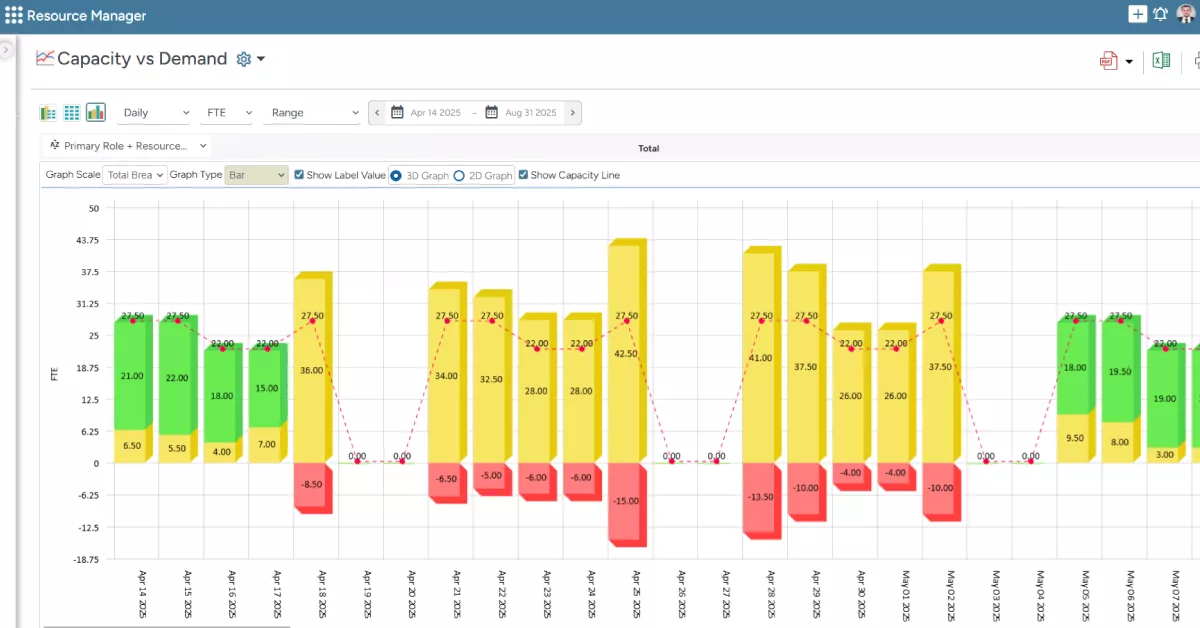 SAVIOM’s Capacity vs. Demand Graph enables managers to spot resource shortages and excesses, and take timely action to balance supply and demand.
Deploy the Best-Fit Resources to Projects
In this step, assign work based on skills and experience, not just immediate availability. When the right people work on the right tasks, output quality improves, and teams remain productive. This also helps distribute effort more evenly, improves the resource health index, and boosts delivery outcomes.
Monitor Resource Utilization Levels in Real Time
After deploying resources, track utilization and workload continuously to detect over- or under-utilization early. In the event of any deviations, managers can take timely corrective action to maintain workforce productivity, ensure consistent delivery performance, and sustain employee morale.
Learn how to effectively track resource utilization.
Implement the Right Optimization Technique
Lastly, apply the appropriate resource-optimization technique to keep workloads balanced without affecting delivery timelines. Apply resource smoothing when timelines are fixed, but workloads can be optimized by pulling in additional resources. Conversely, use resource leveling when there are resource shortages, and adjust project start and end dates to prevent overallocation.
AI and predictive analytics are effectively optimizing project resource utilization. Let us understand how.
Future Trends: AI & Predictive Analytics in Resource Utilization
Advanced analytics is reshaping how organizations anticipate and respond to utilization risks. Let’s take a look at some future trends of AI and predictive analytics:
Predictive Utilization Forecasting
Predictive forecasting involves analyzing historical workloads, seasonality, and demand patterns to estimate future employee utilization across roles and skills. This improves forecast accuracy and reduces last-minute firefighting for competent resources. As a result, firms can commit to delivery with greater confidence.
AI-Driven Allocation Recommendations
AI-driven recommendations evaluate employee skills, availability, cost, and current workload to suggest suitable resource allocations. This helps teams place the right people on the right projects or tasks without relying on manual judgment. As a result, organizations achieve better workload distribution, improve resource utilization, and deliver more consistent outcomes.
Early Risk Detection
AI continuously monitors utilization patterns to flag early signs of resource over- and underutilization. This gives leaders advance visibility into potential delivery risks and workload stress before employee performance is affected. With earlier insights, teams can rebalance work in real time rather than react after issues escalate.
Strategic Impact of AI-Enabled Resource Utilization Management
AI analyzes upcoming demand, current capacity, and workload patterns to surface utilization risks before they impact operational efficiency. This allows leaders to adjust resource allocations and staffing plans earlier, reduce last-minute resourcing decisions, and improve delivery performance.
Next, let us look at common project resource utilization mistakes and how to address them.
Common Resource Utilization Mistakes & How to Avoid Them
Even organizations with the right utilization tools can still struggle to manage utilization effectively. Given below are common mistakes that consistently lead to uneven workload distribution and missed project timelines. Take a look.
Misinterpreting High Utilization as High Productivity
The mistake: Organizations that treat 90–100% utilization as a sign of success assume that more hours worked equals higher productivity. But in reality, sustained overutilization increases employee burnout, execution errors, and delivery risk.
How to avoid it:
- Define optimal utilization thresholds by role and work type.
- Include buffers for collaboration, learning, and unplanned work.
- Measure delivery outcomes alongside utilization.
Explore practical strategies to combat resource overutilization.
Managing Resource Utilization in Organizational Silos
The mistake: Firms often optimize utilization within teams without considering enterprise-wide priorities and cross-functional dependencies. As a result, critical initiatives may be under-resourced while low-priority work consumes scarce capacity.
How to avoid it:
- Establish enterprise-wide visibility into capacity and demand.
- Enable cross-functional resource sharing.
- Apply standardized prioritization criteria across portfolios.
Reliance on Manual & Fragmented Tracking Methods
The mistake: Many organizations still rely on spreadsheets and disconnected systems, resulting in inconsistent and outdated utilization data. This creates a lack of visibility into resource utilization, leading to burnout and unplanned attrition.
How to avoid it:
- Centralize resource data in a single planning platform.
- Automate utilization reporting.
- Provide real-time dashboards to all stakeholders.
Read this blog to understand why you should not rely on spreadsheets.
Excluding Non-Project Work from Capacity Calculations
The mistake: Managers may assume that all available time and resources can be allocated to revenue-generating work without considering the time spent on project meetings and other BAU activities.
How to avoid it:
- Account for administrative, operational, and support activities.
- Calculate the realistic available capacity.
- Revalidate assumptions regularly.
Failing to Align Utilization with Strategic Priorities
The mistake: Organizations may achieve high utilization while deploying resources on low-priority or lower-value work. This misalignment diverts limited capacity away from critical initiatives that support growth and competitive advantage.
How to avoid it:
- Rank initiatives by strategic and financial impact.
- Actively stop or defer low-priority work.
- Align staffing decisions with portfolio objectives.
Explore steps to optimize resource utilization across your organization.
Evaluating Utilization Metrics Without Context
The mistake: Organizations often review utilization metrics without understanding the factors behind them. Without accounting for demand variability, resource availability, etc., these numbers provide limited insight and fail to show where teams are truly overloaded or underutilized, impacting delivery outcomes.
How to avoid it:
- Combine utilization with delivery and quality metrics.
- Monitor planned versus actual effort.
- Analyze trends rather than isolated values.
Conclusion
Resource utilization is not about keeping everyone busy; it is about ensuring capacity is invested in the right work, at the right time, and at the correct cost. When measured and managed correctly, utilization becomes a powerful signal for delivery risk, cost efficiency, and workforce health.
Organizations that succeed in maintaining optimal resource utilization levels experience high employee engagement, consistent project delivery, and higher ROI.
Frequently Asked Questions (FAQs)
Resource utilization measures how effectively available resources, such as people, skills, equipment, or tools, are used over a given period. By comparing actual work performed to total available capacity, organizations can improve efficiency, balance workloads, and minimize wasted resources.
The benefits of effectively optimizing resource utilization are:
1. Minimizes Project Resourcing costs
2. Facilitates Timely Project Delivery
3. Drives Strategic Capacity Alignment
4. Improves Workforce Engagement & Retention
5. Ensures Data-Driven Decision-Making
The key metrics for calculating resource utilization include:
1. Standard Resource Utilization Formula
2. Billable Utilization Rate
3. Resource Capacity Utilization
4. Actual vs. Planned Utilization
5. Strategic Utilization
6. Productive Utilization
7. Skill Utilization
8. Asset Utilization
The following are the best practices for optimizing resource allocation:
1. Improve Demand & Capacity Visibility across the Enterprise
2. Ensure Skill-Based Task Assignment
3. Establish Utilization Benchmarks & Monitor them
4. Maintain a Balanced Resource Mix for Every project
5. Actively Monitor & Optimize Workload
6. Promote Cross-Functional Resource Sharing
7. Standardize Resource Management Processes
8. Leverage Technology and Automation
To create a practical resource utilization framework, follow these steps:
1. Gain Comprehensive Visibility into the Project Pipeline
2. Forecast Demand, Capacity & Future Utilization
3. Identify and Bridge Capacity & Utilization Gaps
4. Deploy the Best-Fit Resources to Projects
5. Monitor Resource Utilization Levels in Real-Time
6. Implement the Right Optimization Technique
The common resource utilization mistakes are:
1. Misinterpreting High Utilization as High Productivity
2. Managing Resource Utilization in Organizational Silos
3. Reliance on Manual & Fragmented Tracking Methods
4. Excluding Non-Project Work from Capacity Calculations
5. Failing to Align Utilization with Strategic Priorities
6. Evaluating Utilization Metrics without Context