

Introduction
Do you often struggle to predict future project demand accurately and ensure the right skills are available when projects begin? For many businesses, resource capacity planning challenges arise when firms fail to align available capacity with changing project demand, leading to resource shortages, employee burnout, subpar deliverables, etc.
Addressing these challenges early allows organizations to move from constant firefighting to deliberate resource planning. It helps improve resource utilization, reduce costly last-minute firefighting, and deliver project commitments with confidence.
This blog explores the most critical resource capacity planning issues organizations face and outlines practical ways to overcome them and drive stronger business outcomes.
What are Resource Capacity Planning Challenges?
Resource capacity planning challenges refer to the difficulties organizations face in aligning project demand with available resources based on skills, cost, and capacity. These challenges arise when enterprises lack centralized visibility into project pipelines, resource availability, and the skills required to meet delivery commitments.
Over time, these challenges affect how organizations decide which projects to take up and when. Additionally, without clarity on available capacity and required skills, leaders risk over- or under-committing, leading to project delays, inflated costs, reduced productivity, and missed business opportunities.
Now that we have defined the resource capacity planning challenges, the next step is to examine the key metrics that help identify them early.
Metrics That Reveal Resource Capacity Planning Challenges Early
Tracking the right resource metrics helps organizations identify capacity management challenges early, before they escalate into delivery and execution risks. Let us take a look at these KPIs:
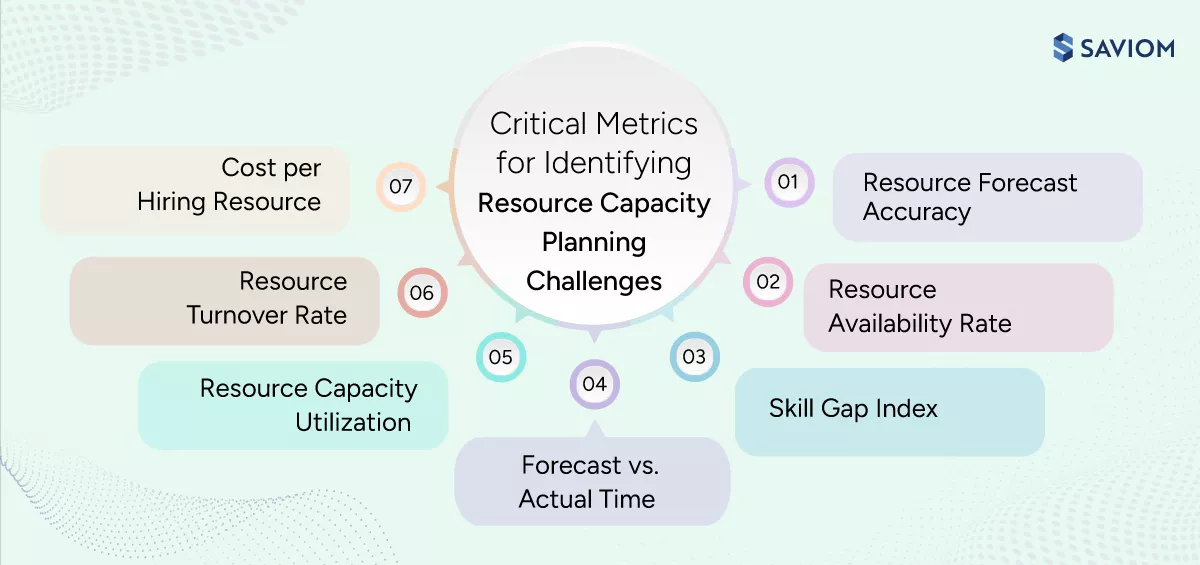
Resource Forecast Accuracy
Resource forecast accuracy measures how closely projected demand aligns with actual project needs over time. Low forecasting accuracy indicates weaknesses in demand forecasting, often caused by assumptions or outdated inputs, and results in capacity plans that cannot reliably support upcoming project requirements.
Actual Demand) X 100
Read our blog on resource capacity forecasting.
Resource Availability Rate
Resource availability rate tracks the percentage of time resources remain available for project work. A consistently low availability rate signals overcommitment and emerging capacity issues, helping organizations identify constraints early before they escalate into delivery disruptions and poor resource utilization.
Skill Gap Index
The skill gap index measures the difference between the skills required for upcoming project work and the skills currently available in the workforce. A widening gap indicates a clear skill mismatch, even when headcount appears sufficient, and highlights the need for focused skills-based workforce planning.
Number of Skills Required] X 100
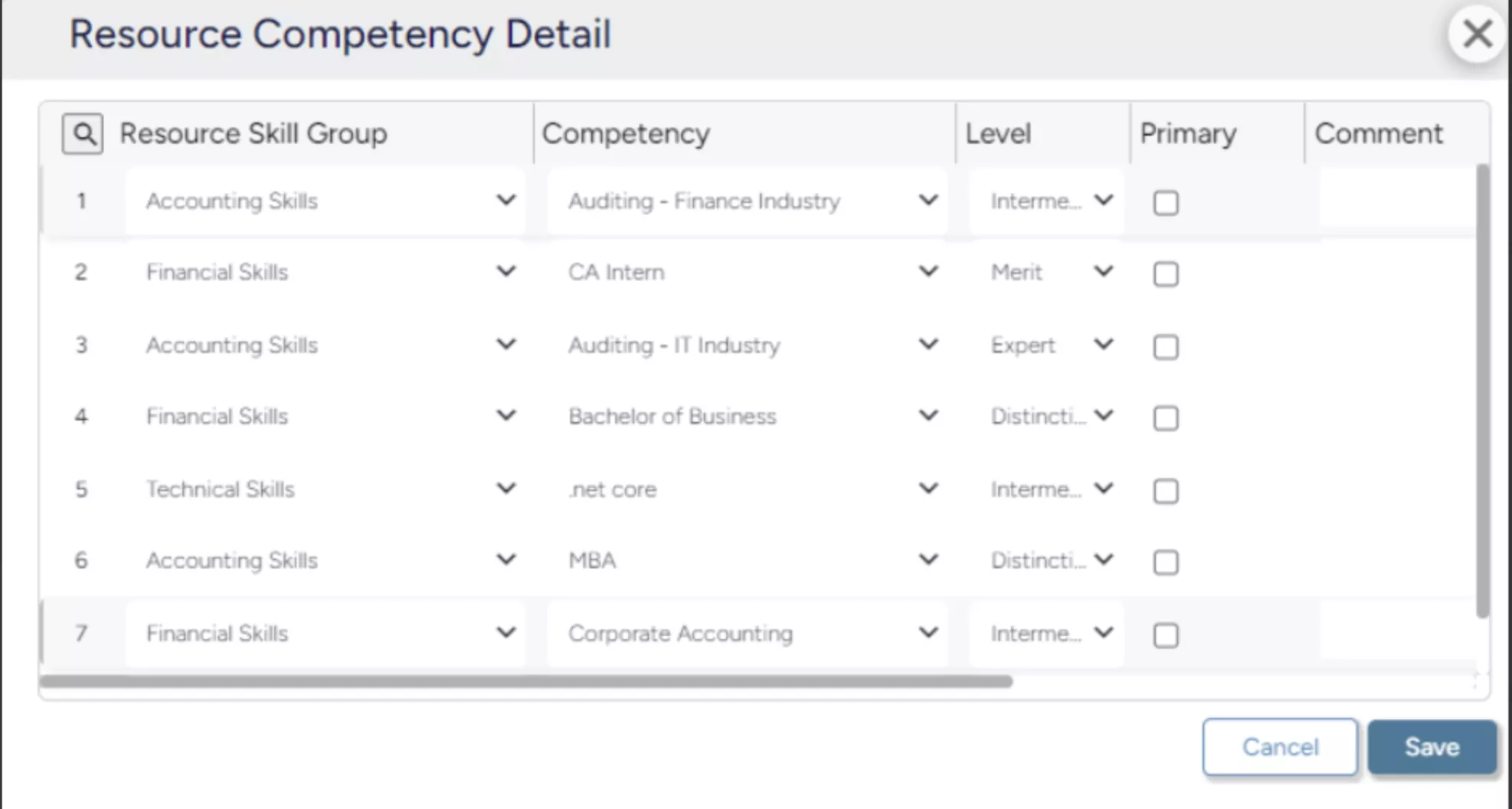 SAVIOM’s Competency Matrix provides visibility into existing skills across the organization, allowing managers to identify skill gaps and initiate targeted training and upskilling programs.
Forecast vs. Actual Time
Forecast vs. actual time measures the difference between estimated effort and the time actually spent on tasks or projects. Recurring variances point to inaccurate forecasting and weak planning assumptions. Tracking this variance helps teams refine estimates and improve resource forecasting accuracy before timelines are finalized.
Time X 100
Resource Capacity Utilization
Resource capacity utilization measures the extent to which the available workforce capacity is actively used for project work. Persistent over- or underutilization of resources points to challenges in balancing capacity vs. demand. Tracking utilization trends helps identify emerging resource bottlenecks before they affect delivery timelines.
X 100
Read this blog to understand how to track resource utilization.
Resource Turnover Rate
Resource turnover rate measures how frequently employees leave the organization over a given period. A consistently high turnover rate creates unexpected capacity shortages and disrupts the timely execution of future projects. This makes it harder to manage projects and intensifies existing resource capacity planning challenges.
Average Number of Resources During Period) X 100
Cost per Hiring Resource
Cost per hiring resource measures the total expense involved in recruiting and onboarding a new employee. Rising costs often reflect reactive hiring decisions driven by unresolved issues in capacity planning issues. This highlights the financial impact of ongoing challenges in resource capacity planning.
Number of Hires
Learn how constant hiring/firing cycles lead to cost overrun.
Explore our comprehensive eBook on resource capacity planning to understand the best practices for aligning capacity with demand.
Having identified the key metrics that reveal capacity gaps early, the following section focuses on the most common capacity challenges organizations face and the solutions to address them.
Common Resource Capacity Planning Challenges & Their Solutions
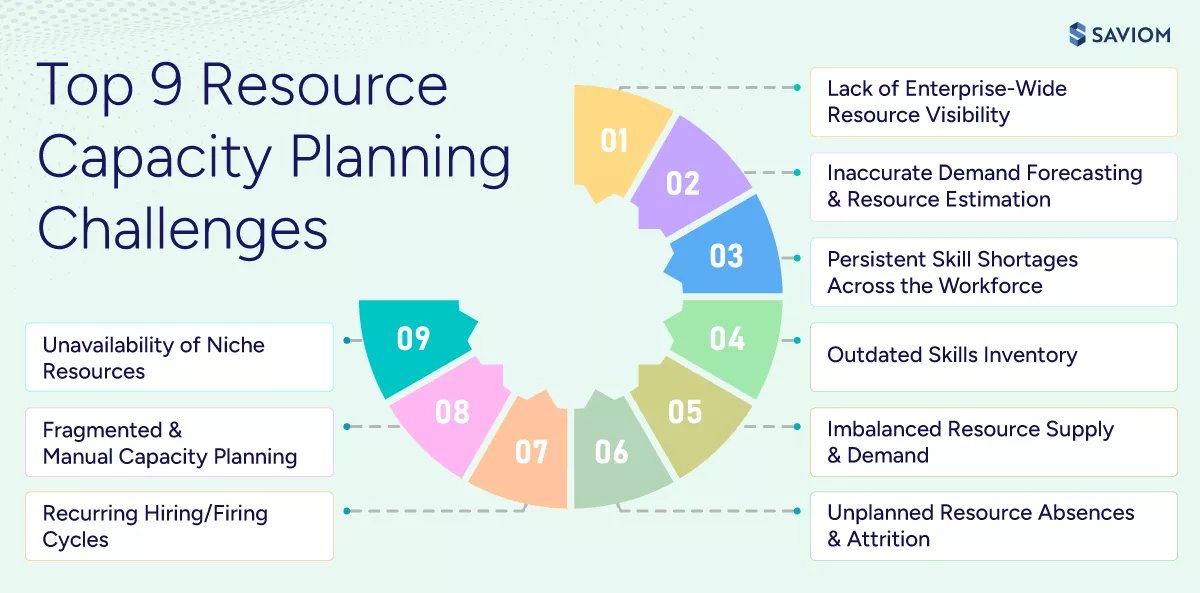
Below are the most common resource capacity planning challenges organizations face, along with the solutions required to manage them effectively.
Lack of Enterprise-Wide Resource Visibility
When resource data is spread across multiple tools or teams, organizations lack a unified view of who is available, what skills they have, and for how long. This limited visibility makes it difficult to detect resource bottlenecks, creates resource allocation problems, and results in capacity decisions based on assumptions rather than actual availability.
To overcome these blind spots, firms need a centralized view of resource-centric attributes, such as availability, skills, and allocations. For example, in a construction company, teams can instantly see whether site engineers are tied up on active builds or if electricians and civil crews are available for upcoming phases or new projects. This reduces guesswork and helps address capacity management risks before they impact delivery.
Inaccurate Demand Forecasting & Resource Estimation
In many organizations, demand is forecasted without sufficient clarity on project scope, timelines, or dependencies, while resource estimation is based on assumptions rather than task-level effort analysis. This combination results in inaccurate forecasting, where capacity plans fail to reflect the actual effort required to deliver upcoming work.
To address this, organizations must align demand forecasting with approved project plans and improve resource estimation by considering historical performance data. This proactive approach improves forecasting accuracy and ensures resource estimates remain realistic as project scope and priorities evolve.
Read our blog on resource estimation.
Persistent Skill Shortages Across the Workforce
As per a McKinsey & Company study, “87% of companies are already struggling with skills gap or expect to face shortages within a few years.”
Evolving technology trends are widening skill gaps across organizations. As project requirements shift toward advanced capabilities, existing workforce skills often lag behind. This limits the ability to take on complex projects and results in missed market opportunities. Over time, persistent skill shortages constrain growth and delivery performance.
To address this, firms need to implement a skills matrix as part of their resource capacity planning. For example, an audit and accounting firm can identify upcoming shortages of forensic auditors or ESG reporting experts early. This will help them focus on retraining/upskilling or lateral hiring before delivery timelines are affected, helping futureproof the workforce while maintaining a competitive edge.
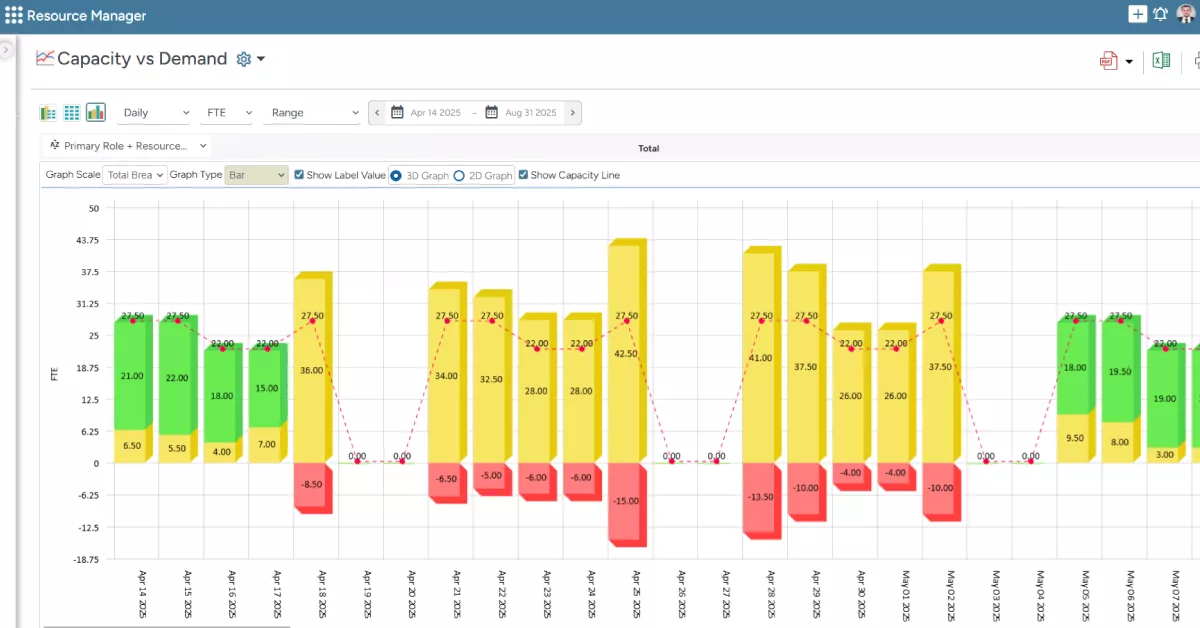 SAVIOM’s Capacity vs. Demand Graph enables managers to spot resource shortages and excesses, and take timely action to balance supply and demand.
Outdated Skills Inventory
As project requirements evolve, organizations may not always maintain an up-to-date view of workforce skills. As a result, teams may assume they have the right capabilities to meet upcoming project needs, only to discover during execution that the required skills are missing or insufficient.
To mitigate this challenge, organizations should maintain a regularly updated skills inventory mapped to current and future project needs. Keeping skill data accurate supports better skills-based resource planning and helps reduce the risk of skill gaps, delivery delays, and reactive staffing decisions.
Learn what a skill matrix is and why it is important for businesses.
Imbalanced Resource Supply & Demand
When demand vs. capacity is not evaluated early, teams struggle to align workloads effectively. This misalignment creates pressure during peak demand periods, stretches teams beyond sustainable limits, and leads to capacity wastage and underutilization when demand slows.
To manage this imbalance, organizations must continuously review the capacity vs. demand gap across ongoing and upcoming projects. This approach enables better workload distribution and supports timely decisions around reprioritization, redeployment, or capacity adjustments before delivery is impacted.
Unplanned Resource Absences & Attrition
According to a Gallup study, “51% of US employees are actively planning to leave their jobs – the highest level of turnover risk since 2015.”
Unplanned absences and employee attrition often disrupt capacity assumptions built during resource planning. When resources become unavailable without warning, teams are forced to reshuffle work, causing task delays, overloading remaining team members, and disrupting project execution.
To mitigate this risk, organizations need to factor potential absences and attrition trends into their capacity plans and create buffers. For example, an IT firm can plan coverage for unexpected absences or exits of cloud architects or stack developers, whose expertise is pivotal for project delivery. This will help prevent projects from derailing and avoid single points of failure.
Understand how to combat unplanned attrition in the IT industry.
Recurring Hiring/Firing Cycles
Frequent hiring and firing cycles often occur when organizations focus on immediate project needs rather than long-term resource planning. For instance, if resources are hired to meet short-term demand, once the project ends, they end up on the bench and eventually are released from the organization. This reactive approach disrupts team continuity, wastes talent, and drives business costs.
To reduce these cycles, firms must base workforce decisions on a holistic view of pipeline demand and long-term capacity requirements. By aligning hiring with both current and upcoming project needs, organizations can maintain team stability, optimize bench utilization, and reduce operational planning disruption caused by reactive staffing decisions.
Fragmented & Manual Capacity Planning
When capacity requirement planning relies on spreadsheets and disconnected tools, data is often updated manually and inconsistently across teams. This fragmented and manual approach increases errors, slows decision-making, and makes it difficult to maintain an accurate, real-time view of resource availability, leading to recurring resource capacity planning challenges.
To overcome this challenge, organizations should move toward integrated, system-driven planning approaches. Centralizing resource data and automating updates reduces manual effort, minimizes errors, and enables faster, more reliable decisions that improve workforce utilization and delivery predictability.
Understand what you should not use spreadsheets for.
Unavailability of Niche Resources
Organizations often identify the need for highly specialized skills only at the start of a project. These niche roles are scarce, challenging to source quickly, and command premium rates. When these critical skills are not identified early, it may lead to incompetent allocation, increased costs, and delayed project initiation.
To avoid this, organizations must forecast niche skill requirements during resource capacity planning and align them against future demand. For example, law firms can anticipate early demand for IP litigators or data privacy attorneys. This enables proactive staffing decisions, prevents last-minute resource constraints, and ensures timely project delivery.
Having examined the most common resource capacity planning problems and solutions, let us now look at how SAVIOM helps organizations address these challenges more effectively.
How SAVIOM Helps Overcome Resource Capacity Planning Challenges?
SAVIOM’s advanced resource capacity planning software addresses resource challenges by enabling organizations to plan, analyze, and manage capacity using real-time data and forward-looking insights. Let us understand how:
- Multidimensional analysis provides a consolidated view of resource capacity, skills, availability, and cost across dimensions, helping teams identify capacity challenges and assess feasibility more accurately.
- Embedded heatmaps visually highlight resource overutilization or underutilization patterns, enabling teams to spot resource utilization imbalances early.
- Intelligent matchmaking aligns resources with projects based on skills, availability, and cost, minimizing capacity planning bottlenecks and ensuring competent resource allocation.
Overcome resource capacity planning challenges with SAVIOM’s advanced software to improve utilization, enhance delivery predictability, and support better capacity decisions. Book a Demo Today.

- Early warning system proactively flags overallocations and double bookings, helping teams address resource capacity planning issues before they disrupt schedules or delivery predictability.
- KPI forecaster tracks key performance metrics, such as utilization, availability, and capacity, helping teams monitor resource management trends and make more informed capacity planning decisions.
- Resource forecasting and capacity planning capabilities help organizations prevent unexpected capacity shortages or excesses by improving forecasting and demand plan accuracy.
- Scenario modeling allows teams to compare alternative resource management plans and test different responses to changing demand vs. capacity conditions before committing.
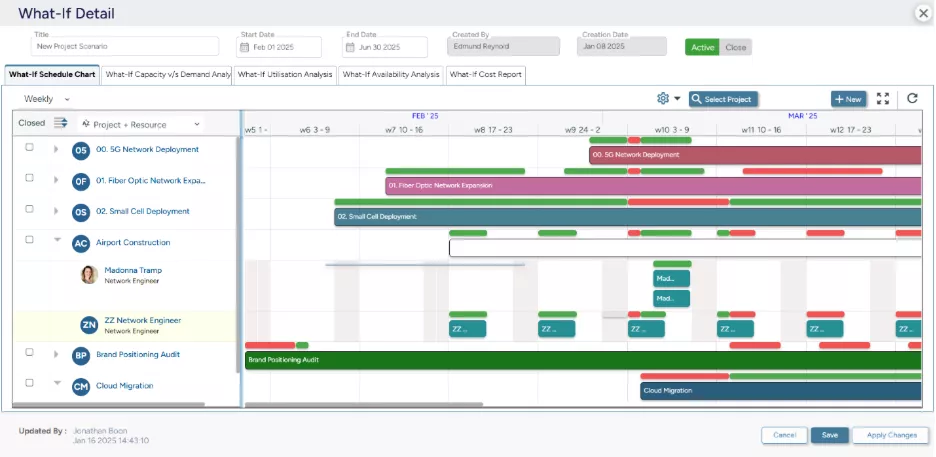 SAVIOM’s Scenario Modeling empowers managers to compare multiple capacity plans and select the most viable option based on demand, skills, and available resources.
- Real-time BI reports provide continuous visibility into availability, utilization, and workload trends, supporting data-driven enterprise capacity planning decisions.
Conclusion
Resource capacity planning challenges cannot be managed solely through assumptions or reactive decisions. Addressing these challenges requires clear visibility, accurate planning, and the ability to proactively balance demand with available capacity. With the right approach and technology, organizations can improve delivery predictability, reduce capacity risks, and make confident decisions that support sustainable execution.
Frequently Asked Questions (FAQs)
Resource capacity planning challenges are the difficulties organizations face when aligning project demand with available resources across time, skills, and cost constraints. These challenges occur when there is insufficient visibility into upcoming work, resource availability, or skill requirements, leading to planning risks and unreliable capacity decisions.
Resource capacity planning in enterprises primarily fails due to fragmented data, inaccurate demand and resource estimates, and limited visibility into future workloads and skill requirements. When planning relies on static assumptions instead of real-time capacity insights, organizations struggle to make reliable decisions, leading to misaligned capacity and execution risks.
Some of the most common resource capacity planning challenges are:
1. Lack of Enterprise-Wide Resource Visibility
2. Inaccurate Demand Forecasting & Resource Estimation
3. Persistent Skill Shortages Across the Workforce
4. Outdated Skills Inventory
5. Imbalanced Resource Supply & Demand
6. Unplanned Resource Absences & Attrition
7. Recurring Hiring/Firing Cycles
8. Fragmented & Manual Capacity Planning
9. Unavailability of Niche Resources
Here are the metrics that managers can track to identify poor capacity planning:
1. Resource Forecast Accuracy
2. Resource Availability Rate
3. Skill Gap Index
4. Forecast vs. Actual Time
5. Resource Capacity Utilization
6. Resource Turnover Rate
7. Cost per Hiring Resource
Capacity planning affects project delivery by determining whether timelines, resource commitments, and workloads are realistically achievable. When resource capacity planning challenges are not addressed, organizations face capacity shortages, resource bottlenecks, and reduced delivery predictability, increasing the risk of delays and execution disruptions.