

Introduction
Resource capacity planning and resource planning may sound similar, but they address two distinct aspects of managing project resources. One determines whether the organization has sufficient people, tools, and equipment to meet current and future demand. The other focuses on forecasting, allocating, and managing resources across projects to ensure timely and cost-effective delivery.
Understanding resource capacity planning vs. resource planning is critical in multi-project environments where teams are shared, and priorities shift frequently. Without clarity between the two, organizations may overutilize resources or under-allocate them, leading to workload imbalances and missed delivery timelines.
This article breaks down capacity planning vs. resource planning in detail, their definitions, differences, and practical use cases to help organizations make informed and scalable planning decisions.
What is Resource Capacity Planning?
Resource capacity planning is the strategic process of evaluating an organization’s aggregate supply, including people, budget, equipment, and technology, to meet both current and future demands. It helps managers proactively identify shortages and excesses, enabling timely corrective actions and ensuring the right resources are available when needed.
The key objectives of resource capacity planning include:
- Ensures available capacity aligns with forecasted demand, enabling organizations to meet workload requirements without over- or underutilizing resources.
- Provides early visibility into potential shortages or excesses, enabling managers to take proactive actions such as redeployment, reskilling, or hiring.
- Helps avoid cost overruns from last-minute hiring or underutilized capacity, thereby improving overall cost efficiency.
- Enables quick adjustments to resource plans in response to changing project requirements or market conditions, supporting more flexible operations.
Having understood what capacity planning is, its objectives, and types, let us move on to understand resource planning and its core components.
What is Resource Planning?
Resource planning is the systematic process of forecasting, allocating, managing, and optimizing human or non-human organizational resources to deliver projects on time and within budget. The primary goal is to ensure resources are planned and utilized in a way that supports business priorities, improves employee productivity, and reduces delivery risk.
The key objectives of resource planning include:
- Helps identify upcoming resource requirements in advance, enabling organizations to plan allocations more effectively and avoid skill gaps.
- Ensures resources are assigned to projects based on their skills, expertise, and competencies, resulting in higher-quality outcomes.
- Maximizes productivity by minimizing bench time and avoiding overallocation of resources, ensuring consistent and efficient workforce utilization.
- Helps identify potential resource gaps or bottlenecks early, allowing timely corrective actions to prevent disruptions and maintain smooth project delivery.
Next, let us distinguish between resource planning and capacity planning.
Resource Capacity Planning vs. Resource Planning: Key Differences
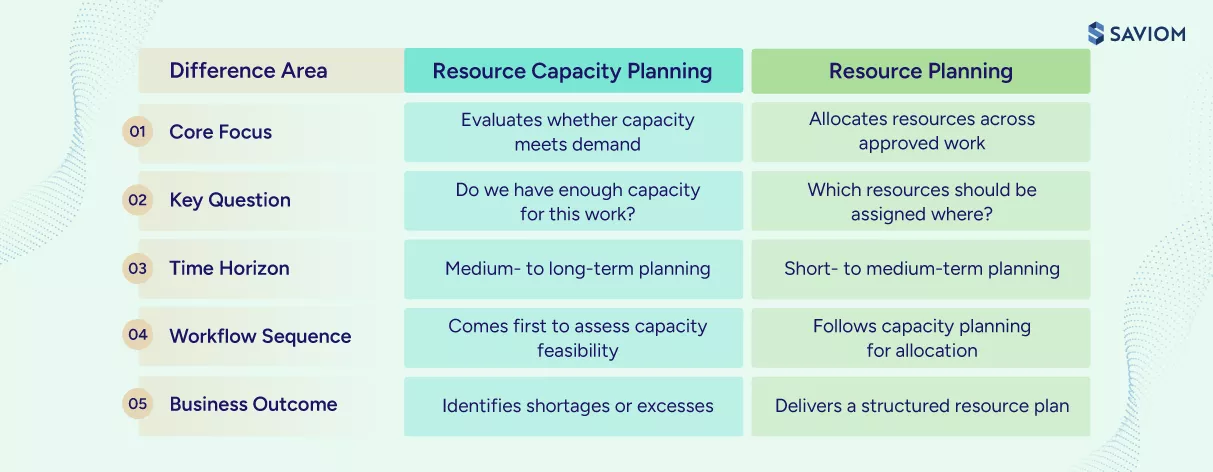
Although often used interchangeably, resource capacity planning and resource planning operate at different levels and address different questions. The table below presents the key differences between resource capacity planning and resource planning.
Primary Focus: Evaluating Capacity vs. Managing Resources
Resource capacity planning evaluates whether available capacity is sufficient to meet current and future demand. It assesses the organization’s overall capacity to ensure workload requirements can be supported. Resource planning, on the other hand, focuses on forecasting, identifying, allocating, and optimizing resources across approved work to ensure that projects are executed efficiently and aligned with business priorities.
Key Question Answered: Feasibility vs. Deployment
The main purpose of resource capacity planning is to determine whether the organization has enough capacity to take on specific work based on current and future demand. It helps determine if the workload is feasible before making commitments. Resource planning answers what resources are needed, where they should be deployed, and how they can be used effectively to deliver projects successfully.
Time Horizon: Medium-to-Long-Term vs. Short-to-Medium-Term
From a time-frame perspective, resource capacity planning typically looks at current and future demand across weeks, months, or quarters, allowing organizations to prepare for upcoming workload needs. Resource planning builds on that foundation by managing short-, medium-, and long-term resource needs and allocation decisions, with a stronger emphasis on execution and effective assignment throughout the project lifecycle.
Decision-Making Basis: Capacity and Demand vs. Project Requirements
In terms of decision-making inputs, resource capacity planning relies on forecasted demand, team capacity, utilization, and workload trends to identify shortages or excesses and support proactive decision-making. Resource planning is based on project needs, skill requirements, resource availability, and business priorities to ensure that the right resources are allocated to the right work.
Dive into our blog to learn how organizations can balance resource capacity and demand.
Workflow Sequence: Strategic vs. Tactical Planning
Within the resource management lifecycle, resource capacity planning takes place at a more strategic level, where aggregate capacity is assessed against forecasted demand before work is committed. Resource planning operates at a tactical level, where these capacity insights are used to allocate resources to specific tasks and timelines, ensuring smooth and efficient execution.
Level of Planning Detail: Aggregate-Level vs. Individual-Level
Resource capacity planning operates at an aggregate level, focusing on roles, skills, or teams to evaluate whether sufficient capacity exists. Resource planning operates at the individual level, assigning specific resources to tasks based on their skills, availability, and project requirements.
Planning Dependency: Capacity Validation vs. Allocation Dependence
As a planning input, resource capacity planning serves as a prerequisite by validating whether sufficient capacity is available before detailed allocation decisions are made. In contrast, resource planning relies on these inputs to ensure allocations are realistic and aligned with available capacity, enabling effective, feasible resource deployment.
Outcome: Capacity Visibility vs. Resource Plan
Resource capacity planning provides visibility into whether additional capacity is needed or excess capacity is available, helping organizations take corrective actions in advance. Resource planning results in a structured resource management plan that aligns resources with demand, improves resource utilization, and supports successful project delivery.
Moving on, let us understand how resource and capacity planning work together and why organizations need both for overall efficiency.
Resource Capacity Planning vs. Resource Planning: How They Work Together
While each approach serves a distinct purpose, their true value emerges when they work together within a unified framework. In this section, we will understand how resource capacity planning and resource planning are interconnected and why organizations need both techniques for success.
The End-to-End Workflow
Effective resource management follows a structured process where each layer builds on the previous one, ensuring a seamless transition from demand estimation to execution. The following layers outline how resource capacity planning and resource planning work together in practice.
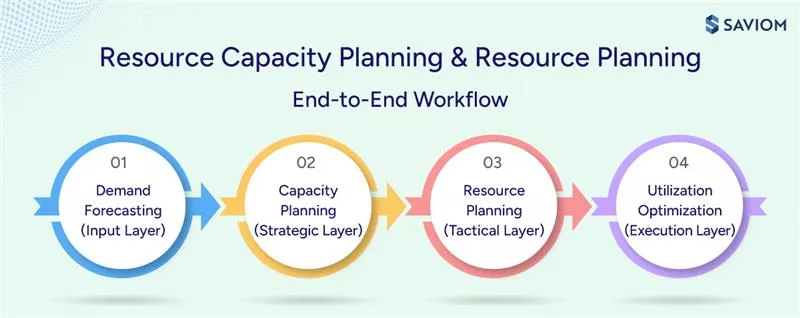
- Demand Forecasting (Input Layer): Captures and consolidates upcoming demand based on project pipeline, historical trends, and business priorities, establishing a reliable foundation for all subsequent planning decisions.
- Capacity Planning (Strategic Layer): Evaluates resource capacity and demand to identify potential shortages or excesses, ensuring the organization is prepared before committing to new work.
- Resource Planning (Tactical Layer): Utilizes validated capacity to allocate the right resources to projects and tasks based on skills, availability, and timelines.
- Utilization Optimization (Execution Layer): Ensures resources are effectively deployed during execution by preventing overallocation or underutilization and maintaining optimal workforce efficiency.
Why You Need Both (Not Either/Or)
Capacity planning and resource planning are interdependent and deliver maximum value only when used together. Capacity planning without resource planning remains incomplete, as identifying a shortage or excess does not ensure effective execution. Conversely, relying solely on resource planning leads to reactive decisions and suboptimal allocations because validated capacity is lacking.
While capacity planning ensures that the organization has sufficient people, tools, and equipment, resource planning ensures that this supply is deployed effectively across projects. Together, they create a seamless flow from demand validation to execution, aligning strategic planning with day-to-day delivery, and improving overall productivity and project outcomes.
To gain a better understanding of resource capacity planning, read our comprehensive eBook.
So far, we have established that capacity and resource planning play different roles in the resource management lifecycle. The next step is to understand when organizations should use each technique.
Resource Capacity Planning vs. Resource Planning: When to Use Each
Resource capacity planning and resource planning serve different purposes in managing project demand and resource availability. Knowing when to use each helps organizations improve allocation decisions, avoid overcommitment, and ensure smoother project execution.
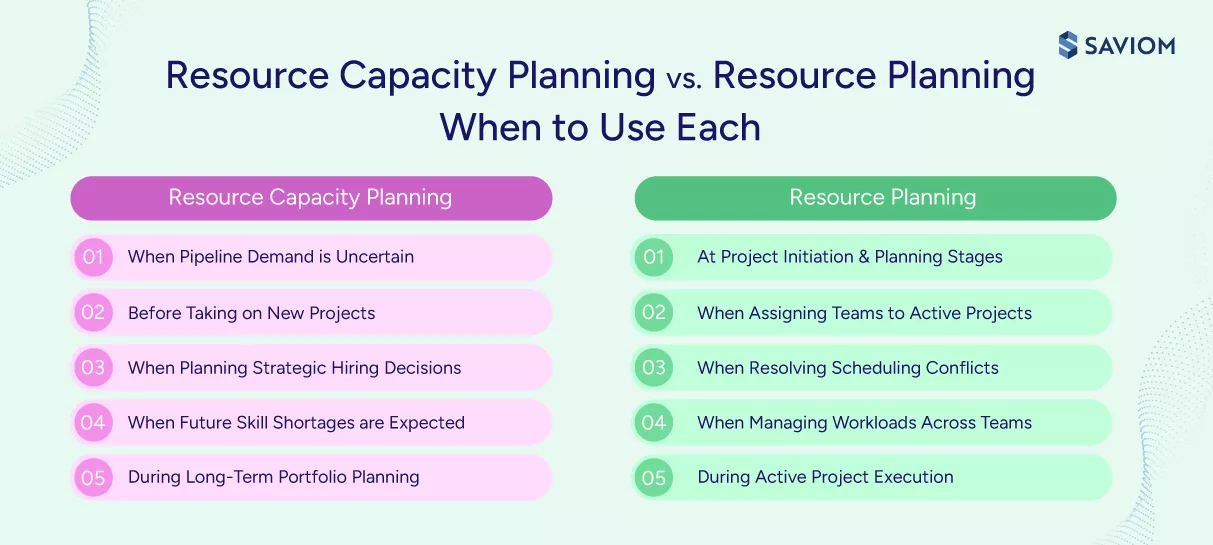
When to Use Resource Capacity Planning?
Resource capacity planning is used to determine whether organizations have sufficient capacity and capabilities to handle expected workloads. It helps managers make proactive decisions around resource reallocation, retraining/upskilling, or hiring. Common situations include:
- When pipeline demand is uncertain or fluctuating: Evaluates whether available capacity can support upcoming work by creating different demand scenarios before committing.
- Before taking on new projects: Assesses whether current capacity is sufficient to handle additional project demand without overextending resources.
- When planning strategic hiring decisions: Identifies where additional capacity or specific skills may be required to meet future demand.
- When future skill shortages are expected: Supports proactive planning to ensure required capabilities are available when demand arises.
- During long-term business or portfolio planning: Ensures capacity aligns with growth objectives and supports future workload requirements.
When to Use Resource Planning?
Resource planning is used before and during project execution to identify, allocate, and optimize resources. It plays a critical role in avoiding resource constraints and ensuring optimized resource utilization when multiple projects compete for limited skilled talent. Key times to use resource planning include:
- At project initiation and planning stages: To identify and allocate resources before execution begins, ensuring projects start with the right skill sets in place.
- When assigning teams to active projects: To deploy resources based on skills, availability, and delivery priorities, ensuring work is handled efficiently.
- When resolving scheduling conflicts: To manage competing demands across multiple projects and reassign resources without disrupting delivery timelines.
- When managing workloads across teams: To ensure effective resource assignment, prevent overbooking, reduce burnout, and maintain consistent productivity.
- During active project execution: To adjust resource allocations based on changing priorities and ensure smooth, uninterrupted project delivery.
Having understood when organizations should choose between resource planning vs. capacity planning, let us now learn about some common mistakes firms make.
Capacity vs. Resource Planning: Common Mistakes Organizations Make
Even with the right intent, many organizations struggle to align capacity with execution due to common planning mistakes. Identifying and addressing these pitfalls is essential to improving planning accuracy, avoiding reactive decisions, and ensuring consistent delivery outcomes. Let us take a look at some of these common mistakes: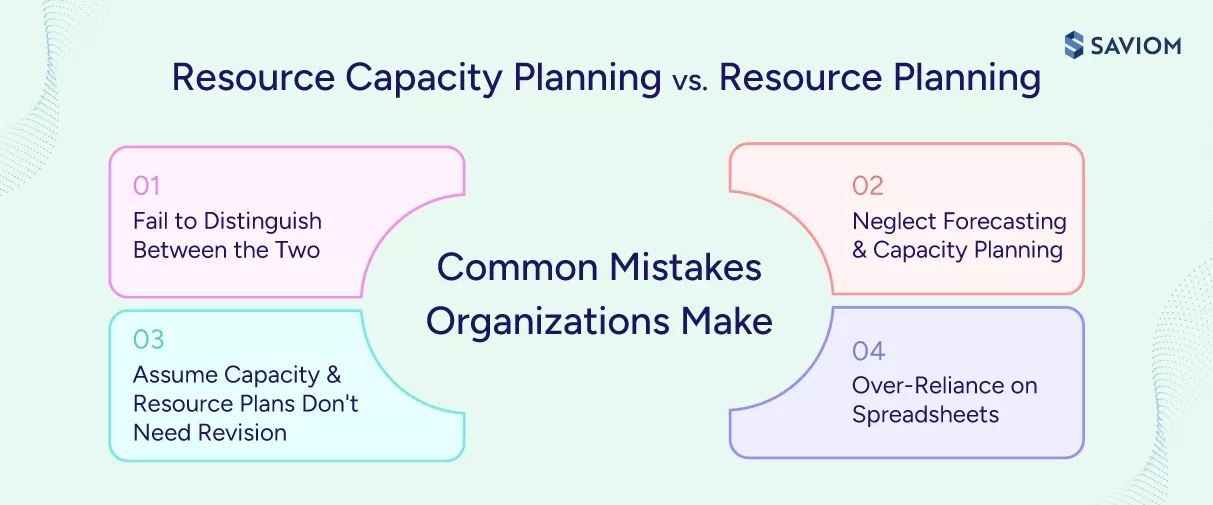
Treat Capacity Planning and Resource Planning as the Same
Organizations often treat capacity planning and resource planning as the same, assuming that assessing availability and assigning resources are one activity. This leads to allocating resources without validating capacity first, resulting in overbooking, skill mismatches, and unrealistic commitments.
Neglect Demand Forecasting and Capacity Planning Entirely
According to a McKinsey survey, “90% of business leaders consider capacity building a priority that needs to be addressed now or soon.”
Skipping demand forecasting and capacity planning forces organizations to make decisions without validating future demand or available capacity. As a result, resource planning becomes reactive, increasing the risk of overcommitment, last-minute hiring, and delays in project delivery.
Fail to Revisit Capacity and Resource Plans
When organizations do not regularly review their plans, they continue allocating work based on outdated estimates. This results in overloaded teams, underused talent, missed deadlines, and poor delivery outcomes. Over time, this lack of adjustment creates a disconnect between what leaders expect and what teams can realistically deliver.
Over-Reliance on Spreadsheets
Using spreadsheets limits real-time visibility into resource demand, capacity, and allocations. Manual updates often lead to outdated data and allocation errors. As a result, organizations struggle to make accurate planning decisions and respond quickly to changing demand.
Explore why organizations shouldn’t depend on Excel for resource planning in our blog.
Next, let us understand the benefits of aligning resource and capacity planning for organizations.
Benefits of Aligning Capacity and Resource Planning
Aligning resource capacity planning with resource planning helps organizations make more informed and reliable resourcing decisions. It ensures that capacity insights directly support allocation, improving overall efficiency and delivery outcomes. Let us understand some of the benefits of aligning capacity and resource planning:
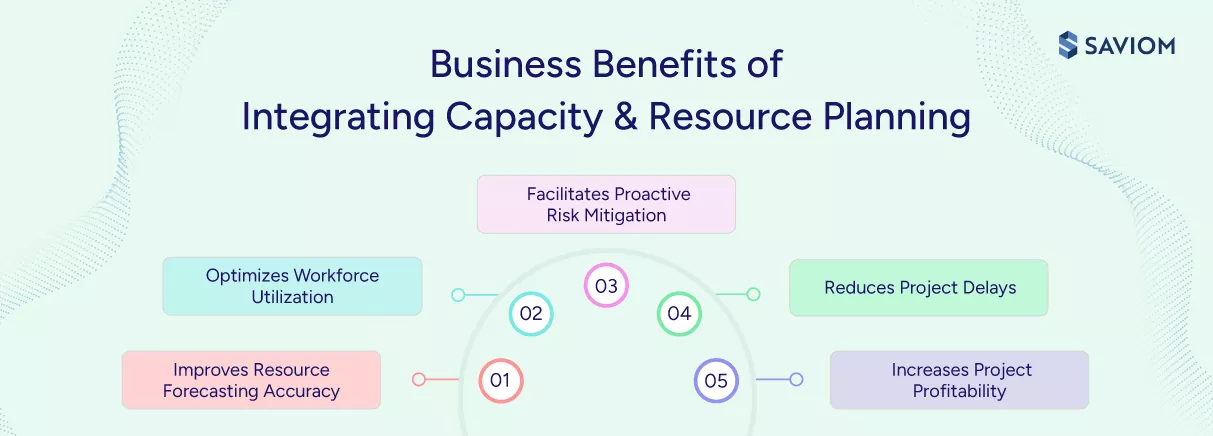
Improves Resource Forecasting Accuracy
Aligning resource and capacity planning ensures that demand forecasts are based on actual available capacity rather than assumptions. This helps organizations anticipate shortages, avoid overcommitment, and plan resource needs more realistically. As a result, resource capacity forecasts are more reliable, enabling better decision-making.
Optimizes Workforce Utilization
When capacity and resource planning are aligned, managers can distribute work based on actual resource availability. This leads to more informed and realistic allocation decisions, preventing imbalances across teams. As a result, it reduces employee burnout and disengagement while improving overall billable utilization.
Read our blog to understand how organizations can calculate and maximize billable utilization.
Facilitates Proactive Risk Mitigation
Combining capacity planning and resource planning helps managers identify potential shortages, overloads, and skill gaps early. This enables proactive actions such as adjusting assignments, initiating training, hiring contingent workers, or revising timelines. As a result, delivery risks are minimized, and projects stay on track.
Reduces Project Delays
Validating capacity before allocation ensures that the required resources are available when the project begins and minimizes resource scheduling conflicts. This reduces resource-related bottlenecks, improves timeline adherence, and enables more reliable project delivery.
Increases Project Profitability
Better alignment between capacity and resource planning helps minimize bench time, overtime, and last-minute hiring that drive up project costs. It also improves delivery efficiency by ensuring the right resources are allocated from the project onset. As a result, organizations can control costs and improve overall project profitability.
Moving on, let us understand why traditional tools can no longer support growing organizations with resource and capacity planning. We will also learn how modern resource management software is a game-changer.
Tools and Software for Capacity and Resource Planning
Effective capacity and resource planning require tools that provide real-time visibility into resource demand, availability, and allocations. The following sections highlight the limitations of traditional tools and how modern resource management software enables more integrated and accurate planning.
Limitations of Traditional Tools
Traditional tools like spreadsheets lack real-time visibility, making it difficult for managers to track changes in capacity vs. demand and resource allocation accurately. As project environments become more dynamic, this limited visibility leads to outdated information, delayed decisions, and reduced planning accuracy.
In addition, these tools often operate in silos, preventing seamless integration between resource and capacity planning. Manual updates and limited scalability further increase the risk of errors, version conflicts, and inefficiencies, making it challenging to manage resources effectively at scale.
What Modern Resource Management Software Provides?
According to a PMI survey, “26% of companies with a dedicated resource management platform can efficiently estimate and allocate resources to ensure on-time project delivery.”
Leveraging an advanced tool is critical for improving both resource and capacity planning. SAVIOM’s next-gen resource management software empowers organizations with the visibility, control, and intelligence needed to plan, allocate, and optimize resources more effectively. Let us understand how:
- All-in-One Resource Planner: Provides a 360-degree view of enterprise-wide resource data, helping managers allocate the right resources to the right work.
- Embedded Capacity Planner: Helps managers anticipate future needs, identify resource gaps, and address them proactively.
- KPI Forecaster: Helps track key resource metrics such as resource availability, utilization, and capacity trends, making it easier to spot risks and adjust plans proactively.
- Embedded Heatmaps: Highlight over- and underutilized resources in a color-coded format, allowing managers to identify imbalances and quickly optimize workload distribution.
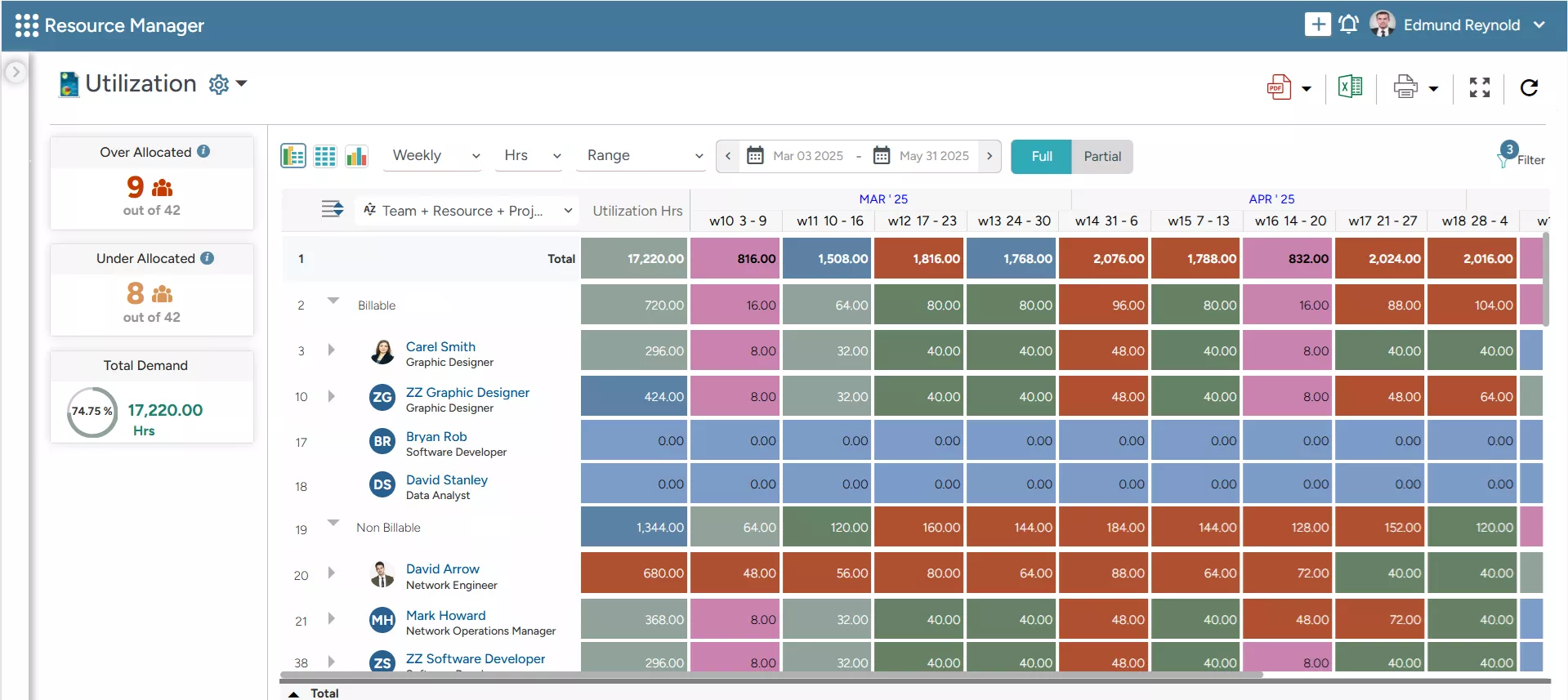 SAVIOM’s Utilization Dashboard helps managers spot utilization imbalances through a color-coded heatmap, allowing timely corrective actions.
- Intelligent Matchmaking: Dynamically matches the most suitable resources to tasks based on skills, availability, and other criteria, ensuring optimal allocation decisions.
- Early Warning System: Flags issues such as overallocations and booking conflicts, helping teams prevent scheduling disruptions and protect delivery timelines.
- Scenario Modeling: Allows organizations to simulate and compare different scenarios and choose the most effective resource plan.
Learn more about scenario planning, its types, benefits, and best practices in our blog.
Explore how SAVIOM’s advanced solution can streamline the end-to-end lifecycle of resource management. Book a free demo today!

In the next section, we will understand how resource and capacity planning work across different industries.
Resource Capacity Planning vs. Resource Planning: Real-World Use Cases
The impact of resource capacity planning and resource planning becomes more evident when applied to real-world scenarios. Different industries face unique challenges in managing demand and resources, and the following examples illustrate how both approaches work together to ensure effective planning and execution.
Professional Services Firms
Professional services firms manage multiple client engagements that often compete for the same pool of skilled consultants. This makes it important to maintain optimal staffing levels, as organizations must balance client demands while avoiding both shortages and excess capacity.
Resource capacity planning helps forecast demand across pipeline opportunities and active engagements, ensuring sufficient capacity is available in advance. Resource planning then ensures that consultants are allocated to projects based on skills, availability, and client requirements, enabling efficient staffing and maximizing billable utilization.
AEC Firms (Architecture, Engineering, and Construction)
AEC firms manage long-term, resource-intensive projects that often run concurrently and compete for the same specialized roles across multiple sites. This makes it difficult to ensure the right expertise is available at the right time while maintaining continuity across project timelines.
Resource capacity planning helps assess the availability of critical roles in advance, ensuring projects are adequately staffed throughout their lifecycle. Resource planning then allocates engineers, architects, quality inspectors, and other roles across projects. This resolves resource conflicts and maintains schedule continuity across overlapping engagements.
Explore effective ways to overcome resourcing challenges in the AEC industry.
IT Services Firms
IT services firms operate in highly dynamic environments where client requirements evolve frequently, and delivery models are often iterative. This results in inaccurate resource estimations, requiring teams to continuously adjust based on changing workloads and priorities.
Resource capacity planning helps evaluate whether teams have sufficient bandwidth to support upcoming demand and shifting workloads. Resource planning then enables ongoing reallocation of resources across projects and sprints, ensuring teams remain aligned with delivery needs and execution stays on track.
Audit, Accounting, and Legal Firms
Audit, accounting, and legal firms often handle cyclical, case-driven workloads, with demand peaking during specific periods, such as audits, tax seasons, or critical legal proceedings. Managing these fluctuations while ensuring timely delivery across engagements becomes a key challenge.
Resource capacity planning helps anticipate these demand variations and ensures the availability of the right expertise during peak periods. Resource planning then supports accurate allocation of professionals to engagements or cases based on skills, availability, and deadlines, ensuring work is delivered on time without overloading teams.
Conclusion: Choosing the Right Approach for Your Organization
Understanding resource capacity planning vs. resource planning enables organizations to move away from reactive decision-making and adopt a more structured approach to workforce management. When both practices are clearly defined, teams can make more informed decisions about what work to take on and how to execute it effectively.
Capacity planning ensures that the organization has the right level of resources to meet demand, while resource planning ensures those resources are allocated and utilized efficiently across projects. Together, they improve visibility, reduce inefficiencies, and strengthen overall project performance, making planning more reliable and scalable over time.
Resource Capacity Planning vs. Resource Planning FAQs
No, resource capacity planning evaluates aggregate supply against demand to identify shortage or excess, while resource planning focuses on allocating resources to specific tasks and projects. Capacity planning is strategic, whereas resource planning supports execution at a tactical level.
Resource capacity planning comes first, as it validates whether sufficient capacity exists before committing to work. Resource planning follows by assigning the right resources based on these insights, ensuring allocations are realistic, balanced, and feasible.
Yes, but it often leads to reactive and inefficient outcomes. Without capacity planning, resource planning decisions are made without validating whether sufficient capacity exists, resulting in overcommitment, frequent scheduling conflicts, and last-minute adjustments.
Organizations use spreadsheets or dedicated resource management tools for capacity and resource planning. While spreadsheets work for basic tracking, they lack real-time visibility and scalability. Resource management software offers features like capacity planning, resource forecasting, skill-based allocation, and utilization tracking. This helps organizations balance workloads and align resources with project demand.
Resource capacity planning ensures that the right level of resources is available by identifying shortages or excesses, while resource utilization measures how effectively those resources are used during project execution.
The choice depends on the objective and stage of planning. Resource capacity planning assesses whether available capacity meets demand at a strategic level, while resource planning allocates resources to tasks during execution. In practice, both are required together to ensure decisions are realistic and work is delivered efficiently.