

Introduction
Reactive workforce decisions can stall even the most promising business growth plans. When organizations fail to anticipate talent needs, they often find themselves making costly hiring decisions, stretching existing teams too thin, struggling with retention, and missing critical opportunities.
Human resource planning helps prevent these challenges by bringing structure, foresight, and alignment to talent management. It allows businesses to forecast resource requirements, identify skill gaps, and prepare employees for evolving roles. Instead of treating talent management as a short-term response to immediate problems, HR planning connects talent decisions directly with long-term business goals.
This guide covers the definition, benefits, types, steps, challenges, metrics, and best practices of human resource planning.
What is Human Resource Planning?
Human resource planning (HRP) is the strategic process of evaluating an organization’s current workforce, forecasting future staffing needs, and developing plans to ensure the right employees are available when needed. It helps businesses address skill gaps, support succession planning, and align talent strategies with long-term objectives.
Effective human resource planning helps organizations stay prepared for changes such as business expansion, market fluctuations, and technological advancements. When companies spot talent shortages early, they can make better decisions about retraining/upskilling and hiring. This keeps the workforce flexible, productive, and ready for future demands.
Read our resource planning guide to explore how it improves workforce efficiency and business profitability.
Now that the human resource planning definition is clear, let us move on to its benefits.
Why is Human Resource Planning Important for Businesses?
Human resource planning helps businesses stay prepared, competitive, and efficient as demands change. It connects talent decisions to business goals, so businesses can address skill gaps, manage costs, and support growth with greater confidence. To understand its value more clearly, let’s look at the key benefits of human resource planning:
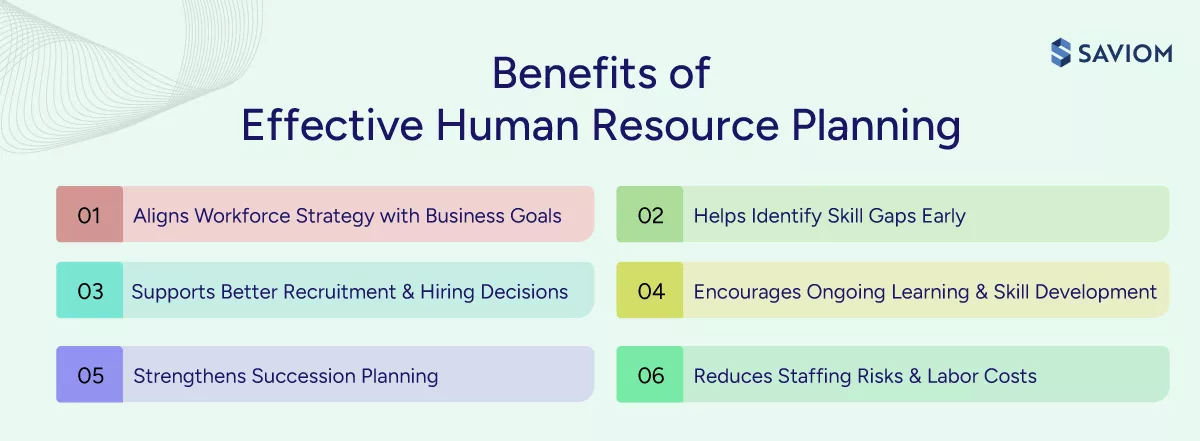
Aligns Workforce Strategy with Business Goals
Effective human resource planning aligns workforce decisions with broader business goals such as growth, expansion, innovation, and operational efficiency. As a result, organizations can build the right talent base to support long-term priorities instead of reacting to problems after they emerge. This creates stronger coordination between business goals and workforce strategies.
Helps Identify Skill Gaps Early
Workforce planning helps businesses identify skill gaps before they begin to affect service quality, employee productivity, or growth plans. As a result, managers can take corrective actions such as redeploying employees, launching upskilling initiatives, or conducting targeted hiring. This improves future readiness and allows the organization to respond to change with greater confidence.
Discover how a skill matrix helps businesses make informed staffing decisions.
Supports Better Recruitment and Hiring Decisions
As per SHRM, “Poor hiring decisions can cost up to 30% of a first-year salary.”
Robust HR planning improves recruitment by giving businesses a clear understanding of which roles are required, which skills are most critical, and when hiring should take place. This clarity helps organizations make more targeted hiring decisions, avoid rushed recruitment, and use hiring budgets more effectively. As a result, businesses can improve workforce quality and achieve stronger long-term hiring outcomes.
Encourages Ongoing Learning and Skill Development
Human resource planning highlights the capabilities employees need to meet changing business demands and future strategic priorities. In turn, this creates a stronger focus on upskilling, reskilling, and continuous learning across the workforce. By investing in employee development, organizations can improve performance, increase adaptability, and build a future-ready workforce.
Explore how skill development helps prepare the workforce for future demands.
Strengthens Succession Planning
Human resource planning supports effective succession planning by identifying key roles within the organization and preparing internal talent to step into those positions. As a result, organizations can reduce disruption when experienced employees leave, retire, or move into new positions. This creates stronger continuity and long-term workforce stability.
Reduces Staffing Risks and Labor Costs
With better visibility into workforce needs, human resource planning helps organizations avoid overstaffing, understaffing, and costly last-minute hiring decisions. It enables businesses to manage labor costs more effectively while improving workforce efficiency. This supports smoother operations, better resource utilization, and stronger cost control.
Explore cost reduction strategies to boost business profitability.
Now, let us learn about the various types of human resource planning.
Types of Human Resource Planning
Human resource planning can take different forms depending on the organization’s goals, time horizons, and workforce challenges. Each type supports a specific area of talent management, from long-term strategy to day-to-day staffing decisions. To understand how each one works in practice, let’s look at the main types:
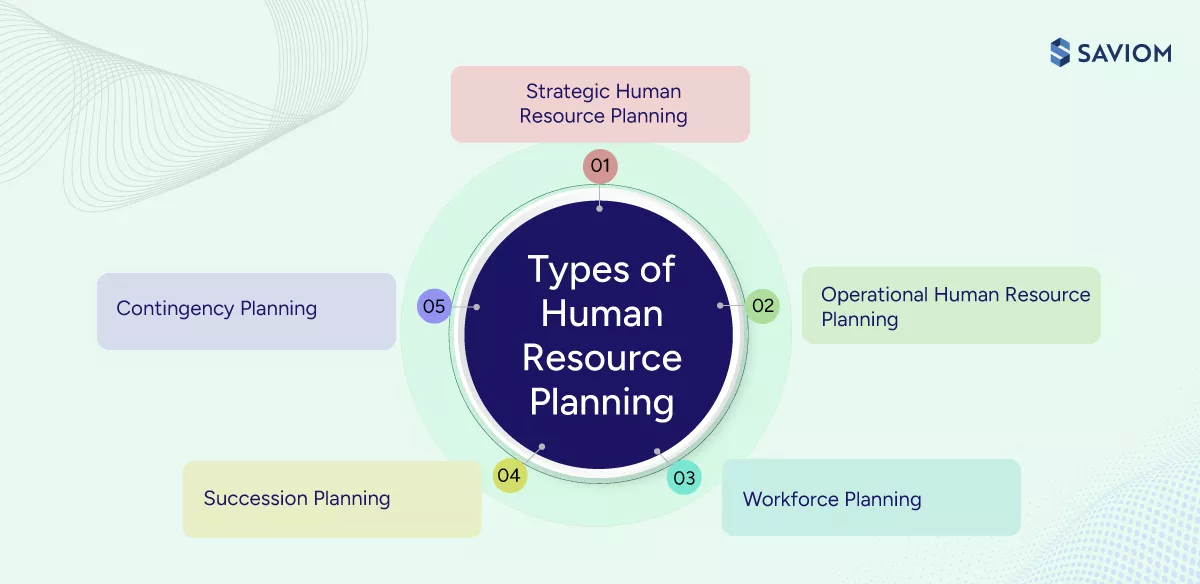
Strategic Human Resource Planning
Strategic human resource planning is the long-term process of aligning workforce decisions with the broader business objectives. It helps organizations define annual workforce priorities, anticipate future talent needs, and ensure that people’s strategy supports long-term business goals such as growth, innovation, expansion, or transformation.
Operational Human Resource Planning
Operational human resource planning focuses on short-term workforce execution and turns broader HR strategy into day-to-day staffing actions. It includes managing staffing levels, balancing workloads, and ensuring role-specific allocations. As a result, it helps managers maintain workforce continuity while meeting immediate business demands.
Learn the fundamentals of operational workforce planning.
Workforce Planning
Workforce planning is the process of aligning resource capacity, skills, and deployment with current and future business needs. It helps organizations assess talent demand, identify gaps, and determine whether they need to hire, redeploy, train, or restructure teams. The goal of workforce planning is to ensure that the right people are in the right roles at the right time.
Succession Planning
Succession planning focuses on identifying and preparing internal talent to step into critical roles when vacancies arise. It addresses continuity risks linked to leadership exits, retirements, unplanned attrition, or internal movement across key positions. Therefore, this planning type helps organizations protect business stability and reduce disruption during role transitions.
Contingency Planning
Contingency planning is the process of preparing organizations for unexpected workforce disruptions such as sudden resignations, hiring freezes, labor shortages, or changes in business demand. It supports business continuity by building backup staffing options, cross-training employees, and creating response plans for various resource risks. In this way, it helps organizations stay resilient under changing conditions.
After types, it’s time to understand the differences between human resource planning and resource planning.
Human Resource Planning vs. Resource Planning
Understanding the difference between human resource planning and resource planning helps businesses choose the right planning approach. Human resource planning focuses specifically on workforce needs, while resource planning covers a broader mix of people, budgets, tools, and time. The table below elucidates the distinction clearly.
| Aspect | Human Resource Planning | Resource Planning |
|---|---|---|
| Definition | Focuses on planning the workforce an organization needs to achieve business goals | Focuses on planning and allocating all types of resources needed to complete work efficiently |
| Primary Focus | Talent needs, workforce capacity, skills, hiring, and employee development | Availability and use of people, time, budget, tools, and other operational resources |
| Scope | Limited to employees and workforce-related decisions | Broader and may include human resources, finances, equipment, technology, and materials |
| Goal | Ensure the organization has the right people with the right skills at the right time | Ensure the organization uses available resources effectively to meet project or business demands |
| Common Activities | Workforce forecasting, succession planning, hiring plans, skill gap analysis, and retention planning | Resource allocation, capacity planning, scheduling, budgeting, workload balancing, and utilization tracking |
| Time Horizon | Often strategic and long term, but may also support annual workforce planning | Often operational, tactical, or project-based, though it can also support long-term planning |
| Key Stakeholders | HR managers, business leaders, department heads, and talent managers | Project managers, operations leaders, finance teams, resource managers, and department heads |
| Key Outcome | Stronger workforce readiness and better alignment between talent strategy and business goals | Improved resource utilization, delivery efficiency, cost control, and operational performance |
Now that the distinction between human resource planning and resource planning is clear, we can focus on the key steps involved in talent planning.
A Step-by-Step Framework to Human Resource Planning
A clear framework helps organizations turn human resource planning from a concept into a repeatable process. It gives managers a structured way to assess workforce needs, spot gaps, and take action before those gaps affect business performance. To see how this process works in practice, let’s look at the step-by-step framework for human resource planning:
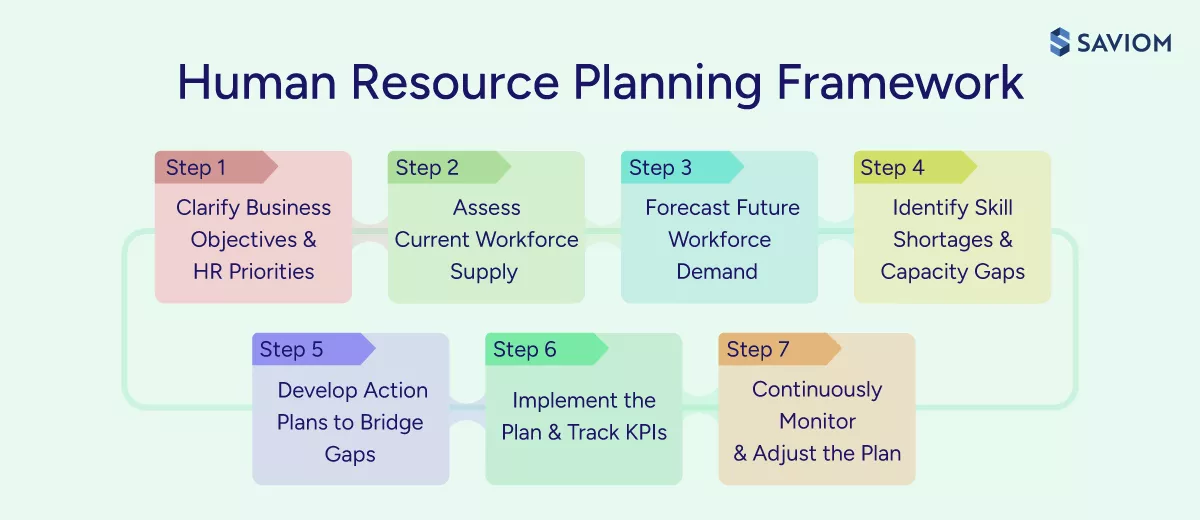
Step 1: Clarify Business Objectives and HR Priorities
Human resource managers can start by connecting HR planning to business goals such as growth, expansion, efficiency, innovation, or transformation. Additionally, they should identify the key workforce priorities, including critical roles, essential skills, leadership needs, and likely capacity gaps. A clear starting point improves alignment between workforce decisions and business strategy.
Step 2: Assess Current Workforce Supply
Next, managers should get a realistic view of the workforce the organization already has. For this, they can review resource availability, skills, performance levels, experience, tenure, and exposure to critical positions. They should also assess internal mobility potential and succession depth to understand which employees can be developed, redeployed, or prepared for future roles. .
Explore how workforce capacity planning can help assess and plan talent precisely.
Step 3: Forecast Future Workforce Demand
Then, managers should estimate what resources the organization will need in the future based on business plans, expected growth, productivity targets, and upcoming initiatives. They must look beyond headcount and define the capabilities, experience levels, and role types the business will require. This makes resource forecasting more practical and closely tied to execution needs.
Step 4: Identify Skill Shortages and Capacity Gaps
As per the Future of Jobs Reports 2025, “Skill gaps are categorically considered the biggest barrier to business transformation.”
Managers should compare the current workforce supply with future requirements. This comparison reveals where the business may face skill shortages, weak role coverage, or excess capacity. Highlighting these gaps early helps organizations understand where critical resource constraints may arise. As a result, they can take proactive corrective actions before these issues disrupt business performance.
Discover how resource capacity planning helps firms identify and bridge skill gaps.
Step 5: Develop Action Plans to Bridge Gaps
Once the gaps are clear, managers should decide how they will close them. The plan may include corrective actions such as reallocation, upskilling, and hiring contingent workers, or full-time employees. Additionally, they should assign ownership, timelines, and budget assumptions, so each action has a clear path forward. Well-defined action plans help organizations improve execution discipline and workforce responsiveness.
Step 6: Implement the Plan and Track KPIs
Next, managers can put the plan into action through coordinated efforts across recruitment, learning and development, workforce management, and leadership teams. This ensures that redeployment, training, and hiring activities are aligned and executed efficiently. At the same time, they must track key performance indicators to measure progress, highlight delays, and identify issues before they escalate.
Explore the key resource management metrics that businesses must track.
Step 7: Continuously Monitor and Adjust the Plan
Finally, managers should review outcomes regularly because business priorities, hiring conditions, and employee movement can change quickly. They should evaluate whether actual results still match the original assumptions and adjust timelines, hiring plans, or resource allocation when needed. Continuous adjustment improves accuracy, agility, and long-term workforce stability.
To better understand how real-time workforce optimization and planning can help your organization build a more future-ready workforce, read our comprehensive eBook.
After the steps, let us take a look at the various human resource planning challenges that organizations encounter, along with the ways to solve them.
Common Human Resource Planning Challenges and Ways to Solve Them
Human resource planning often looks straightforward in theory, but organizations face several challenges when they try to apply it in practice. These challenges can affect forecasting accuracy, talent availability, and the ability to align workforce decisions with business needs. Let’s dive deep into the common pitfalls and their solutions:
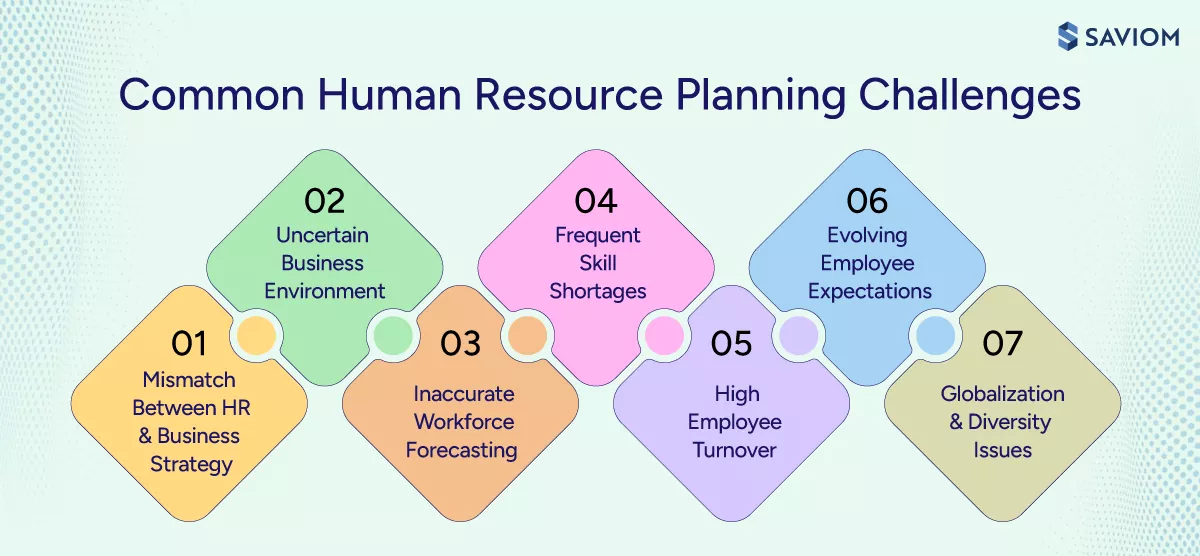
Mismatch Between HR and Business Strategy
What is the impact?
When workforce plans are not aligned with business goals, organizations may invest in the wrong roles or skills. This can slow growth, reduce efficiency, and weaken the impact of strategic initiatives.
How to address it?
Organizations should involve HR early in business planning, define shared priorities with leadership, and regularly review workforce plans alongside business objectives to ensure alignment.
Uncertain Business Environment
What is the impact?
Sudden changes in market conditions, customer demand, or business priorities can lead to overstaffing, understaffing, or delayed hiring. This reduces flexibility and makes workforce planning less reliable.
How to address it?
Managers should use scenario planning to prepare for multiple outcomes, build flexible staffing models, and review workforce plans regularly to keep them relevant.
Inaccurate Workforce Forecasting
What is the impact?
Poor forecasting causes organizations to misjudge how many employees they need and when they need them. This can lead to skill shortages, idle capacity, excess labor costs, and rushed recruitment decisions.
How to address it?
HR managers should strengthen data quality, combine historical trends with current assumptions, and leverage real-time insights for better forecasts. In addition, they should involve cross-functional teams to create realistic workforce projections.
Learn how resource capacity forecasting helps build solid talent pipelines.
Frequent Skill Shortages
What is the impact?
Skill gaps can reduce work quality, delay projects, and weaken the organization’s ability to adopt new technologies or respond to emerging opportunities. Over time, they can also affect employee performance and business growth.
How to address it?
Organizations should invest in upskilling and reskilling, strengthen internal mobility, and adopt targeted hiring strategies for critical roles.
High Employee Turnover
What is the impact?
High attrition disrupts team stability and makes long-term workforce planning less reliable. As employees leave, the organization loses knowledge, experience, and productivity while spending more on recruitment and onboarding.
How to address it?
HR should identify the main causes of attrition by analyzing exit interviews, employee feedback, and turnover data. Based on these insights, managers can improve employee experience by addressing workload concerns, offering competitive compensation, strengthening workplace culture, and creating clear career development opportunities.
Evolving Employee Expectations
What is the impact?
Evolving employee expectations around flexibility, growth, and workplace culture can make it harder to attract and retain talent if organizations fail to adapt. This can weaken employer reputation and make workforce planning less effective.
How to address it?
HR should listen to employees through surveys, feedback sessions, manager discussions, and exit data. Then, the organization should update policies related to flexible work, career development, well-being, recognition, and employee support.
Discover effective strategies to improve employee engagement.
Globalization and Diversity Issues
What is the impact?
Globalization and diversity issues make workforce planning more complex because labor laws, cultures, skills, and employee expectations differ across regions. Weak diversity planning can limit inclusion, reduce innovation, and make it difficult to manage global projects.
How to address it?
HR should adopt region-specific planning approaches, strengthen inclusive hiring practices, and ensure fair promotion opportunities. Additionally, they should track diversity and pay equity metrics to ensure balanced and effective workforce strategies.
In the next section, let us learn about the human resource planning process.
Best Practices for Human Resource Planning
Robust human resource planning depends not just on process, but on how consistently organizations apply the right practices. The most effective process combines business alignment, reliable data, and ongoing workforce review to make better talent decisions. To see what drives better human resource planning outcomes, let’s look at the best practices:
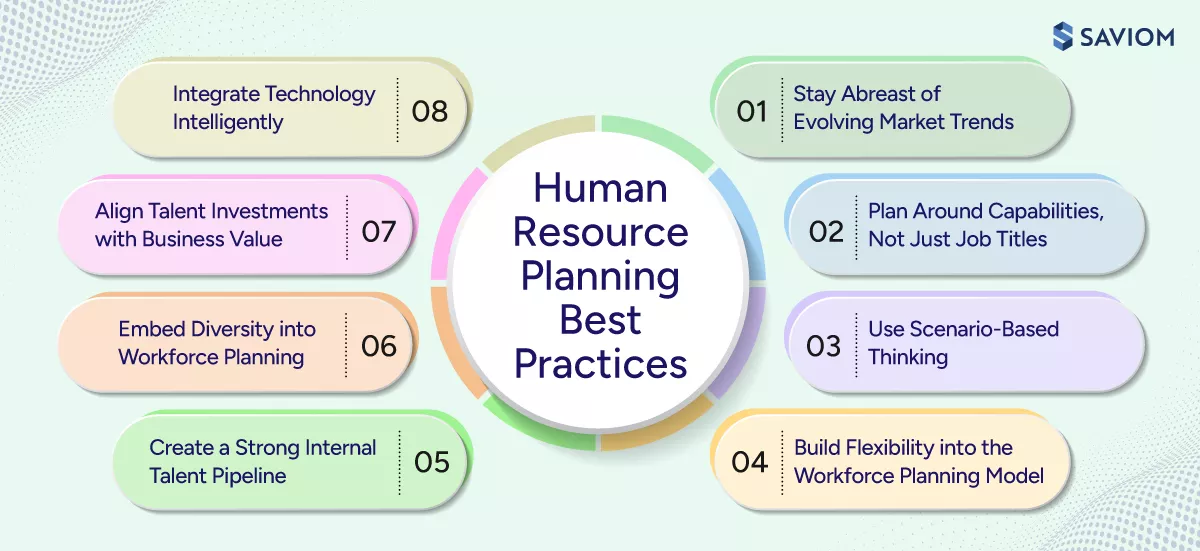
Stay Abreast of Evolving Market Trends
An effective human resource planning process starts with staying informed about changes in the industry, technology landscape, and labor market. This allows organizations to adjust workforce plans before business needs shift too far from existing assumptions. As a result, managers can anticipate skill gaps earlier and prepare for hiring, upskilling, or restructuring strategies with greater confidence.
Plan Around Capabilities, Not Just Job Titles
Managers can plan around the skills, competencies, and adaptability employees bring instead of relying only on job titles or fixed role definitions. This approach gives businesses a clearer view of how talent can be deployed across changing priorities and business needs. It also helps organizations respond faster when roles evolve, teams restructure, or new capabilities become important.
Use Scenario-Based Thinking
Scenario-based thinking helps managers plan for growth, restructuring, technological change, or shifting customer demand without relying on a single fixed forecast. As a result, workforce-related decisions become more resilient and less reactive during uncertainty. Moreover, this practice improves workforce readiness and streamlines the talent management process.
Explore how scenario planning helps firms choose the most feasible resource plan.
Build Flexibility into the Workforce Planning Model
A flexible workforce model combines permanent employees, contract talent, cross-trained staff, and redeployment options to meet changing demands. This approach enables businesses to scale resources quickly, manage workload fluctuations efficiently, and maintain continuity during disruption.
Create a Strong Internal Talent Pipeline
Best-in-class human resource planning depends on building talent from within, not just hiring from outside. Investing in succession planning, employee development, mentoring, and internal mobility creates a stronger pipeline for future roles and leadership needs. As a result, organizations can fill key positions faster and reduce dependence on external hiring.
Embed Diversity into Workforce Planning
According to the Future of Jobs survey, “Adoption of diversity, equity, and inclusion initiatives remains on the rise.”
A strong HR strategy should make diversity, equity, and inclusion part of workforce planning rather than treating them as separate initiatives. This means building plans that support fair hiring, development, promotion, and succession opportunities across the organization. When diversity is embedded into talent strategy, the workforce becomes more representative, inclusive, and adaptable.
Explore the key benefits of diversity in project management.
Align Talent Investments with Business Value
Human resource planning becomes more credible when talent investments clearly support business priorities and measurable outcomes. Organizations should direct hiring, training, and development budgets toward areas that improve execution, strengthen critical capabilities, or support strategic growth. This creates a stronger alignment between workforce spending and business value.
Integrate Technology Intelligently
Modern human resource planning works better when organizations use technology to improve visibility, forecasting, and decision-making. HR analytics, talent management software, and automation can help teams process data faster and identify patterns that may otherwise be missed. This proactive approach leads to more accurate, efficient, and practical workforce planning.
After best practices, let us take a look at the various metrics that organizations must track to ensure the effectiveness of human resource planning.
Key Metrics for Effective Human Resource Planning
Tracking the right metrics helps businesses turn human resource planning into a measurable and actionable process. These metrics show whether the organization has the right talent and capacity to meet current needs and future goals. Below are the key metrics for effective human resource planning.
Headcount Gap
The headcount gap measures the difference between the number of employees currently available and the number needed to meet projected business demand. It helps the organization spot areas where it may face understaffing or excess capacity. This insight supports timely decisions on hiring, redeployment, or workforce readjustment.
Time to Hire
Time to hire measures the number of days between a candidate entering the recruitment process and accepting a job offer. It reflects how quickly the organization can respond to staffing needs and secure talent. A shorter hiring cycle often points to stronger recruitment efficiency and a smoother candidate experience.
Cost per Hire
Cost per hire measures the total expense involved in recruiting and in the onboarding process of a new employee, including sourcing, advertising, recruiter effort, and onboarding costs. This metric shows how efficiently the organization converts hiring demand into talent acquisition outcomes. It also helps managers control recruitment spending and make more cost-effective staffing decisions.
Absenteeism Rate
Absenteeism rate measures how frequently employees are absent from work over a defined period, excluding approved leaves where applicable. High absenteeism can signal issues such as low engagement, burnout, health concerns, or poor workplace culture. Monitoring this metric helps organizations protect productivity and maintain workforce availability.
Employee Turnover Rate
According to a Gallup survey, “42% of employees who voluntarily left said their exit could have been prevented.”
Employee turnover rate measures how quickly employees leave the organization over a specific period. High employee turnover can increase hiring costs, reduce productivity, and create capability gaps. Monitoring turnover helps workforce planners identify retention risks and improve engagement, rewards, or development strategies.
The formula to calculate employee turnover rate is:
Average Number of Employees During the Period) × 100
Retention Rate
The retention rate measures the percentage of employees who remain with the organization over a defined period. It reflects workforce stability and shows whether the organization is able to hold on to key talent. Strong retention supports better long-term staffing continuity and reduces repeated hiring pressure.
Discover effective employee retention strategies for your workforce.
Internal Mobility Rate
Internal mobility rate measures how frequently the organization fills open roles with existing employees through promotions, transfers, or lateral moves. It shows how effectively the business uses its internal talent pool to meet changing workforce needs. A strong rate reflects better talent development, career progression, and succession readiness.
Skill Gap Index
The skill gap index measures the gap between the skills employees currently have and the capabilities the organization needs to achieve future goals. It helps managers identify where talent shortages may limit business performance or strategic execution. This metric supports smarter decisions on hiring and employee development.
The formula to calculate skill gap index is:
Number of Skills Required] × 100
Succession Coverage Ratio
Succession coverage ratio measures how many business-critical roles have ready or near-ready internal successors. A strong ratio reduces leadership continuity risk and ensures smoother transitions when vacancies arise due to retirement, promotion, or unexpected exits. It is a key indicator of long-term workforce resilience.
Vacancy Rate
Vacancy rate measures the percentage of approved or required roles that remain unfilled at a specific point in time. It highlights where staffing shortages may place pressure on teams, output, or service quality. A rising vacancy rate often signals the need for faster hiring, better workforce allocation, or stronger retention action.
Diversity Metrics
Diversity metrics track how well the workforce aligns with the organization’s diversity goals across hiring, representation, progression, pay equity, and retention. Common metrics include gender diversity, ethnic or racial representation, age distribution, hiring diversity rate, and promotion rates by demographic groups. These metrics help organizations identify gaps, strengthen inclusion efforts, and build a more balanced workforce for future needs.
Plan, manage, and optimize workforce in real-time using SAVIOM’s robust workforce management software. Book a Demo Today.
Next, let us understand the role of AI, analytics, and HRIS in improving human resource planning.
How AI, Analytics, and HRIS Improve Human Resource Planning
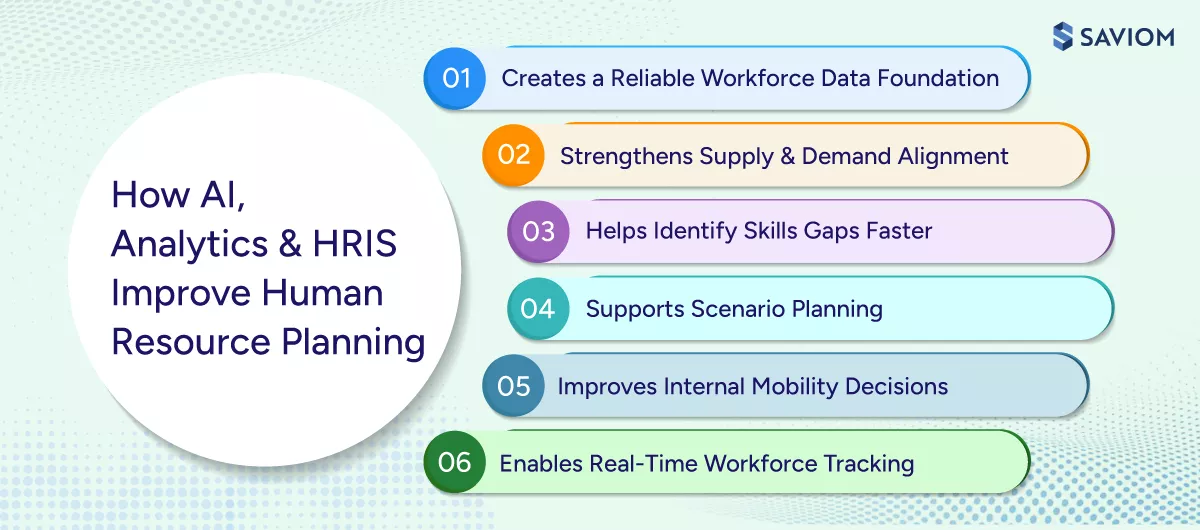
AI, analytics, and HRIS help organizations make human resource planning faster, more accurate, and more proactive. They improve visibility into workforce trends, support better forecasting, and help teams make decisions based on real-time data instead of assumptions. Let’s look at how AI, analytics, and HRIS improve human resource planning:
Creates a Reliable Workforce Data Foundation
HRIS creates a reliable workforce data foundation by centralizing employee, role, and organizational information in one system. As a result, human resource managers can work with more accurate, consistent, and up-to-date data instead of relying on disconnected records. This improves workforce visibility and supports more confident HR planning decisions.
Strengthens Supply and Demand Alignment
Workforce analytics helps organizations understand workforce trends such as hiring velocity, turnover patterns, productivity levels, and seasonal demand shifts. As a result, managers can compare projected demand with available workforce supply more accurately. This proactive approach makes workforce forecasting more practical and reduces the risk of staffing gaps or excess capacity.
Explore how capacity planning helps firms align supply and demand effectively.
Helps Identify Skills Gaps Faster
AI and analytics can assess employee profiles, role requirements, certifications, performance data, and future business priorities to identify capability gaps more quickly. This gives human resource managers a clearer picture of where the organization may lack critical talent or emerging skills. In turn, they can initiate learning programs or onboard new hires.
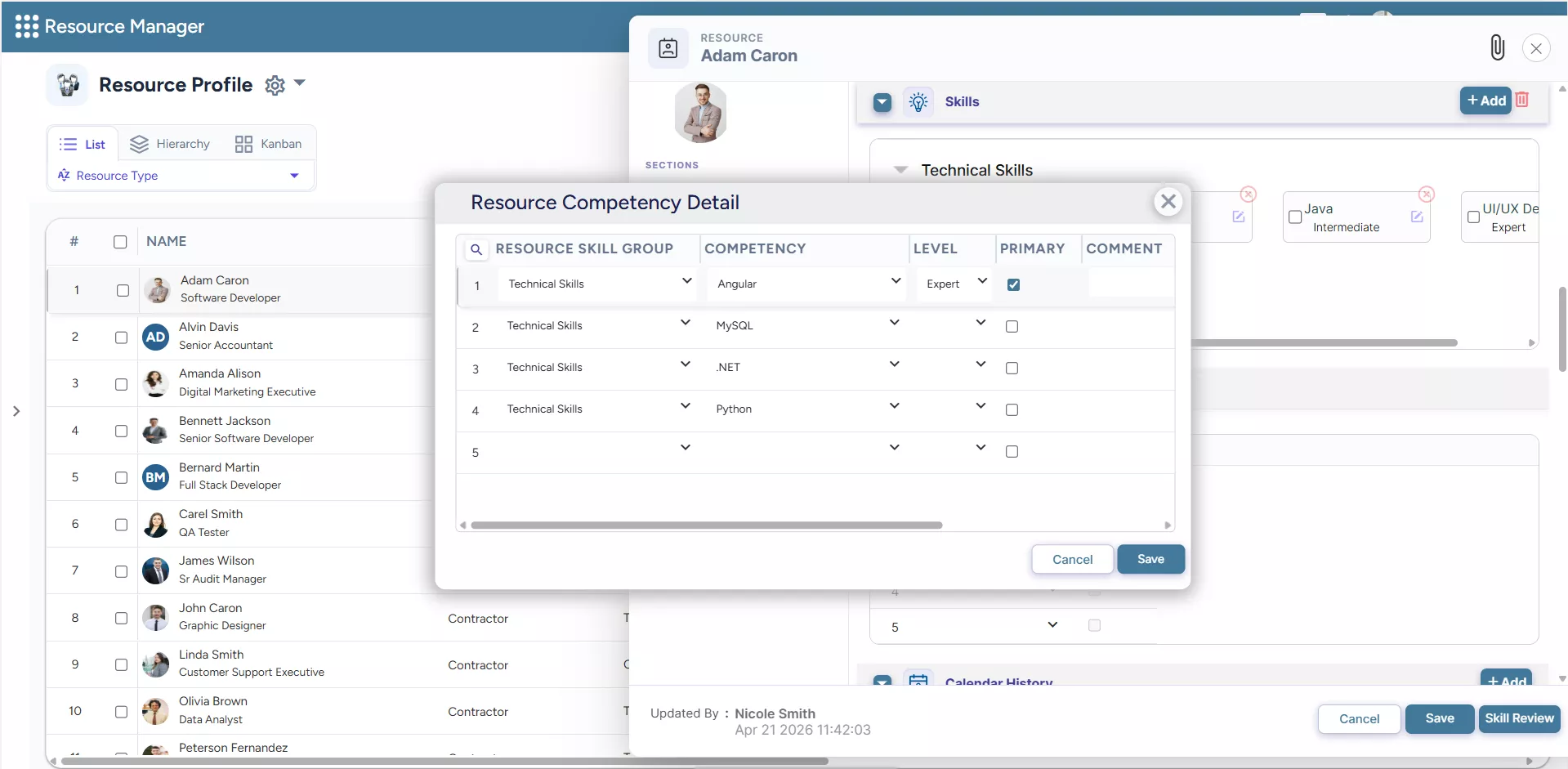
SAVIOM’s Competency Matrix enables managers to track skills, certifications, and proficiency levels, helping identify skill gaps and plan targeted reskilling initiatives.
Supports Scenario Planning
AI and workforce analytics support scenario planning by modeling different workforce outcomes based on growth plans, attrition levels, budget changes, or business transformation. Therefore, managers can prepare for several possible situations instead of depending on a single static forecast. This makes talent planning more flexible, along with improving enterprise risk management and decision-making quality.
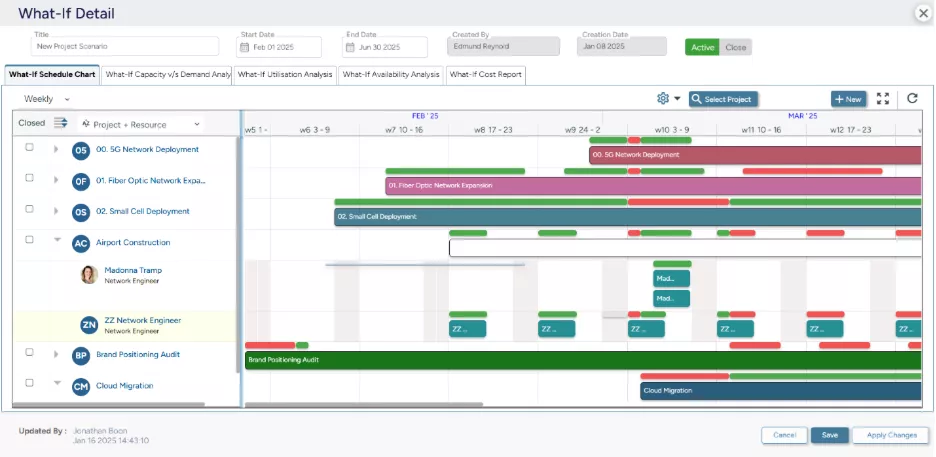
SAVIOM’s Scenario Modeling functionality allows managers to simulate and test multiple workforce scenarios in a sandbox environment.
Improves Internal Mobility Decisions
HRIS platforms combined with skills data help identify employees who may be suitable for open positions, stretch assignments, or future leadership roles. This improves internal mobility by matching talent to opportunities faster and more accurately. It also reduces dependence on external hiring while increasing employee engagement and career development opportunities.
Enables Real-Time Workforce Tracking
Modern analytics dashboards enable real-time workforce tracking by showing current trends in employee attrition, hiring progress, workforce capacity, and related human resource planning indicators. This allows organizations to monitor changes continuously instead of waiting for periodic reviews. In turn, managers can adjust resource management plans more quickly when priorities or conditions shift.
Conclusion
Effective human resource planning connects strategy, skills, headcount, and governance into one coordinated rhythm. It helps organizations move beyond reactive staffing and build a workforce that supports business goals more deliberately. In that sense, HR planning works best when it stays continuous, cross-functional, and guided by reliable workforce data.
As business needs and talent conditions keep changing, human resource planning cannot remain a one-time exercise. Organizations need to review their planning process, metrics, and planning cadence regularly to keep decisions accurate and relevant. A stronger human resource planning approach ultimately improves workforce readiness, execution quality, and long-term business stability.
Human Resource Planning FAQs
Human resource planning (HRP) is the strategic process of evaluating an organization’s current workforce, forecasting future staffing needs, and developing plans to ensure the right employees are available when needed. It helps businesses address skill gaps, support succession planning, and align talent strategies with long-term objectives.
The benefits of effective human resource planning are:
1. Aligns workforce strategy with business goals
2. Helps identify skill gaps early
3. Supports better recruitment and hiring decisions
4. Encourages ongoing learning and skill development
5. Strengthens succession planning
6. Reduces staffing risks and labor costs
The main objectives of human resource planning are to ensure the organization has the right number of people with the right skills in the right roles at the right time. It also aims to reduce workforce risks linked to attrition, succession gaps, and capability shortages that could disrupt business performance. At the same time, it improves cost efficiency and decision quality by supporting better forecasting, prioritization, and long-term talent planning.
Human resource planning focuses specifically on ensuring the organization has the right people, skills, and workforce capacity to meet business needs over time. On the other hand, resource planning is broader in operational use and often refers to allocating all types of resources, such as people, time, budgets, tools, or equipment, to support project execution and delivery.
The key steps in human resource planning include:
1. Clarify business objectives and HR priorities
2. Assess current workforce supply
3. Forecast future workforce demand
4. Identify skill shortages and capacity gaps
5. Develop action plans to bridge gaps
6. Implement the plan and track KPIs
7. Continuously monitor and adjust the plan
Workforce planning addresses talent gaps by identifying the difference between current workforce capabilities and future business needs. It helps organizations analyze shortages in skills, capacity, or critical roles. It then creates targeted strategies such as hiring new talent, upskilling existing employees, redeploying internal resources, succession planning, or using contingent staff.
The common challenges in talent planning and management are:
1. Mismatch between HR and business strategy
2. Uncertain business environment
3. Inaccurate workforce forecasting
4. Frequent skill shortages
5. High employee turnover
6. Evolving employee expectations
7. Globalization and diversity issues
HRIS stores workforce information in one place and gives firms easier access to accurate employee data. It helps organizations analyze headcount, roles, skills, performance, and availability more clearly, which improves planning quality and decision-making. Because of this, HR teams can forecast future workforce needs with better accuracy and align talent plans more closely with business goals.