

Introduction
Every business wants to get maximum value from its people, time, and budget. However, without proper scheduling, even the best teams can struggle with overutilization, underutilization, missed deadlines, and misplaced priorities. This directly affects productivity, project costs, employee morale, and overall profitability.
Effective resource scheduling helps organizations plan work more strategically by assigning the right people to the right tasks at the right time. This is where resource scheduling benefits become more visible by preventing booking conflicts, improving resource utilization, and aligning workforce capacity and project priorities.
This blog covers the importance of resource scheduling, the key benefits it offers, and when organizations begin to realize its value.
Why Effective Resource Scheduling Matters?
In dynamic business environments, project priorities change quickly, client expectations evolve, and distributed teams often depend on the same critical specialists. As a result, static project plans lose accuracy when resource availability, timelines, or business needs change. Effective resource scheduling bridges this gap by turning project demand into a realistic execution plan that managers can trust before work begins.
This makes scheduling a practical decision framework, not just an administrative exercise. It helps managers assess whether commitments are achievable, identify staffing risks early, and sequence work based on the team’s actual capacity. Moreover, effective resource scheduling improves resource planning and delivery readiness, enabling teams to execute projects more predictably.
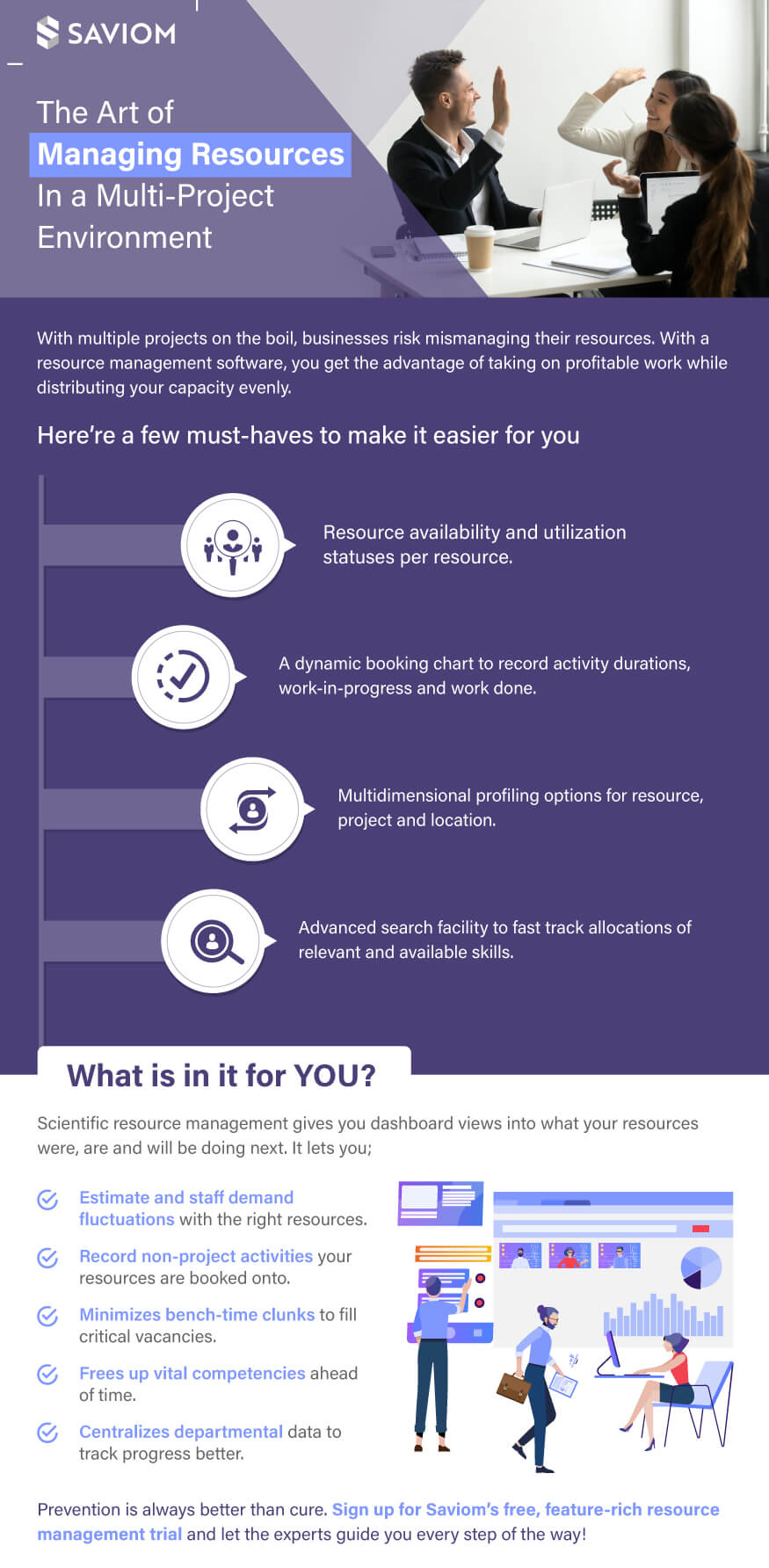
For a detailed overview of the process, strategies, and best practices, read our resource management guide
Now that we have understood the importance, let’s explore the benefits of resource scheduling.
Key Resource Scheduling Benefits
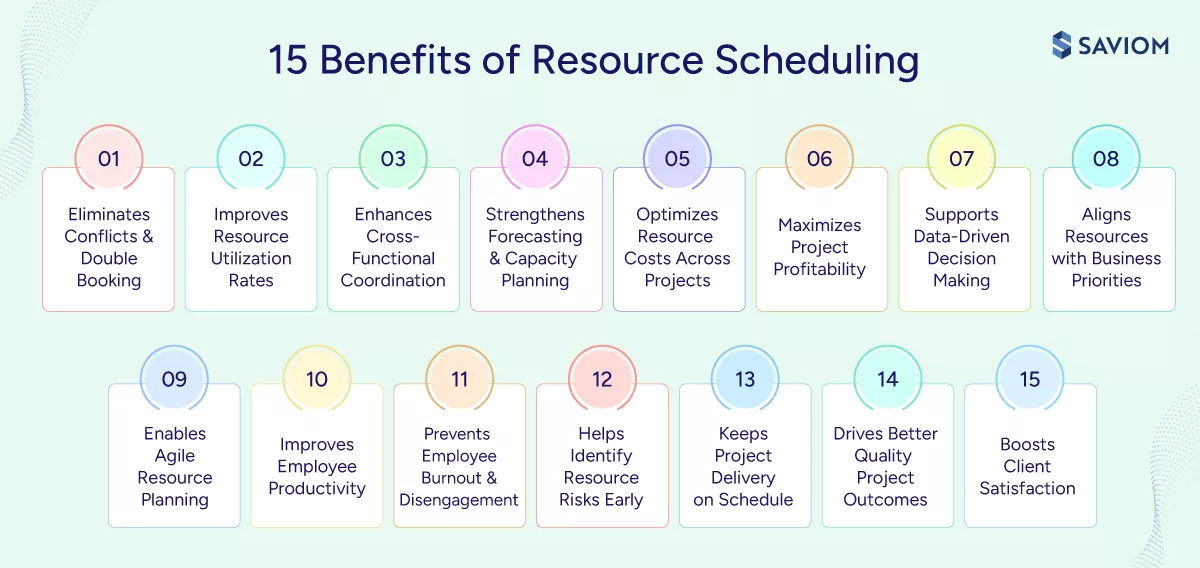
The key resource scheduling benefits extend across operations, finance, business strategy, workforce management, and project delivery. Together, they help organizations improve resource utilization, reduce avoidable costs, and create a more reliable delivery model. Let’s explore how these benefits contribute to stronger project execution and better business performance:
Operational Benefits
Resource scheduling first improves how day-to-day work is planned, assigned, and coordinated across teams. The following benefits highlight how workforce scheduling prevents conflicts, improves utilization, and supports better cross-functional execution.
Eliminates Resource Conflicts and Double Booking
Resource scheduling solves this issue by preventing the same employee, equipment, or shared asset from being assigned to overlapping work. By identifying conflicts early, managers avoid last-minute reshuffling, task delays, and delivery disruptions caused by double-booking. As a result, resources are allocated more efficiently and can work with greater clarity.
Improves Resource Utilization Rates
Resource scheduling improves resource utilization by showing who is available, overloaded, or underused. This helps managers assign work based on actual capacity, skills, and project priorities instead of assumptions. As a result, teams stay productive, workloads remain balanced, and businesses achieve high operational efficiency without increasing headcounts.
Enhances Cross-Functional Coordination
A shared resource schedule gives departments a unified view of resource availability, dependencies, and deadlines. This improves cross-departmental collaboration by enabling teams to plan around realistic timelines rather than relying on informal updates or disconnected spreadsheets. Consequently, handoffs become smoother, and projects move forward with fewer delays or communication gaps.
Financial Benefits
Resource scheduling also influences how efficiently organizations use budgets and workforce capacity. By giving managers better visibility into resource demand, availability, and utilization, it helps them make more cost-effective resource decisions. The following benefits show its impact on resource forecasting, cost control, and project profitability.
Strengthens Forecasting and Capacity Planning
Resource scheduling strengthens forecasting and capacity planning by providing managers with a clear view of upcoming demand, current bookings, and future availability. These demand-vs-capacity insights support timely hiring, training, backfilling, and outsourcing decisions before shortages affect project timelines, delivery quality, or budgets.
See how resource capacity planning helps identify demand and capacity gaps.
Optimizes Resource Costs Across Projects
Effective resource scheduling helps managers select the right mix of local/global, junior/senior, and permanent/contingent workforce based on project needs. As a result, they can assign right-cost resources without paying for overqualified talent or using high-cost specialists where the work does not require them. This improves cost efficiency across projects while maintaining the required level of quality and expertise.
Maximizes Project Profitability
With a robust resource scheduling plan in place, organizations can staff initiatives in line with planned billable utilization rate, project budgets, and revenue targets. Moreover, proactive scheduling also reduces last-minute firefighting, high contractor costs, bench time, and unplanned overtime. As a result, firms can protect project margins, maintain cost predictability, and improve overall project ROI.
Read our billable utilization guide to learn how to improve profit margins.
Strategic Business Benefits
At a strategic level, resource scheduling connects day-to-day project execution with broader business planning. The following benefits demonstrate that resource scheduling improves leadership visibility, supports better priority alignment, and enables businesses to adjust plans.
Supports Data-Driven Decision Making
Resource scheduling gives managers clear visibility into resource risks, demand patterns, availability, capacity, and utilization. With accurate scheduling insights, managers can prioritize the right projects, approve realistic timelines, and resolve bottlenecks. As a result, they can make evidence-based staffing decisions instead of relying on anecdotal updates.
Aligns Resources with Business Priorities
A well-structured resource scheduling plan helps managers allocate resources based on business impact, urgency, commercial value, and strategic alignment. This allows organizations to focus workforce capacity on high-value, business-critical, and revenue-generating projects.
Enables Agile Resource Planning
Flexible resource schedules help organizations respond quickly when deadlines change, project scope expands, or client priorities shift. It allows managers to assess availability and adjust allocations with minimal disruption. As a result, delivery teams can adapt to changing business needs without losing control of timelines, budgets, or project quality.
Explore our resource planning guide to improve project readiness.
Workforce-Based Benefits
Beyond project plans and financial outcomes, resource scheduling also affects how people experience their day-to-day work. The following benefits highlight how resource scheduling improves productivity, supports workload balance, and strengthens employee engagement across teams.
Improves Employee Productivity
Resource scheduling improves employee productivity by matching skills, competencies, experience, and availability with suitable project tasks. When employees are assigned the right work, they complete tasks faster, deliver better outputs, and build expertise through relevant assignments that support both individual growth and organizational capability.
Learn how to improve employee productivity for better workforce performance.
Prevents Employee Burnout and Disengagement
According to a Gallup report, “Unmanageable workload and unreasonable time pressure are among the top causes of employee burnout.”
With a clear view of resource schedules, managers can identify overallocated resources and rebalance workloads before excessive pressure leads to burnout. Moreover, they can mobilize underutilized employees to billable or strategic projects, reducing disengagement caused by bench time or limited project involvement. This balanced workload distribution improves employee well-being and creates a healthier work environment.
Project Delivery and Client Benefits
Resource scheduling also plays a direct role in how reliably projects move from planning to completion. Listed below are the benefits that highlight how effective resource scheduling improves delivery timelines, output quality, project predictability, and client confidence.
Helps Identify Resource Risks Early
With a well-defined resource scheduling plan, managers gain real-time visibility into availability, capacity, workload, and skill requirements. This helps them spot potential gaps, such as overallocated employees, skill shortages, or dependency conflicts, before they impact delivery. Consequently, they can adjust resource allocation, secure backup support, or plan hiring and outsourcing in time.
Explore ways to reduce resource risks in project management.
Keeps Project Delivery on Schedule
Resource scheduling helps managers plan work around actual availability, skill requirements, dependencies, and project deadlines. This keeps delivery on track by ensuring critical tasks have the right resources available at the right time. Consequently, effective resource scheduling improves schedule adherence, especially when multiple projects compete for the same specialists or shared assets.
Drives Better Quality Project Outcomes
Quality improves when resources are assigned to suitable work that matches their skills, expertise, and availability, and teams are not rushed by unrealistic workloads. With strong skill fit, balanced schedules, and clear deadlines, organizations can reduce errors, avoid rework, and prevent quality issues caused by hurried execution.
See how a skill matrix helps match the right talent to the right project work.
Boosts Client Satisfaction
Reliable resource scheduling supports predictable timelines, right quality standards, and fewer delivery surprises. When organizations commit to schedules based on actual availability, capacity, and skill-fit, they can deliver projects as promised with fewer changes, delays, or escalations. This improves the client experience, strengthens trust, and gives clients greater confidence in the organization’s ability to meet commitments.
Explore this eBook to learn how 5th gen resource management helps organizations schedule resources effectively, optimize capacity, and improve delivery performance.

With the key resource scheduling benefits covered, let’s see when they become visible, measurable, and scalable.
When Do Organizations Start Seeing Resource Scheduling Benefits?
Organizations rarely achieve all resource scheduling benefits at once. The value typically grows through a maturity curve, starting with visibility, moving into optimization, and eventually becoming a strategic planning capability. Let’s look at how these benefits evolve at each stage:
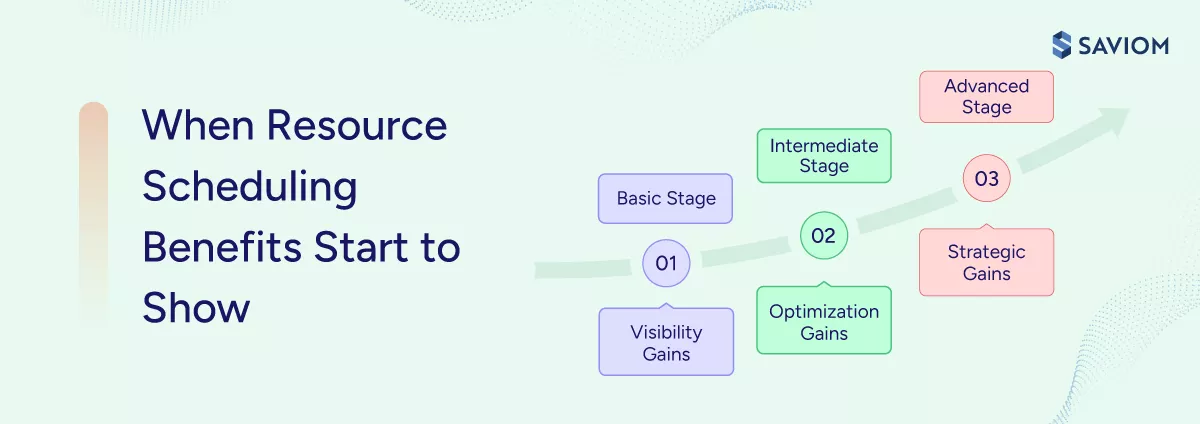
Basic Stage: Visibility Gains
At the basic stage, organizations start building a reliable foundation for resource scheduling by improving visibility and reducing information gaps.
- Managers first gain clarity into who is working on what, which resources are available, and where scheduling conflicts exist.
- Resource information becomes more reliable as skills, roles, availability, capacity, calendars, and assignments move out of scattered spreadsheets, emails, and individual manager updates.
- Early gains include reduced confusion, improved coordination, fewer informal scheduling gaps, and more dependable resource-planning conversations.
See why resource planning in Excel limits visibility.
Intermediate Stage: Optimization Gains
At the intermediate stage, organizations move from basic visibility to more effective resource scheduling across current and upcoming work.
- Managers start aligning resources with active and future project demand based on capacity, availability, skills, and workload requirements.
- Scheduling maturity improves when managers look beyond current assignments and include pipeline demand in planning discussions.
- Noticeable improvements appear in resource utilization, workload balance, delivery readiness, and the ability to prepare earlier for future project needs.
Advanced Stage: Strategic Gains
At the advanced stage, resource scheduling is closely linked to business performance and long-term planning.
- Mature organizations connect scheduling data with business metrics such as capacity utilization rate, cost rates, billability, margins, and revenue impact.
- Scheduling insights begin to guide workforce planning, hiring decisions, redeployment, training priorities, project intake, and capacity planning.
- Scheduling moves beyond day-to-day coordination and becomes a strategic lever for enterprise resource planning, profitability improvement, and business alignment.
Explore how strategic planning aligns resources with business priorities.
See how SAVIOM’s advanced resource management software helps you optimize resource scheduling and deliver projects with confidence. Book your free demo now.

Now that the growth path is clear, let’s understand how SAVIOM helps organizations realize these resource scheduling benefits.
How Does SAVIOM Enable These Resource Scheduling Benefits?
SAVIOM’s 5th gen resource management software brings together the scheduling capabilities organizations need to plan, assign, and optimize resources across projects.
The following features show how SAVIOM enables resource scheduling benefits:
- The all-in-one resource planner centralizes enterprise-wide resource information, giving managers a unified view of availability, schedules, allocations, and workload distribution.
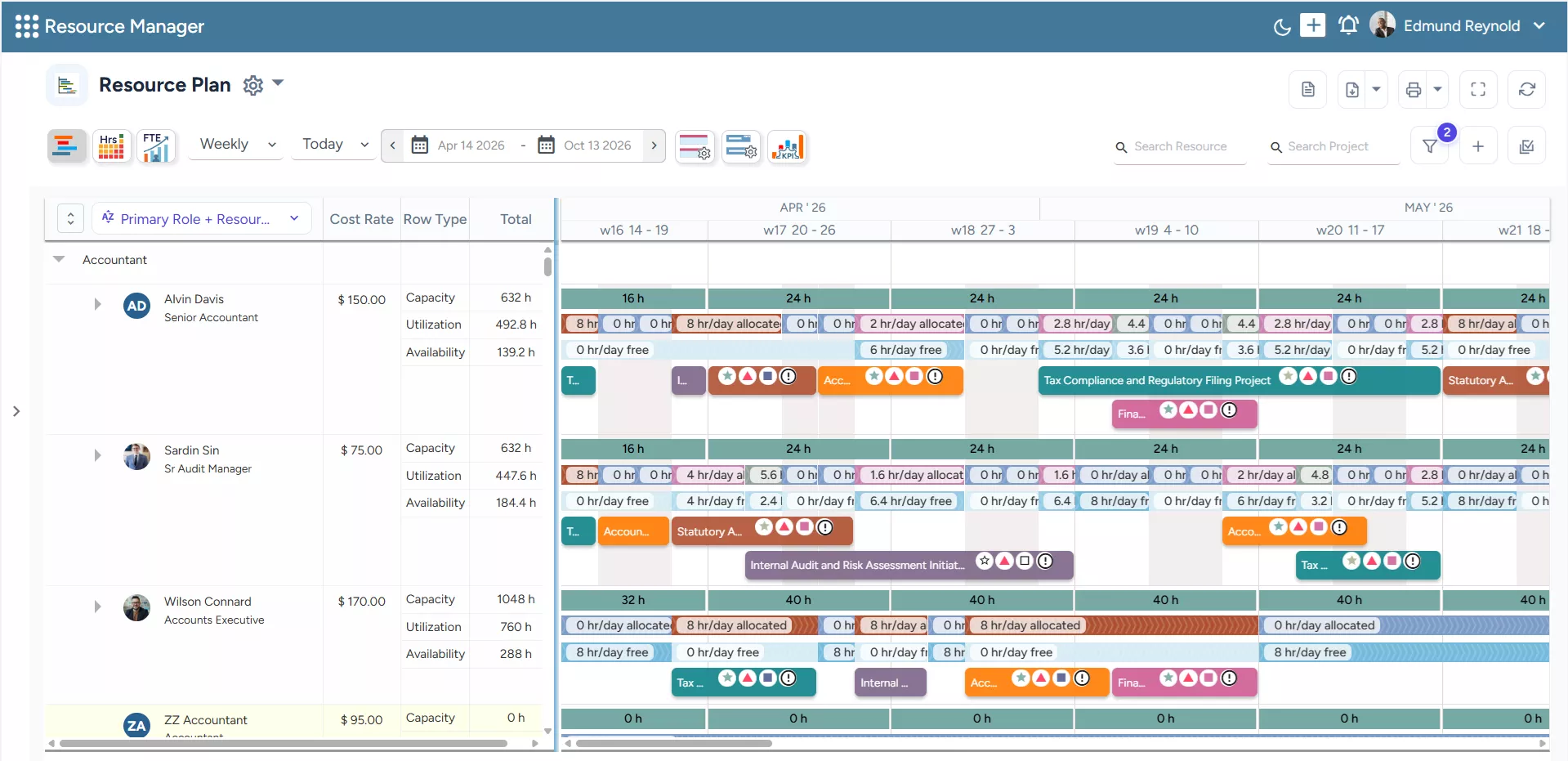 SAVIOM’s All-in-One Resource Planner provides real-time visibility into resource schedules, availability, and utilization across the enterprise.
- An intuitive drag-and-drop interface lets managers adjust schedules quickly, while automatically highlighting conflicts introduced by manual changes.
- The embedded capacity planner helps organizations compare demand against available capacity, making it easier to schedule resources based on actual delivery capability rather than assumptions.
- The KPI forecaster tracks key metrics, such as resource utilization, availability, and capacity, helping organizations monitor scheduling performance and spot trends early.
- The competency matrix provides clear visibility into workforce skills, certifications, and experience, helping managers schedule skilled resources more accurately across projects.
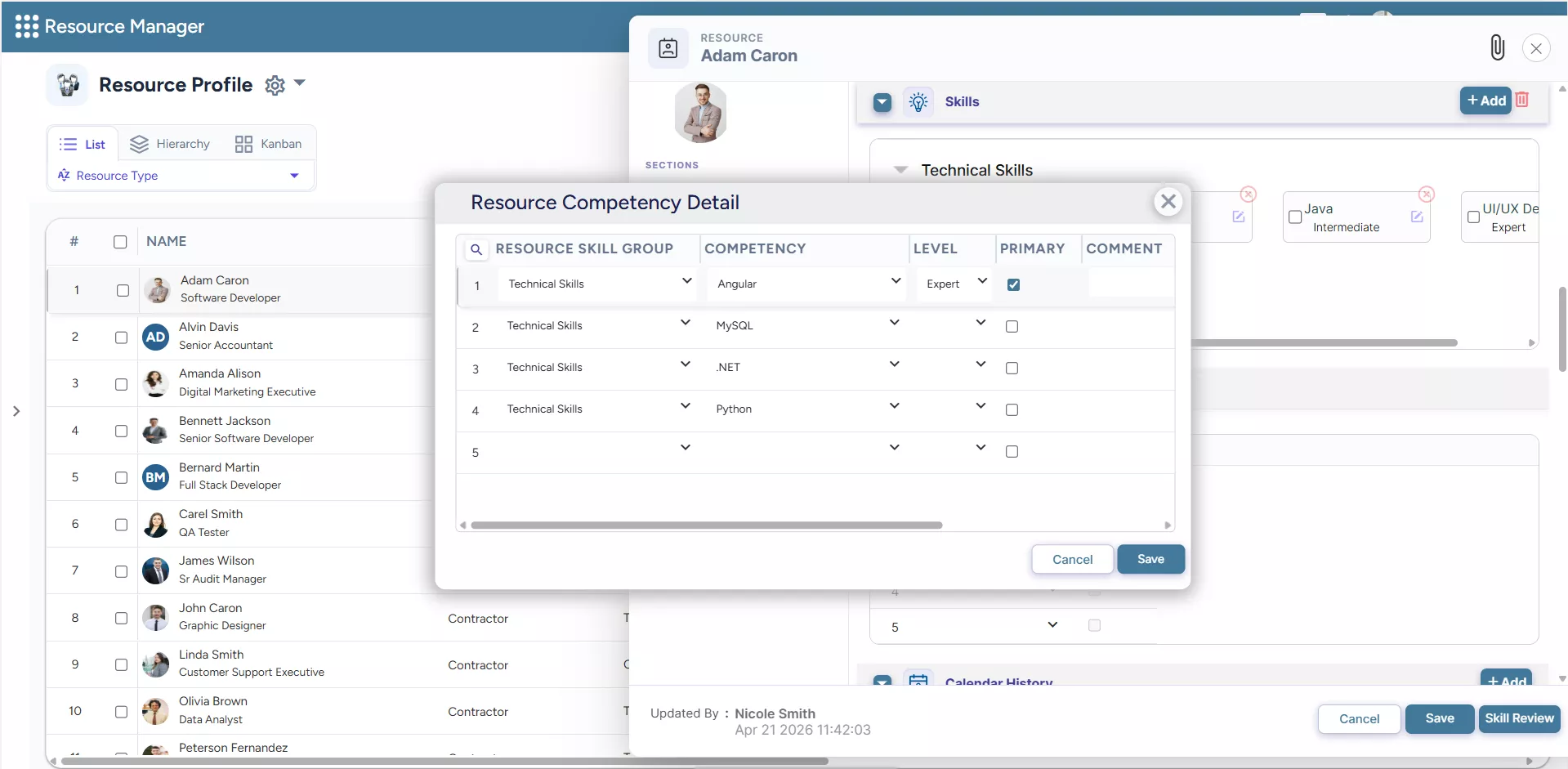 SAVIOM’s Competency Matrix enables managers to track skills, certifications, and proficiency levels, helping identify skill gaps and plan targeted reskilling initiatives.
- Embedded heat mapping visualizes under- and overutilized resources, enabling managers to identify workload imbalances and take corrective action.
- The early warning system flags issues, such as overutilization and double bookings in advance, enabling teams to address scheduling risks before they affect delivery.
- Real-time BI reports and dashboards provide visibility into critical resource data, allowing managers to review scheduling decisions against actual capacity, project demand, and utilization.
- Scenario modeling allows teams to evaluate different scheduling approaches before implementation, supporting more structured decision-making in dynamic environments.
- Workflow automation streamlines resource requisition, approval, scheduling, and skill-management processes, reducing manual effort and improving consistency.
Explore our resource management guide to understand the core concepts.
Conclusion
Resource scheduling is no longer a back-office coordination task. It is a strategic business capability that improves resource utilization, reduces delivery risks, controls costs, and strengthens project outcomes. The strongest benefits appear when organizations move beyond manual resource scheduling and build a repeatable approach backed by clear visibility.
With the right resource scheduling practices, managers can prevent conflicts, protect margins, and make credible delivery commitments. Moreover, as project environments become more dynamic, mature resource scheduling helps organizations respond more quickly to shifting demand, changing priorities, and evolving portfolio needs, thereby enhancing agility, profitability, and delivery resilience.
Resource Scheduling Benefits FAQs
Resource scheduling is the process of planning and assigning resources to project tasks for specific time periods based on availability, skills, capacity, and demand. It ensures the right people, equipment, or assets are available when needed, helping teams create realistic timelines, balance workloads, and deliver projects predictably.
Resource allocation is the process of deciding which resources should be assigned to a project or task, while resource scheduling defines when and for how long those resources will be used. In simple terms, allocation focuses on who is assigned, whereas scheduling focuses on when they are needed.
Resource scheduling helps organizations prevent booking conflicts, balance workloads, and improve utilization across teams. It also supports accurate forecasting, cost control, better decision-making, on-time project delivery, improved work quality, and higher client satisfaction.
Resource scheduling improves resource utilization by showing managers which resources are available, underutilized, overutilized, or already committed to other work. With this visibility, managers can assign resources to appropriate tasks, reduce bench time, balance workloads, and reallocate available capacity to billable or high-priority projects.
Yes, resource scheduling helps reduce project delays by ensuring critical tasks have the right resources available at the right time. It helps managers identify capacity gaps, skill shortages, conflicting assignments, and workload issues early, so teams can adjust schedules, reassign resources, and prevent avoidable timeline disruptions.
Yes, resource scheduling can prevent resource overallocation by giving managers a clear view of resource availability, capacity, and existing assignments. It helps identify conflicts, workload imbalances, and double bookings early, allowing teams to reassign work or adjust timelines before overutilization affects productivity and project delivery.
Resource scheduling supports better decision-making by providing real-time insights into availability, skills, capacity, and workload. This helps managers assign the right resources, avoid conflicts, identify future demand gaps, and make informed decisions around project planning, hiring, training, and resource allocation.