


Introduction
Runn works well for small to medium-sized teams that need simple resource scheduling, availability tracking, and project planning in one place. However, as organizations grow, resource management often demands deeper resource forecasting, stronger capacity planning, and broader workforce visibility.
That is when businesses start exploring Runn alternatives that can keep pace with increasing resource planning complexity. They need platforms that support complex resource pools, changing project demand, utilization optimization, and long-term resource planning without limiting operational control.
This article highlights the top Runn alternatives for different resource management priorities, from visual scheduling and workload management to enterprise resource planning and capacity optimization.
Quick Comparison: Best Runn Alternatives
Not every Runn alternative is designed for the same resource management needs. Some tools focus on visual scheduling and workload management, while others support enterprise planning, forecasting, utilization optimization, and portfolio-level visibility. The table below compares the top Runn alternatives based on their strengths, use cases, and overall resource management capabilities.
 Medium to enterprise-level organizationsDemand forecasting, capacity planning, utilization optimization, scenario planning60-day free trial and demo available
 Small to mid-sized organizationsVisual planning, live availability, workload balance, capacity checks30-day free trial available
 Small to mid-sized firmsTeam scheduling, capacity visibility, leave tracking, resource booking30-day free trial available
 Small to large organizationsAllocation planning, workload tracking, time tracking, portfolio visibilityDemo available
 Small to mid-sized firmsWorkload planning, resource forecasting, utilization reports, billable tracking30-day free trial and demo available
 Mid-sized to large organizationsCapacity planning, workload views, effort tracking, reporting, team coordination14-day free trial available
Before exploring the Runn alternatives, let us first explore the evaluation criteria in the next section.
How We Evaluated These Runn Alternatives?
Evaluating Runn alternatives requires more than comparing scheduling features or project visibility. Businesses need resource management tools that can improve forecasting accuracy, capacity planning, utilization, workforce visibility, and overall delivery decisions as operational demands grow. Each platform was assessed based on how effectively it supports both current resource management needs and long-term business scalability.
Here are the key evaluation factors considered while comparing these Runn alternatives:
- Enterprise scalability: The tool should support growing organizations, larger project portfolios, multiple departments, and expanding resource pools as the business scales.
- Flexible resource scheduling and allocation: Organizations should be able to assign and reassign resources across multiple projects, timelines, and shifting priorities with ease.
- Resource capacity planning: The platform should help identify capacity vs. demand gaps, resource shortages, excess capacity, and future workforce requirements.
- Resource forecasting and predictive planning: Businesses should be able to anticipate future workload, resource demand, and availability before bottlenecks impact delivery.
- Scenario modeling: Organizations should be able to compare different staffing, project, or demand scenarios to support better resource decisions.
- Resource utilization optimization: The tool should help reduce overbooking, underutilization, bench time, and workload imbalance across the organization.
- Early warnings: Businesses should receive early visibility into capacity shortages, scheduling conflicts, allocation issues, and delivery risks.
- Reporting and analytics: The platform should provide visibility into utilization, availability, demand, allocation, capacity, and overall project performance.
- Resource financial planning: Organizations should be able to connect resource plans with costs, budgets, bill rates, margins, and profitability insights.
- Customization and governance: The tool should offer configurable workflows, integrations, permissions, security controls, and governance support for business requirements.
Explore our resource management buyer's guide to make informed selections.
Now, let us explore the different Runn alternatives.
Top Runn Alternatives for Effective Resource Management
SAVIOM
Best Runn Alternative for Enterprise Resource Management
Best for: Medium to enterprise-level organizations.
Pricing: Custom pricing is available based on business requirements and deployment needs.
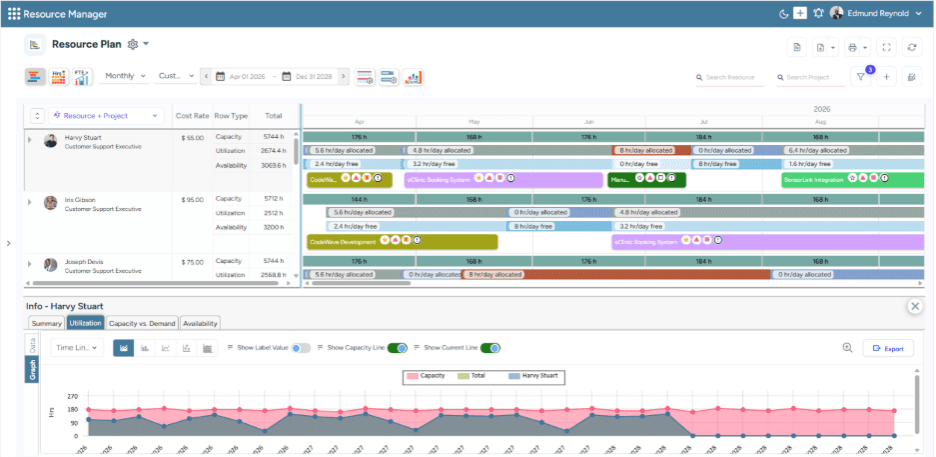
SAVIOM's All-in-One Resource Plan dashboard helps visualize current capacity, utilization, and availability in a centralized view.
SAVIOM is a strong Runn alternative for organizations that need enterprise-level resource management beyond basic scheduling and project planning. It helps businesses manage complex resource pools while improving visibility into capacity, utilization, demand, and workforce availability. Its strengths in forecasting, scenario modeling, and skills-based allocation support better long-term resource planning and delivery decisions.
Key Features:
- Resource forecasting & predictive planning
- Resource capacity planning
- Flexible resource scheduling & allocation
- Resource utilization optimization
- Scenario modeling
- Bench management
- Early warnings
- Intelligent matching-making
- Resource financial planning
- Resource requesting
- Time tracking
- Automation & workflow
- Multi-dimensional analysis
Why Choose SAVIOM Over Runn?
Choose SAVIOM when your organization needs resource management capabilities that extend beyond project-level planning. It is better suited for businesses requiring deeper forecasting, stronger capacity visibility, utilization optimization, financial insights, and governance across large and complex resource environments. The platform also supports long-term workforce planning and enterprise-wide decision-making more effectively as business operations scale.
Read our resource management guide for an in-depth understanding of benefits, types, key metrics, challenges, and best practices.
Float
Best for Visual Resource Scheduling and Capacity Planning
Best for: Small to mid-sized organizations.
Pricing: Starts at $7 per scheduled person/month for the Starter plan and $12 per scheduled person/month for the Pro plan. Enterprise pricing is available on request.
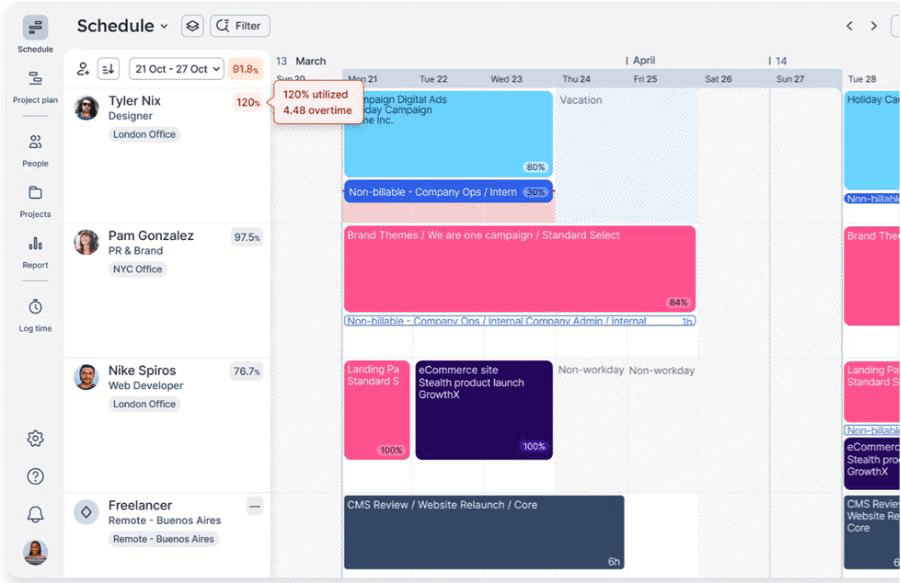
Float's Resource Scheduling dashboard provides real-time insights into project allocations.
Float is a strong Runn alternative for firms that prefer a visual and easy-to-use resource planning platform for managing schedules, workloads, and team capacity. The platform helps managers allocate resources based on real-time availability while improving visibility into project timelines and workload distribution. Its clean interface and planning capabilities make it suitable for organizations looking for faster scheduling decisions and better day-to-day resource coordination.
Key Features:
- Resource scheduling
- Capacity planning
- Project planning
- Time tracking
- Reports and dashboards
- Project cost estimation
- Project templates
- Integrations
Why Choose Float Over Runn?
Choose Float if your business needs a visual scheduling platform that simplifies workload planning and capacity management. It is better suited for organizations looking for quick scheduling adjustments, real-time availability visibility, and an easier way to connect resourcing with project timelines and workloads.
Dive into our blog on Float alternatives for a deeper comparison of similar resource management tools.
Resource Guru
Best for Simple Resource Scheduling
Best for: Small to mid-sized organizations.
Pricing: Starts at $4.16 per person/month with multiple plan options available.
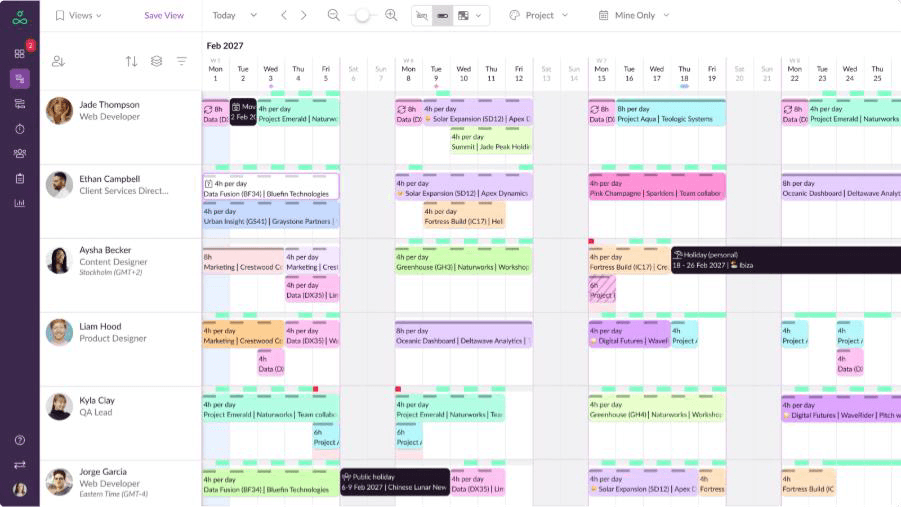
Resource Guru's Resource Scheduling dashboard to visualize and manage clashes faster.
Resource Guru is a good Runn alternative for organizations that want resource scheduling to remain simple, visual, and easy to manage. The platform helps managers coordinate people, equipment, rooms, and project schedules while improving visibility into availability and bookings. Its strengths in clash management, leave tracking, and shared resource scheduling make it suitable for businesses focused on day-to-day resource coordination rather than advanced resource planning.
Key Features:
- Resource scheduling
- Capacity planning
- Leave management
- Equipment management
- Meeting room booking system
- Project scheduling
- Reports
- Timesheets
- Product integrations
- Clash management
Why Choose Resource Guru Over Runn?
Choose Resource Guru if your team needs a simple scheduling platform for managing resource bookings, availability, leave, and shared resources. It is better suited for organizations that prioritize ease of use, clash prevention, and straightforward scheduling over deeper forecasting or enterprise-level resource planning.
Read our comparison article on SAVIOM vs. Resource Guru to understand which tool better fits your business needs.
Smartsheet
Best for Resource Planning Across Projects
Best for: Small to large organizations.
Pricing: The basic plan starts at $9 per member/month, and $19 per member/month for the business plan. Custom enterprise pricing is available.
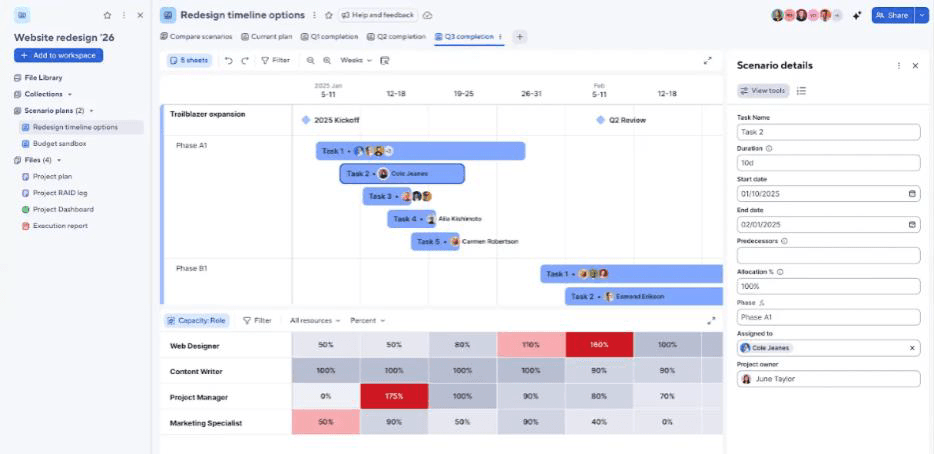
Smartsheet's Scenario Planning feature helps create and compare multiple resource plans and explore its outcomes before commitment.
Smartsheet is suitable for organizations that want resource planning integrated with project management, workflows, dashboards, and portfolio visibility. The platform helps teams manage workloads, track capacity, monitor demand, and coordinate project plans within a structured work management environment. Its combination of resource planning and portfolio-level visibility makes it suitable for businesses managing multiple projects and cross-functional teams together.
Key Features:
- AI & Automation
- Digital asset management
- Resource planning
- Portfolio management
- Team collaboration
- Dashboards and reporting
- Secure request management
- Account administration
- Intelligent workflows
- Integrations
Why Choose Smartsheet Over Runn?
Choose Smartsheet if the organization needs resource planning within a broader work and portfolio management system. It is better suited for teams that want to connect resource plans with workflows, dashboards, project schedules, and portfolio-level visibility in one platform.
Explore our SAVIOM vs. Smartsheet article to understand which platform is the right fit for your organization.
Teamwork.com
Best for Resource Planning Around Billable Client Work
Best for: Small to mid-sized organizations.
Pricing: Starts at $9.99 per user/month with higher-tier and enterprise plans available.
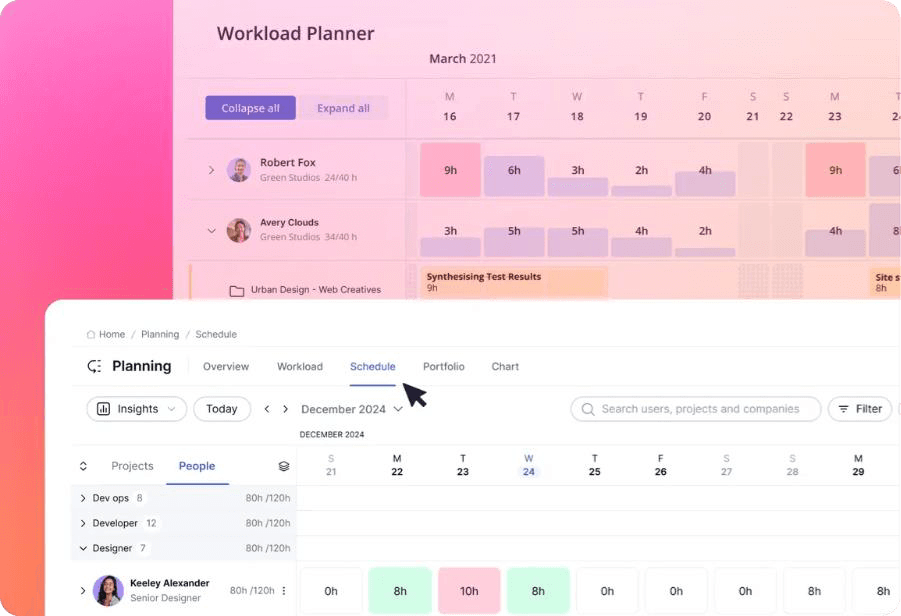
Teamwork's Workload Planner dashboard to track current work distribution among resources.
Teamwork.com is a good Runn alternative for service-based businesses that manage resource planning alongside client delivery, billable work, and project timelines. The platform helps teams balance workloads, track utilization, monitor billable hours, and manage project schedules within a single system. Its visibility into time, budgets, and resource allocation makes it suitable for organizations focused on improving project delivery and profitability.
Key Features:
- Workload planner
- Resource scheduler
- Utilization report
- Planning overview
- Time report
- Tentative projects
- Placeholders
- Allocated time
- Billable rates
Why Choose Teamwork.com Over Runn?
Choose Teamwork.com if the business wants resource planning integrated with client project management and billable work tracking. It is better suited for service organizations that need visibility into resource utilization, time, budgets, and project delivery within one platform.
Check out our Teamwork alternatives blog to evaluate better-fit tools for effective resource management.
Wrike
Best for Resource Planning in Collaborative Workflows
Best for: Mid-sized to large organizations.
Pricing: Wrike offers a free plan, while paid plans start at $10 per user/month for the Team plan and $25 per user/month for the Business plan. More advanced enterprise pricing options are also available.
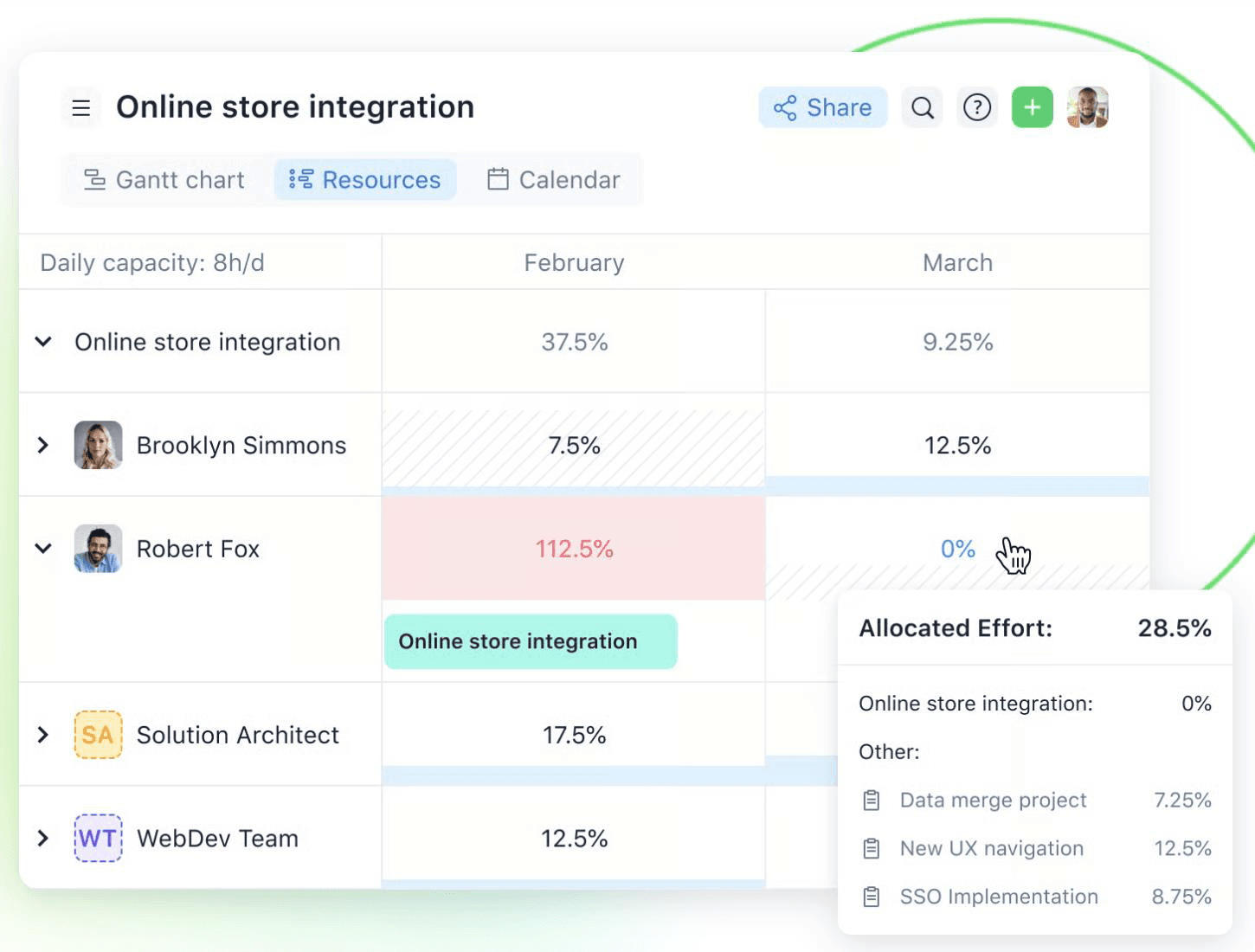
Wrike's Resource Planning dashboard highlights allocations in percentages on a monthly timeline.
Wrike is a strong Runn alternative for organizations that want resource planning integrated with collaborative workflows, task management, and reporting processes. The platform helps teams monitor workloads, track effort, manage capacity, and coordinate work across departments and projects. Its combination of resource planning, utilization visibility, and workflow management makes it suitable for businesses handling cross-departmental collaboration at scale.
Key Features:
- Workload charts
- Effort field
- Job roles
- Timesheets
- Billable time tracking
- Team utilization report
- Advanced resource and capacity planning
- Budgeting
- Advanced reporting and BI
- Dashboards
Why Choose Wrike Over Runn?
Choose Wrike if you want resource planning to work alongside task management, workflows, dashboards, and team collaboration. It is better suited for businesses that need workload visibility, utilization tracking, reporting, and collaborative work management within one platform.
Final Verdict
The best Runn alternative depends on where the organization is facing resource management challenges. While Runn supports resource planning, forecasting, utilization visibility, and project financial tracking, growing businesses often need stronger capacity planning, workforce visibility, forecasting accuracy, and enterprise-level resource control.
When comparing alternatives, organizations should focus on their primary business requirements:
- SAVIOM is the strongest fit for organizations managing complex demand, large resource pools, governance requirements, and long-term workforce planning.
- Float and Resource Guru are better suited for businesses prioritizing visual scheduling, workload visibility, and day-to-day resource coordination.
- Smartsheet, Teamwork.com, and Wrike work well for organizations that want resource planning connected with workflows, project portfolios, reporting, collaboration, and project management.
Businesses should not choose a Runn alternative based only on interface, popularity, or short-term requirements. The right platform should align with the organization's resource management maturity, reporting expectations, governance needs, and ability to support better delivery decisions as the business grows.
Looking for a resource management software that can help you shift from fragmented planning to smarter, centralized resource decisions? Book a Free Demo Today.
Frequently Asked Questions
What are the best Runn alternatives for resource management?
Some of the best Runn alternatives include SAVIOM, Float, Resource Guru, Smartsheet, Teamwork.com, and Wrike. Some tools are better for enterprise resource planning, while others focus more on scheduling, workload management, collaboration, or project-based resource planning. The right choice depends on the organization's operational requirements and planning priorities.